NAIROBI, June 13, 2026 — A growing coalition of retail investors is demanding answers from Centum Investment Company PLC’s board over executive compensation, investment decisions and the group’s long-running decline in market value, setting the stage for what could become one of the most consequential shareholder confrontations in the history of Kenya’s capital markets.
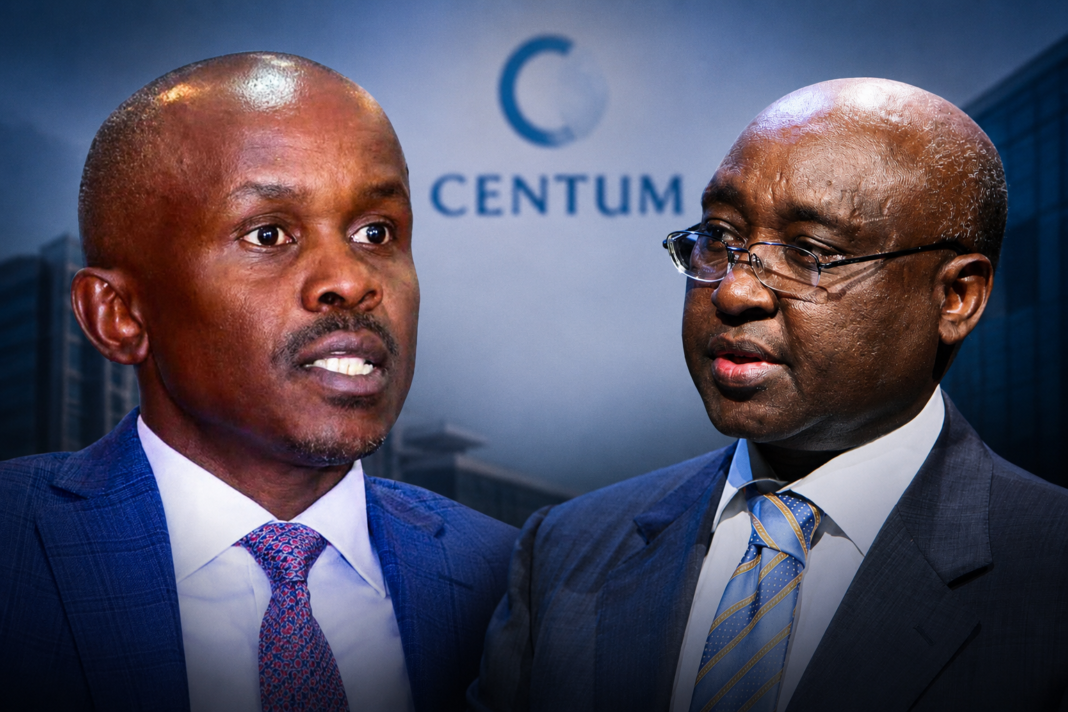
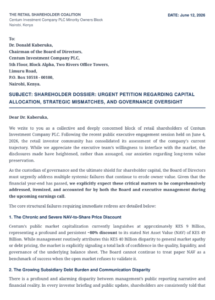
The dispute intensified this week after a shareholder dossier was formally submitted to board chairman Dr. Donald Kaberuka. The document, prepared by investors coordinating through various shareholder forums, raises concerns about capital allocation, executive remuneration, debt management and shareholder returns during the tenure of Chief Executive Officer Dr. James Mworia.
At the heart of the debate is a question many investors say has gone unanswered for nearly a decade: how did one of Kenya’s most admired investment companies see its share price fall from more than KES 40 in 2017 to about KES 14 today despite disposing of major assets and undertaking significant strategic investments?
For thousands of shareholders, the issue is not merely the decline in the share price. It is the widening gap between the company’s reported net asset value and its market valuation, a discount that has persisted despite repeated restructuring efforts and strategic reviews.
Executive Compensation Comes Under Scrutiny
One of the most contentious issues raised by shareholders concerns executive remuneration during a period of declining investor returns.
According to Centum’s annual reports, executive compensation has remained substantial over the past decade even as shareholder wealth has deteriorated. Shareholder activists argue that compensation structures have not sufficiently reflected the company’s market performance or the losses experienced by long-term investors.
In FY2024, Mworia’s total compensation stood at approximately KES 64.5 million, including a base salary of KES 60 million. Investors point out that the fixed salary component increased significantly over recent years despite a prolonged decline in the company’s share price.
Management has previously noted that executive bonuses were largely eliminated after FY2019. However, critics argue that increases in fixed remuneration weakened the intended alignment between management and shareholder interests.
The debate raises broader governance questions about how listed companies measure executive performance and whether compensation should be linked more closely to cash returns delivered to investors rather than asset revaluations or accounting gains.
The KES 28 Billion Strategic Shift
Between 2015 and 2019, Centum executed a series of landmark transactions that generated approximately KES 28 billion in proceeds.
The company exited several mature investments, including UAP Holdings, GenAfrica and beverage-sector assets associated with Nairobi Bottlers and Almasi Beverages. At the time, management argued that the sales would unlock value and provide capital for a new generation of growth investments.
Much of that capital was subsequently deployed into real estate developments, energy projects and infrastructure ventures, including Two Rivers Development, Vipingo Development, Akiira Geothermal and Amu Power.
Investors now question whether those investments delivered the returns that had been anticipated.
Over the same period, Centum’s market capitalization fell sharply despite the company’s reported net asset value remaining significantly higher than its market valuation.
Supporters of management argue that the disconnect reflects broader market conditions and investor scepticism toward illiquid private assets. Critics contend that the discount reflects concerns about the ability to monetize those assets at their stated valuations.
Either way, the gap remains among the largest on the Nairobi Securities Exchange.
Energy Investments That Failed to Deliver
Few investments have attracted as much criticism as Centum’s energy portfolio.
The company’s exposure to Amu Power and Akiira Geothermal has resulted in more than KES 4 billion in capital commitments and write-downs, according to public disclosures.
Amu Power, which sought to develop a coal-fired power plant in Lamu, collapsed after regulatory setbacks, environmental litigation and the withdrawal of international financiers. Centum ultimately wrote off its investment in the project.
Akiira Geothermal has faced a different set of challenges. Exploratory drilling failed to achieve the expected production results, leading to the departure of international partners.
Although Centum subsequently increased its ownership stake, the project has yet to reach commercial generation.
Shareholders argue that the outcomes highlight weaknesses in capital allocation and project risk assessment. Management, however, has maintained that infrastructure investments often require extended development timelines before value can be realized.
Debt Concerns Shift to Subsidiaries
Another issue raised by investors relates to the structure of Centum’s debt.
Management has highlighted significant reductions in debt at the parent company level under the Centum 5.0 strategy. Borrowings at the holding company have indeed declined substantially in recent years.
However, shareholders note that consolidated group debt has continued to rise.
Financial statements show that borrowings across various subsidiaries increased from approximately KES 16.6 billion in 2024 to more than KES 21 billion by late 2025.
Several subsidiaries have disclosed covenant breaches or heightened financing risks, including entities associated with the Two Rivers ecosystem and Longhorn Publishers.
Investors argue that reducing debt at the parent company while leverage remains elevated within subsidiaries does not necessarily reduce overall group risk.
The company maintains that the restructuring is part of a broader strategy to optimize capital allocation and unlock value from underlying assets.
Can the TRIFIC I-REIT Change the Narrative?
Management’s most ambitious attempt to address investor concerns is the newly launched TRIFIC Green USD I-REIT.
The vehicle seeks to raise approximately KES 4.8 billion through the acquisition of income-generating commercial assets within the Two Rivers Special Economic Zone.
If successful, the transaction could help reduce financing costs, improve liquidity and provide a more transparent mechanism for valuing mature real estate assets.
Many investors acknowledge the strategic logic behind the structure.
The question being asked, however, is whether the initiative should have been implemented years earlier when financing costs were already weighing heavily on group profitability.
For shareholders who have endured years of declining returns, the REIT is viewed less as a solution to past losses and more as a test of whether management can finally unlock value from assets that have long remained trapped on the balance sheet.
Buyback Programme Raises Fresh Questions
Centum’s share buyback programme has also become a source of debate.
The company launched the initiative in 2023 with the objective of repurchasing up to 10 percent of its issued shares.
By March 2026, however, only a fraction of that target had been achieved.
While buybacks can enhance shareholder value by reducing the number of outstanding shares, critics question whether the programme represented the best use of capital at a time when several subsidiaries were carrying expensive debt obligations.
Supporters of the strategy argue that repurchasing deeply discounted shares represented an attractive investment opportunity for the company.
The effectiveness of the programme remains a matter of disagreement among investors.
What Shareholders Want
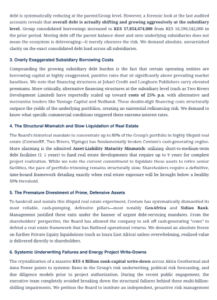
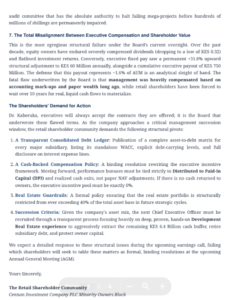
The shareholder dossier submitted to the board outlines several demands.
Among them are calls for greater transparency regarding subsidiary-level debt, enhanced disclosure of financing costs, stronger links between executive compensation and shareholder returns, and clearer succession planning for future leadership.
The group is also seeking a detailed explanation of the investment decisions that contributed to major losses in the energy portfolio and the prolonged discount between Centum’s net asset value and market capitalization.
Whether the board embraces those demands remains uncertain.
What is clear is that frustration among retail investors has become increasingly organized and vocal.
Centum remains one of Kenya’s most significant investment companies, with assets spanning real estate, infrastructure, education and financial services. Yet for many of its approximately 33,000 shareholders, the central issue is no longer the size of the portfolio but the value ultimately delivered to investors.
As the company prepares for future shareholder engagements, investors are expected to continue pressing management and the board for answers on a question that has come to define the Mworia era: why has a company reporting tens of billions of shillings in net assets struggled for nearly a decade to translate that value into shareholder wealth?