
Inspector General Douglas Kanja has sounded the alarm over a ticking time bomb inside Kenya’s capital.
A damning report tabled before the Senate Committee on National Security reveals that 44 out of 64 Nairobi police stations — including high-profile stations like Gigiri, Muthaiga, and Ngara — have no title deeds. Without these documents, each station sits wide open to land grabbers, hostile developers, and legal challenges that could force permanent closures.
This is not a minor administrative oversight. This is a national security crisis hiding in plain sight.
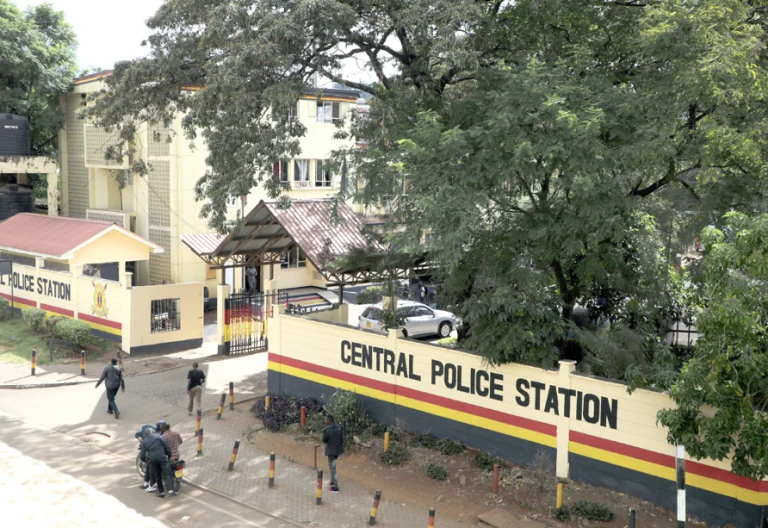
How Missing Title Deeds Are Leaving Nairobi’s Police Stations Wide Open to Land Grabbers
The numbers alone should trigger panic. Kanja’s report confirms that 44 of the city’s 64 police stations have no proper land documentation. That is nearly 70% of Nairobi’s entire police infrastructure sitting on land that nobody can legally prove belongs to the government.
The report paints a grim picture of institutional neglect. Some stations have no title deeds at all. Others have ownership records that nobody can trace. Several stations sit on land that private individuals or community groups donated decades ago — land that was never formally registered in the government’s name. Each of these situations creates a legal opening that land grabbers can — and likely will — exploit.
This is not a new problem in Kenya. The country has watched land grabbers swallow schools, hospitals, and government offices by exploiting missing or outdated documentation. Now, the same threat is closing in on the police stations that Nairobians depend on for their safety.
Starehe Bears the Worst of the Crisis
The Starehe subcounty faces the most severe exposure. Kanja’s report flags several major stations in the area as operating without proper documentation. Ngara, Pangani, Eastleigh North, Kariobangi, Korogocho, and Muthaiga police stations all lack the paperwork needed to secure their land legally.
These are not obscure outposts. Ngara and Pangani are among Nairobi’s busiest and most historically significant stations. Eastleigh North sits in one of the city’s most densely populated and commercially active areas. The absence of title deeds at these locations creates serious vulnerability at the heart of the city’s policing network.
The problem does not stop at Starehe. The report also flags stations across Kasarani, Makadara, Kayole, Embakasi, Ruaraka, and Ruai — stretching the documentation crisis across multiple subcounties and exposing a pattern of neglect that runs far deeper than any single area.
Upmarket Stations and Police Posts Are Not Spared
Many Kenyans assume that wealthier, better-resourced areas of Nairobi escape this kind of problem. They are wrong. The report reveals that some of the city’s most prominent stations—sitting in affluent neighbuorhoods—face exactly the same documentation failures.
In the Kilimani area, Kileleshwa Police Station, Kibra Police Station, and Sarangombe Police Post all lack proper documentation. Lang’ata Police Station — one of the most recognized stations in the city — also has unclear ownership records. Hardy Police Station, Akila Police Station, and Bomas Police Post carry the same problem.
Moving further out, Runda and Gigiri police stations are both flagged, along with Loresho and Evergreen police posts. Parklands Police Station and Luthuli Police Post are also on the list. In the Kabete area, Kabete and Muthangari police stations, alongside Kawangware and Gatina posts, all lack the documentation needed to legally defend their land. This is a city-wide failure, not a localized one.
Kenya Has Seen This Movie Before—and It Ends Badly
This revelation arrives less than a year after another explosive disclosure showed that over 26,000 of Kenya’s 31,000 public schools had no title deeds. That crisis left schools across the country wide open to land grabbing, encroachment, and forced evictions. Despite government promises, only around 5,000 schools have managed to secure title deeds, with many institutions in arid and semi-arid regions remaining completely unprotected.
The parallel is impossible to ignore. Kenya’s institutions—schools, hospitals, and now police stations—are systematically failing to secure the legal foundations they need to survive. Grabbers do not wait for governments to get organized. They move fast, file documents, and present courts with fait accompli situations that take years to reverse—if they are ever reversed at all.
Kanja’s report puts the Senate on notice. The committee must now decide whether it will treat this as a bureaucratic footnote or an emergency that demands immediate action. Title deeds for all 44 vulnerable stations must become a priority, not a long-term agenda item.
Every day these stations operate without proper documentation is another day that land grabbers can make their move—and another day that Nairobi’s policing infrastructure inches closer to collapse.