In the high-stakes world of Kenyan corporate power, where billion-shilling transactions often collide with protracted legal battles, a construction dispute that began nearly a decade ago has emerged as one of the biggest threats to one of East Africa’s largest corporate exits.
JILK Construction Company Limited’s aggressive legal campaign against Diageo Plc, Kenya Breweries Limited (KBL) and East African Breweries Plc (EABL) has cast uncertainty over Diageo’s proposed Sh340 billion sale of its controlling stake in EABL to Japan’s Asahi Group Holdings.
That uncertainty suffered a significant blow on June 17, 2026, when Justice Gregory Mutai of the Milimani Constitutional and Human Rights Division dismissed JILK’s application for conservatory orders seeking to halt the transaction.
The judge found no demonstrable connection between the construction firm’s grievances and the share sale, echoing reasoning previously adopted by Justice Bahati Mwamuye in the separate Bia Tosha Distributors case, which also sought to block the deal.
While the ruling clears a major obstacle for the transaction, JILK’s substantive constitutional petition remains active, ensuring the broader dispute continues. At its core is a bitter fallout over the construction of KBL’s Kisumu brewery, a project once touted as a transformative investment for western Kenya.
The Sh15 Billion Brewery Project at the Centre of the Dispute
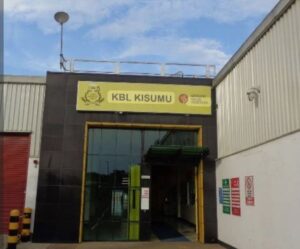
The conflict traces its roots to 2016 when KBL, under the majority ownership of Diageo, launched Project Nafasi, a Sh15 billion initiative aimed at establishing a modern brewery in Kisumu.
The project was designed to expand the production of affordable alcoholic beverages, create employment opportunities and support more than 15,000 sorghum farmers across the region.
JILK Construction was awarded several civil works contracts under the Joint Building Model Agreement. The company says it received approximately Sh1.2 billion for completed works before leaving the site in November 2019 following disagreements over payments, project variations, execution timelines and alleged contractual breaches.
What started as a claim worth about Sh163 million later escalated into a Sh2.45 billion arbitration dispute, excluding interest, filed before the Architectural Association of Kenya in 2020.
After hearings concluded in late 2024 and an arbitral award appeared imminent, KBL moved to court alleging corruption, collusion between the arbitrator and JILK officials, and failure to consider a whistleblower report.
The High Court subsequently issued conservatory orders halting the arbitration process, a move that attracted criticism from those who viewed it as judicial interference in a private dispute resolution mechanism.
JILK has consistently rejected the allegations, maintaining that the whistleblower claims were manufactured to frustrate the arbitration process. The company further argues that although Diageo was not formally a party to the contracts, it exercised significant control over procurement, supervision, financing and key project decisions.
The Battle Expands Beyond Construction Claims
The dispute took on a new dimension in 2026 as Diageo accelerated plans to exit its EABL investment through the proposed Asahi transaction.
JILK sought court orders to stop the sale or compel the deposit of Sh3 billion in court as security for any future arbitral award, arguing that Diageo’s departure could complicate enforcement efforts.
The dispute became even more contentious when JILK initiated efforts to pursue private criminal prosecutions against Diageo, KBL, EABL, EABL Managing Director Jane Karuku, Corporate Affairs Director Eric Kiniti and two Irish project managers, Brendan Daly and Nicholas Quarke.
The company alleged offences ranging from sexual harassment of two female employees to conspiracy to defeat justice and fabrication of evidence. JILK also accused EABL executives of misleading investigators in an effort to shield the foreign nationals, who later left Kenya.
Diageo responded by seeking court orders barring the Director of Public Prosecutions, the Directorate of Criminal Investigations, the Attorney General and JILK from initiating criminal proceedings arising from the dispute.
In its response, the Office of the Director of Public Prosecutions strongly opposed the application, describing it as speculative, premature and an attempt to interfere with the constitutional independence of the prosecutorial process.
The DPP argued that granting such orders would undermine the separation of powers doctrine and amount to granting immunity from potential future criminal investigations.
JILK also sought to invoke the United Nations Guiding Principles on Business and Human Rights, arguing that a human rights audit should be conducted before the transaction could proceed.
The court rejected that argument, finding that the principles do not carry binding legal force capable of stopping a commercial transaction. In doing so, the court relied on guidance from the Supreme Court’s Mitu-Bell decision.
Courts Prioritise Public Interest
In dismissing JILK’s application, Justice Mutai emphasized the wider public interest implications of the transaction.
The court noted that the deal could generate approximately Sh42 billion in Capital Gains Tax revenue for the government and observed that EABL and KBL would continue operating normally after completion of the transaction.
JILK’s case is not the only challenge that has confronted the sale.
Bia Tosha Distributors has repeatedly attempted to block the transaction over a separate distributorship dispute, while activist lawyer Shane Ngechu has argued that minority shareholders should receive a mandatory takeover offer.
Despite these challenges, regulators in Uganda and Tanzania, together with Kenya’s Capital Markets Authority, have largely approved the deal. The Competition Authority of Kenya remains one of the final regulatory hurdles.
Some legal analysts have described the growing wave of litigation surrounding the transaction as an example of “lawfare”, the strategic use of court proceedings to delay commercial transactions or gain leverage in negotiations with large corporations.
JILK rejects that characterization, maintaining that it is pursuing legitimate remedies against what it views as misconduct by a multinational corporation. Critics, however, argue that repeated legal challenges risk creating uncertainty for investors and could affect Kenya’s attractiveness as a destination for foreign capital.
What Happens Next?
Although the latest attempt to stop the transaction has failed, the broader dispute remains unresolved.
JILK’s constitutional petition is still before the courts. The stalled arbitration process remains contested, and the criminal allegations continue to cast a shadow over the parties involved.
The case raises difficult questions about the balance between facilitating major investment transactions and ensuring accountability for alleged wrongdoing. It also puts renewed focus on whether multinational parent companies can face liability for projects they influence but do not directly contract.
For now, the Asahi acquisition appears closer than ever to completion, potentially paving the way for one of the largest corporate transactions in East Africa’s history.
Yet the legal battle that began on a construction site in Kisumu continues to reverberate through Kenya’s corporate and judicial systems. What started as a contractual dispute has evolved into a test case on corporate accountability, prosecutorial independence and the limits of judicial intervention in major commercial transactions.
As investors, regulators and market participants await the next chapter, the outcome could shape not only the future of the Diageo-Asahi deal but also the broader relationship between multinational corporations and local contractors in Kenya.