The mystery around the Tuju Missing case has taken a dramatic turn after the Directorate of Criminal Investigations said officers were blocked from accessing Raphael Tuju’s Karen residence. Detectives now warn that limited access to key locations could slow down efforts to uncover what really happened.
As pressure mounts from political leaders and the public, investigators insist they are using every available tool to trace the former Cabinet Secretary, whose sudden disappearance has raised fears of foul play and exposed deeper tensions surrounding his recent legal and property battles.
Investigators Probe Tuju Disappearance as Missing Case Faces Major Roadblock After DCI Denied Entry to Karen Residence
The Directorate of Criminal Investigations confirmed that officers attempting to access Raphael Tuju’s home along Mwitu Drive in Karen were denied entry. Investigators believe the residence could hold crucial evidence that may explain his sudden disappearance.
Detectives did not mince words. They called on Tuju’s family and anyone with access to relevant locations to cooperate fully with the ongoing investigation. According to the agency, unrestricted access remains critical in reconstructing the timeline leading to his disappearance.
Authorities have already formed a special investigative team dedicated to the Tuju missing case. The unit is combining forensic analysis, intelligence gathering, and witness interviews to establish Tuju’s whereabouts.
The agency emphasized that it is deploying all available investigative techniques. Officers are working under pressure to produce answers in a case that has quickly drawn national attention and political scrutiny.
Abandoned vehicle discovery raises more questions
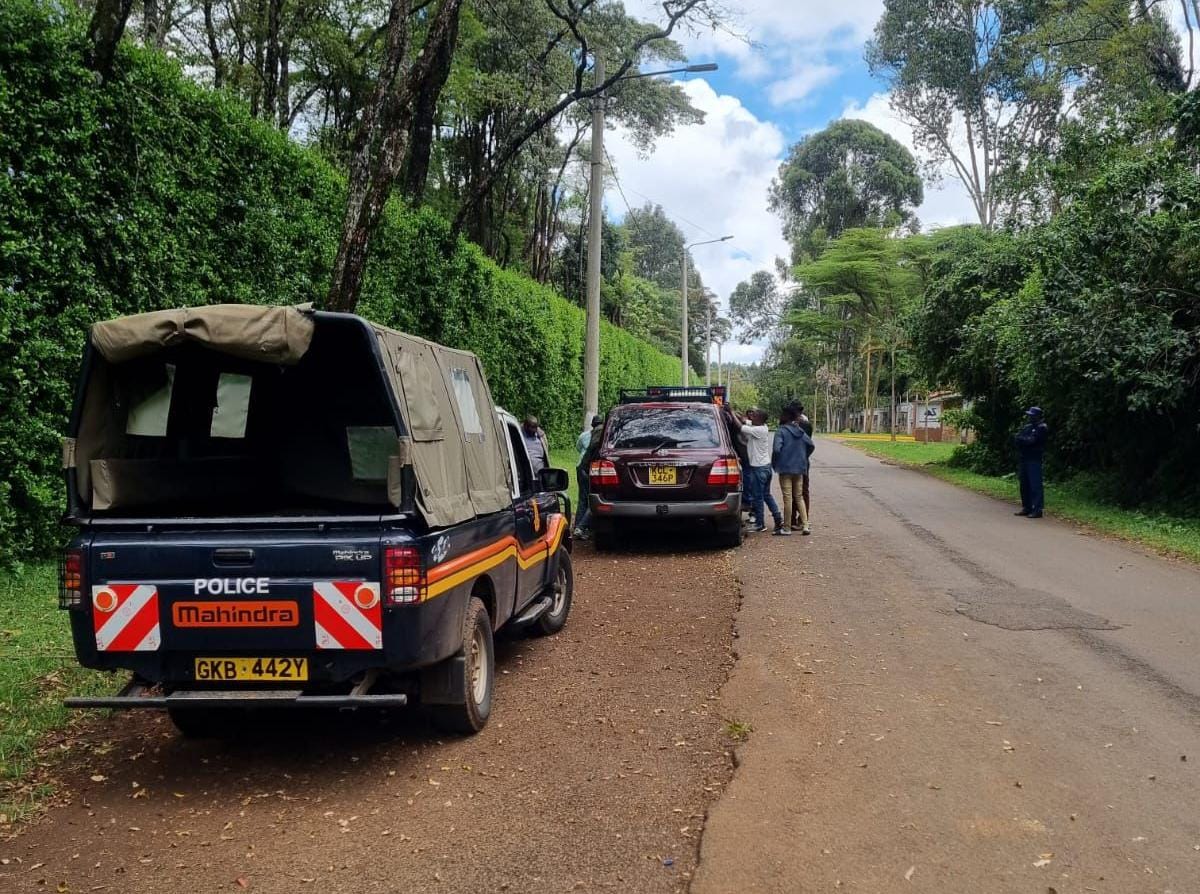
The investigation intensified after police discovered Tuju’s vehicle abandoned along Miotoni Lane in Karen. Officers found the car with its hazard lights still on, a detail that has raised serious questions about the circumstances under which it was left behind.
A security guard from a nearby institution first alerted authorities. Police responded quickly and secured the scene before crime scene investigators processed the vehicle for evidence. Officers later towed it to Karen Police Station for a detailed forensic examination.
The condition of the vehicle and its location have become central to the Tuju Missing investigation. Detectives are now analyzing potential fingerprints, digital data, and any signs of struggle that could indicate whether Tuju left voluntarily or under duress.
The timeline of disappearance sharpens focus on last known movements
Tuju’s family reported him missing on Sunday after repeated attempts to reach him failed. His phone had been switched off, cutting off a key line of communication that investigators often rely on in such cases.
According to his son, Mano Tuju, the former Cabinet Secretary left home on Saturday, March 21, heading to an interview. He never returned. This gap between his departure and the discovery of his vehicle has become a critical window for investigators.
Police later contacted the family after locating the abandoned car. That call confirmed the seriousness of the situation and triggered a full-scale investigation.
Detectives are now working to map Tuju’s final movements. They are likely reviewing CCTV footage, mobile data records, and witness accounts to determine who he met and where he went before his disappearance.
Land disputes and security fears add a troubling dimension
The Tuju Missing case does not exist in isolation. It comes against the backdrop of a highly publicized dispute over his prime Karen property. In recent weeks, Tuju had faced legal battles that escalated into a dramatic eviction.
He openly accused unnamed powerful individuals of targeting him. These claims have now taken on new weight as investigators examine possible motives behind his disappearance.
In a letter written just days before he went missing, Tuju appealed for police protection. He cited growing pressure and expressed concerns about his personal safety. That warning now appears alarmingly relevant.
Political leaders have also entered the conversation. Oburu Odinga urged the government to act swiftly, warning that the case risks damaging public confidence in security agencies. His remarks reflect a growing concern that the investigation must move quickly and transparently.
The intersection of legal disputes, alleged threats, and a sudden disappearance has complicated the case. Investigators must now determine whether these elements connect directly to Tuju’s current situation or remain separate issues.
The Tuju Missing investigation now stands at a critical point. Detectives need full cooperation, access to key locations, and credible information to move forward. Without that, the case risks stalling at a time when urgency is highest.