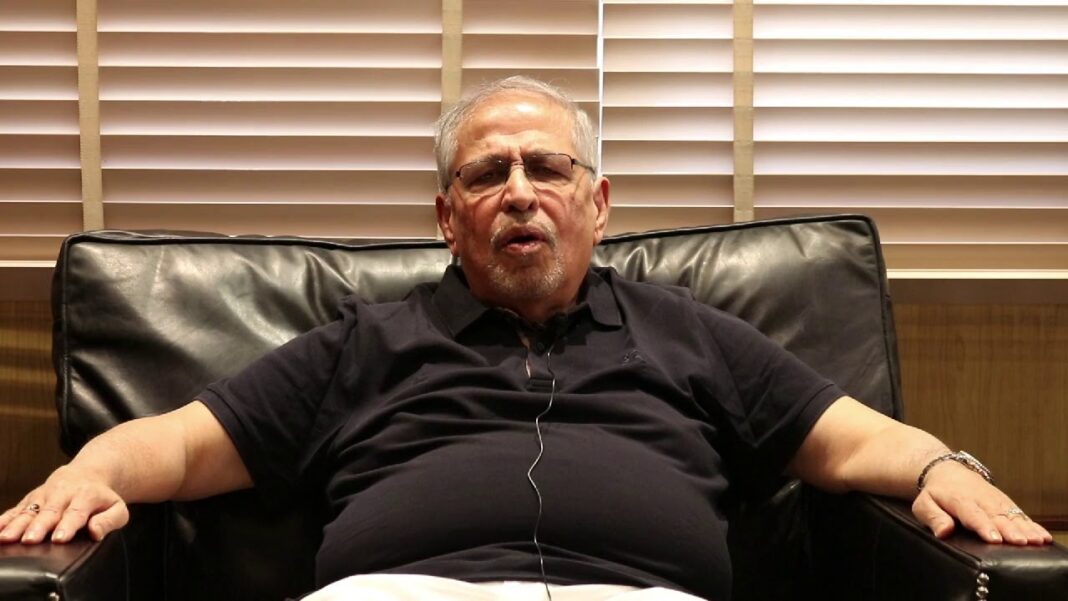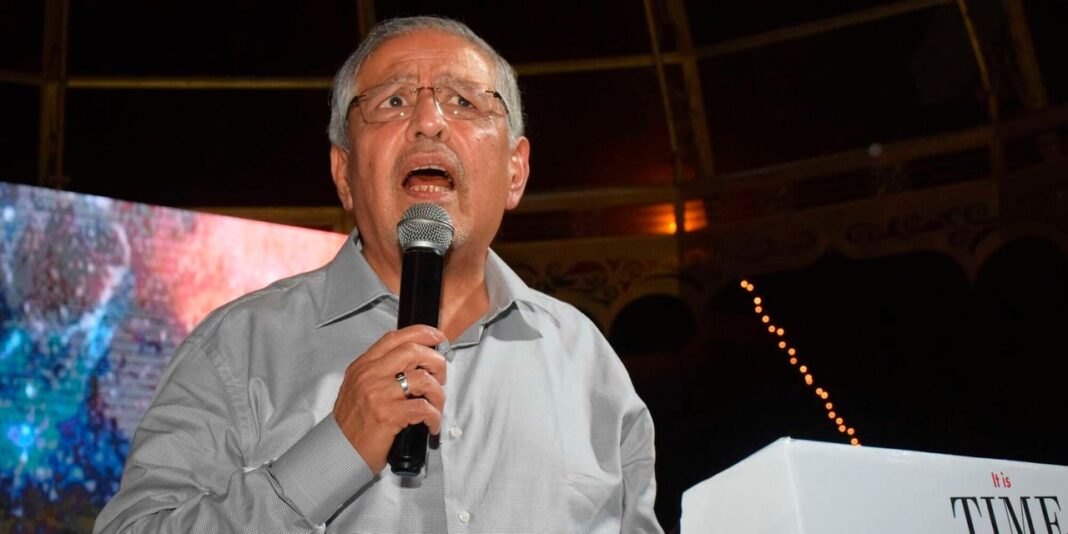
MOMBASA tycoon Mohamed Jaffer, the patriarch of the Jaffer business dynasty and the man at the very centre of Kenya’s most explosive fuel import scandal in recent memory, is currently receiving medical treatment at a hospital in India. Detectives from the Directorate of Criminal Investigations are standing by, waiting for him to return to Kenyan soil so they can record his statement over the Sh11.8 billion dirty fuel saga that has already claimed three of the country’s most powerful energy officials.
In his absence, his sons have been doing the walking that he cannot. Three of them, Mutara Mohamed Jaffer, Ali Abbas Jaffer and Mohamed Husein Jaffer, have already been hauled to DCI headquarters, questioned at length and compelled to record formal statements as investigators widen their net across more than 20 suspects linked to the scandal. Their father’s name hangs over every conversation, every document and every invoice in what investigators are now calling one of the most brazen acts of procurement fraud Kenya’s energy sector has ever seen.
‘Detectives are waiting for him to arrive in the country so they can record his statement. His sons have already been grilled.’
The scandal centres on a 68,000-metric-tonne consignment of super petrol that arrived at the Port of Mombasa on March 27, 2026, aboard the MT Paloma, a Marshall Islands-flagged crude tanker. The vessel had loaded its cargo at the Port of Fujairah in the United Arab Emirates in February before being redirected to Mombasa from its original destination of Angola. One Petroleum Limited, a company whose directorship lists three of Jaffer’s sons alongside other associates, was the importer of record. The shipment was priced at Sh198,000 per metric tonne compared to the Sh140,000 per tonne rate available under Kenya’s Government-to-Government arrangement with Gulf oil majors, a difference of Sh58,000 per metric tonne that would have pushed pump prices up by an estimated Sh14 per litre on that consignment alone.
What makes the scandal so combustible is not merely the price differential but the trail of regulatory approvals that made it possible. The contract for the shipment was reportedly signed on March 25, 2026, yet the MT Paloma docked just two days later, carrying a cargo that investigators say had already been loaded months earlier. The speed of that sequence has convinced detectives that the deal was pre-arranged well before any emergency procurement process was formally triggered, and that the claimed emergency framework was used as cover for what was, in effect, a pre-planned private importation at extravagant profit.
THE EMERGENCY PROCUREMENT CLAIM
One Petroleum has not been silent in the face of mounting scrutiny. The company issued a statement confirming it imported the consignment but insisting it had done so legitimately, as one of four bidders that responded to an emergency request issued by the Ministry of Energy and Petroleum in March. It confirmed that, following consultations with the government, it had taken steps to ensure the petroleum cargo brought in on March 27 via MT Paloma would not enter the Kenyan market. That assurance, however, has done little to quiet the critics or the investigators.
According to the Ministry of Energy’s own pricing disclosures, the petrol supplied by One Petroleum via MT Paloma was invoiced at Sh198,855 per metric tonne on landing in Mombasa. Fuel arriving under the G-to-G arrangement in the same period from Gulf Energy via MT FOS Mercury cost Sh140,111 per metric tonne. The difference of Sh58,744 per metric tonne translates to roughly Sh43.40 per litre, a gap that oil executives describe as impossible to justify under any legitimate emergency framework.
‘For Jaffer, the sequence of events produced something that rarely happens at once: emergency clearance, a premium three times the normal rate, and formal incorporation into the G-to-G deal.’
Industry insiders have pointed out that the emergency request itself raises profound questions. Kenya’s National Security Council Committee had approved emergency imports as early as March 9, 2026, when internal ministry memos flagged the risk of fuel shortages arising from Iran’s attacks on oil facilities in the Gulf and the closure of the Strait of Hormuz. One Petroleum, Oryx Energies, Hass Petroleum and E3 Energies were invited to bid. One Petroleum submitted the highest price of $290 per tonne for 60,000 tonnes, yet was selected ahead of significantly cheaper alternatives. Oryx quoted $253.93 per tonne; Hass quoted $420 per tonne for a smaller volume. By the time the ministry signed off on the arrangement, One Petroleum had already positioned the MT Paloma for delivery.
THE OFFICIALS WHO FELL
The scandal has already destroyed careers at the highest levels of Kenya’s energy sector. Former Petroleum Principal Secretary Mohamed Liban, former EPRA Director General Daniel Kiptoo and former Kenya Pipeline Company Managing Director Joe Sang were arrested on the night of April 2, 2026, and taken to DCI headquarters for questioning. They have since been released on police bond and are expected in court as investigations accelerate. All three have resigned from their positions. Two other officials, Joseph Wafula, the deputy director of petroleum at the ministry, and Joel Mburu, a supply and logistics manager at KPC, were also taken into custody and released on cash bail of Sh100,000 each.
The arrests were preceded by a dramatic sequence of events. It was a quality assurance manager at Kenya Pipeline Company who first rejected the fuel after conducting tests that revealed levels of sulphur, manganese and benzene exceeding Kenya Bureau of Standards limits. The official came under severe pressure to allow the offloading to proceed but refused and escalated the matter internally. That act of institutional courage set off the chain of events that would ultimately bring the three most powerful men in Kenya’s petroleum supply chain crashing down.
Investigators who searched the residences of the three main suspects reportedly recovered close to Sh500 million in cash and assets believed to be connected to the petroleum transactions. The money was said to have been discovered concealed in various locations within the homes, and forensic auditors are now working to trace the financial flows between the officials and the private companies at the centre of the scandal.
THE JAFFER EMPIRE UNDER SCRUTINY
Mohamed Jaffer is not a man accustomed to being on the wrong side of the state. He has built the MJ Group into a coastal conglomerate now valued at more than Sh16.3 billion, with holdings that include Mbaraki Bulk Terminal at the Port of Mombasa, Grain Bulk Handlers, Africa Gas and Oil Company and One Gas Limited. Grain Bulk Handlers controls the bulk of Kenya’s liquefied petroleum gas imports and dominates the LPG transit market to Uganda, Rwanda, South Sudan and parts of the Democratic Republic of Congo. Mbaraki Bulk Terminal operates the region’s largest independent petroleum storage facility at the port, a strategic chokepoint in the energy supply chain for the entire East and Central African region.
Corporate registry records that emerged during the investigation show One Petroleum Limited was incorporated on November 24, 2010, under company number CPR/2010/36450. Its directorship lists Solomon Eswbe Mwanjumwa Ondege, Nicholas Kokita as company secretary, Ali Salaah Balala as executive director, and the three Jaffer sons alongside Jonathan James Stokes. A Mauritius-registered entity, Mbaraki Holdings Limited, holds 41,098 ordinary shares in the company, introducing an offshore financial dimension that investigators say complicates efforts to trace the full beneficial ownership structure and the movement of funds across jurisdictions.
‘The Jaffer sons have recorded statements. Their father is in India. Detectives are waiting. The net is widening.’
The offshore shareholding structure has drawn particular attention from investigators reviewing the scandal’s financial architecture. The presence of a Mauritius-registered holding company is not illegal in itself, but corporate governance analysts who have reviewed the filings warn that such structures are frequently deployed to shield beneficial ownership, complicate profit-tracing and move money beyond the reach of domestic financial regulators. Financial encumbrances filed against One Petroleum also reveal a pattern of heavy asset pledging and aggressive borrowing that analysts say raises further questions about how the company’s operations were being financed and by whom.
THE CABINET MINISTERS’ SHADOW
As the probe has widened, the spotlight has shifted from the technocrats and businessmen to the two Cabinet secretaries whose letters enabled the transaction. Trade and Investments CS Lee Kinyanjui wrote to the Energy Ministry on March 28, 2026, granting a waiver that allowed petroleum products with elevated levels of manganese, sulphur and benzene to enter the country, subject to six listed conditions. By the time that letter was signed, the MT Paloma had already been in Mombasa for 24 hours. Energy CS Opiyo Wandayi’s own ministry had, a day earlier, signed off on letters allowing One Petroleum and Oryx Energies to import 60,000 tonnes of petroleum each outside the G-to-G framework.
Wandayi subsequently ordered One Petroleum to withdraw the consignment from the market entirely, directed oil marketing companies not to uplift the product or settle invoices, and moved to block a second shipment by Swiss-owned Oryx Energies from docking at Mombasa. He maintained publicly that the government had acted swiftly to protect the public interest once the full facts of the importation emerged. Oil executives who spoke privately, however, described his exit order as logistically unworkable, pointing out that much of the fuel had already been mixed with existing stocks in KPC storage infrastructure and private tanks, making a clean withdrawal effectively impossible.
Parliamentary and public pressure on both ministers has been building steadily since leaked letters surfaced connecting them directly to the approval chain. Investigators have indicated that the Cabinet secretaries will be required to account for what they knew, when they knew it and what steps they took or did not take as the importation proceeded.
TWENTY SUSPECTS AND COUNTING
The DCI has so far recorded statements from 19 individuals drawn from a range of agencies and private companies. More suspects, including businessmen and regulatory officials, are now being sought as investigators trace the full chain of approvals, communications and financial flows that made the MT Paloma’s cargo possible. Among those being investigated are members of the Vessel Alignment Committees, specialised technical bodies that oversee maritime petroleum import operations, of which around 26 individuals had not yet been traced for statement-taking as of last weekend.
The DCI has confirmed it is actively engaging investigative agencies in other countries under the Mutual Legal Assistance programme to establish facts about the loading of both the One Petroleum and Oryx Energies consignments at their points of origin. The cross-border dimension of the probe, combined with the offshore shareholding structures at the corporate level, has transformed what might have appeared to be a domestic procurement irregularity into an investigation with international dimensions.
Investigators are also examining whether One Petroleum’s formal incorporation into the G-to-G supply framework, which was announced shortly before the scandal erupted and which expanded the number of participating Kenyan oil firms from three to five, was itself the product of irregular influence. The timing of that incorporation, combined with the emergency importation that followed, has led investigators to question whether the deal represented not a one-off opportunistic transaction but a deliberate strategy to entrench the Jaffer petroleum interests at the very heart of Kenya’s strategic fuel supply architecture.
THE MAN WAITING IN INDIA
At the centre of it all sits Mohamed Jaffer himself, receiving medical care in India while his sons answer for the company whose name bears the weight of a scandal that has already reshaped the senior leadership of Kenya’s entire energy sector. Investigators have said his resignation or continued absence does not reduce his status as a person of interest. The DCI’s public position is unambiguous: resignation from office, or in this case departure from the country, does not exonerate or absolve any suspect.
For the millions of Kenyans who fill their tanks at petrol stations stretching from Mombasa to Moyale, the question that matters most is whether any of the substandard fuel with its dangerously elevated sulphur, manganese and benzene levels has already made its way into their cars, their generators and their matatus. Energy CS Wandayi’s withdrawal order acknowledged the possibility that some of the consignment had already been distributed before the crisis became public. Oil marketing executives confirmed as much in private, describing the order to extract already-mixed product as operationally impossible.
The investigation is ongoing. Detectives are widening their net. Mohamed Jaffer is in India. His sons have spoken. And Kenya is waiting for answers that grow more unsettling with every document that surfaces from the wreckage of an emergency procurement process that may have been nothing of the kind.