The Kenyan government has finally lifted the lid on the disturbing pipeline funnelling Kenyan citizens into the Russian military—and the route runs straight through the Middle East.
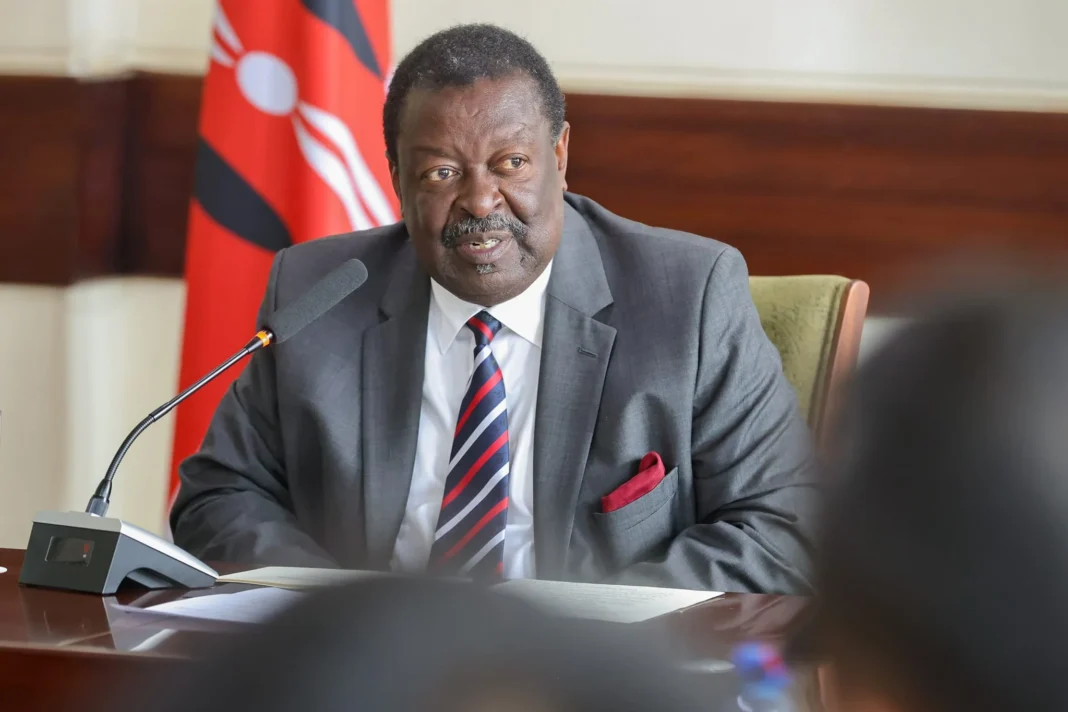
Prime Cabinet Secretary Musalia Mudavadi revealed before the Senate Committee on National Security, Defence, and Foreign Relations on April 2 that Kenyans are deliberately routing themselves through third-party countries to evade government detection before ending up on Russian battlefields.
With over 252 confirmed recruits, 16 missing, and two held as prisoners of war, the crisis is far deeper than official figures suggest.
Kenyans in the Russian Military—How the Recruitment Pipeline Actually Works
Mudavadi’s testimony before the Senate committee pulled back the curtain on a sophisticated and deeply troubling recruitment operation that has been bleeding Kenya of its citizens into an active war zone.
The government’s challenge is not simply identifying who has gone—it is the deliberate concealment built into the recruitment process itself that makes tracking nearly impossible.
The Middle East Detour That Defeats Government Tracking
Mudavadi told senators that most Kenyans who ended up in the Russian military did not travel directly from Kenya to Russia. Instead, they first secured legitimate employment in the Middle East—working as security officers or in other jobs—before being recruited and transferred directly to Russia from there.
This strategic detour creates a tracking nightmare for Kenyan authorities. By the time a Kenyan citizen leaves for Russia, their last known destination on government records is the Middle East, not a war zone.
The PCS warned that the situation becomes even more complex because some of the recruits altered their travel documents along the way, while others entered Russia on tourist visas before engaging in military activities.
“Some of these people did not leave directly from Kenya. They were moving through third-party countries. So you would find that some had regular security jobs in the Middle East. Then from the Middle East, they moved directly to Russia,” Mudavadi stated.
The use of tourist visas as cover adds another layer of deception, making it nearly impossible for the government to distinguish between Kenyans travelling innocently and those heading into active recruitment pipelines.
The Grim Numbers Behind Kenya’s Russian Military Crisis
The scale of Kenya’s entanglement in the Russia-Ukraine war is staggering, and Mudavadi’s figures paint a deeply alarming picture of a crisis the government is still struggling to fully contain.
Around 252 Kenyans are officially confirmed to have been recruited into the Russian military, though Mudavadi acknowledged the true figure could exceed 1,000—meaning the government may only be aware of a fraction of those actually trapped in the conflict.
At least 16 Kenyans remain missing in action, their whereabouts unknown and their safety uncertain. Two others are confirmed prisoners of war held in Ukraine, while over 38 remain hospitalized under restricted access, meaning even consular visits to check on their condition face significant obstacles.
On the positive side, Kenya has managed to repatriate 47 citizens so far, a figure the government points to as evidence of active diplomatic engagement—though critics argue it represents a painfully small fraction of the total affected.
The government’s meetings with Russian authorities in recent days have produced an agreement between both countries to halt further recruitment of Kenyans into the Russian military, a development Mudavadi described as a significant diplomatic breakthrough.
Arrests Made But the Recruitment Network Runs Deep
Kenya’s multi-agency response to the crisis has produced results, but the arrests made so far only scratch the surface of what appears to be a well-organized and far-reaching recruitment network.
Mudavadi confirmed that a joint operation led by the Directorate of Criminal Investigations (DCI), supported by other government agencies, has resulted in the arrest of two suspects linked to an unregistered recruitment agency that was fraudulently luring Kenyans into the Russian military.
The agency operated entirely outside Kenya’s legal framework, recruiting citizens under false pretences and channelling them into a conflict zone thousands of kilometres away. Mudavadi assured the Senate committee that investigations remain ongoing and that the government is actively working to identify and prosecute everyone involved in luring Kenyans into the war.
The PCS reaffirmed Kenya’s commitment to repatriating all citizens trapped in Russia, pursuing both diplomatic channels and legal mechanisms to secure their safe return.
With the true number of affected Kenyans potentially exceeding 1,000, and the recruitment pipeline running through countries beyond Kenya’s direct jurisdiction, the government faces a race against time to shut down the network and bring its citizens home before more lives are lost.