Kenya’s security agencies have taken a major step to strengthen the fight against cross-border crime after the National Police Service introduced a permanent INTERPOL curriculum for police training.
The programme equips officers with practical skills to access international crime databases, share intelligence, and collaborate with law enforcement agencies worldwide. Officials say the move comes at a time when criminals increasingly operate across borders and exploit gaps between national policing systems.
By embedding the training within police institutions, authorities aim to create a new generation of investigators capable of tracking suspects globally and responding quickly to emerging transnational crime threats.
INTERPOL Curriculum Set to Transform Kenya’s Fight Against Global Crime
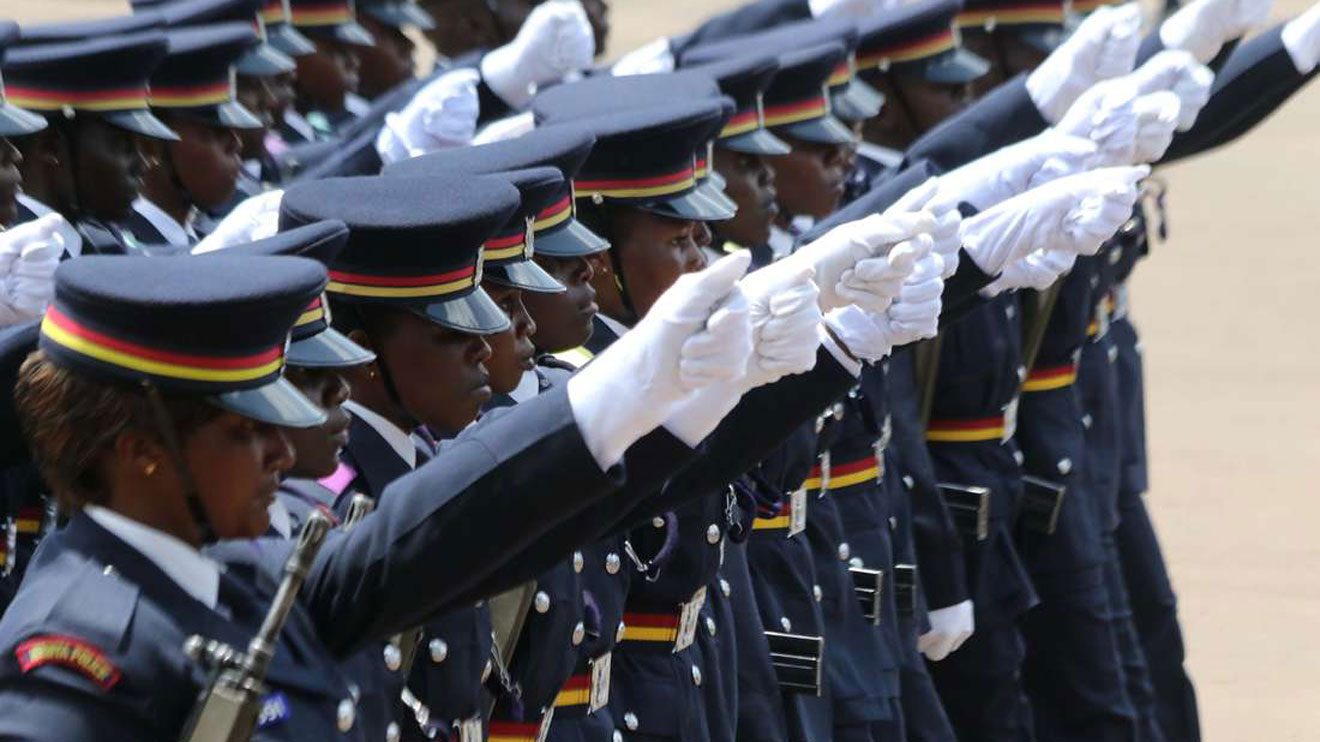
The National Police Service unveiled the INTERPOL Curriculum on March 5 as part of a long-term strategy to modernize policing and strengthen international cooperation against organized crime.
The course, formally known as the INTERPOL Policing Capabilities Foundation Course Module, will train officers on how to use global policing databases, secure communication systems, and advanced investigative tools.
Officials believe these capabilities will allow Kenyan officers to identify suspects faster, track fugitives across jurisdictions, and coordinate investigations with international partners.
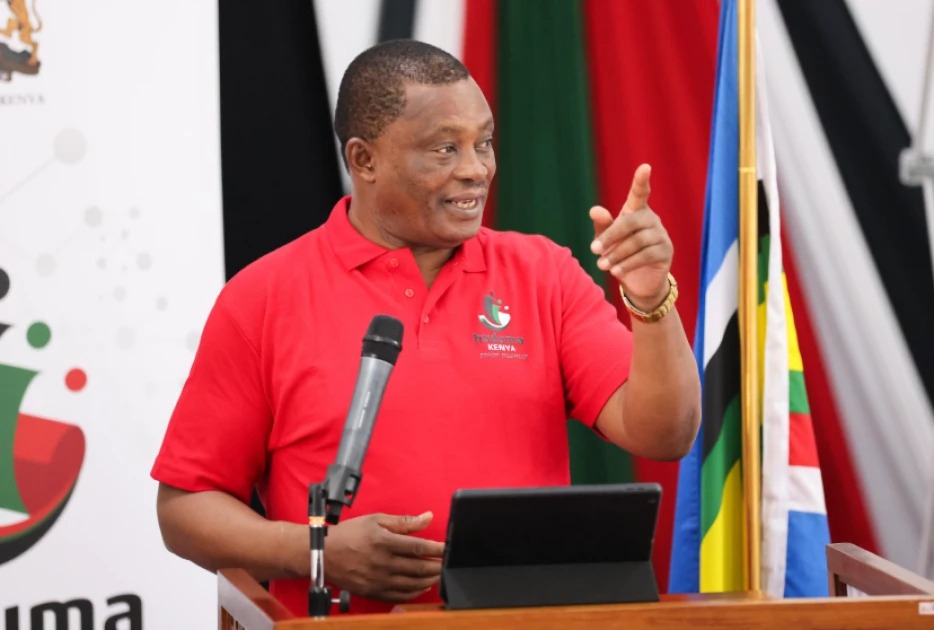
During the launch, Inspector General Douglas Kanja stressed that modern crime networks operate beyond national borders, making international cooperation essential.
“We live in an era where crime has no respect for borders or territorial boundaries. Criminals exploit the gaps between law enforcement agencies, the gaps between national crime databases, and the gaps in our knowledge of how to use international policing tools,” Kanja said.
He explained that the new training programme aims to close those gaps by ensuring officers understand and effectively use international policing resources.
Officers to Master Global Databases and International Investigation Tools
The INTERPOL curriculum focuses heavily on practical skills rather than theory. Officers will learn how to access global criminal intelligence systems, analyze international crime data, and respond to complex cases involving suspects in multiple countries.
The training also prepares officers to tackle transnational crimes such as human trafficking, organized fraud, cybercrime, and sexual and gender-based violence.
Participants will work through real-world case studies and simulations that mirror actual cross-border investigations. These exercises aim to help officers apply INTERPOL tools during routine police work as well as complex international operations.
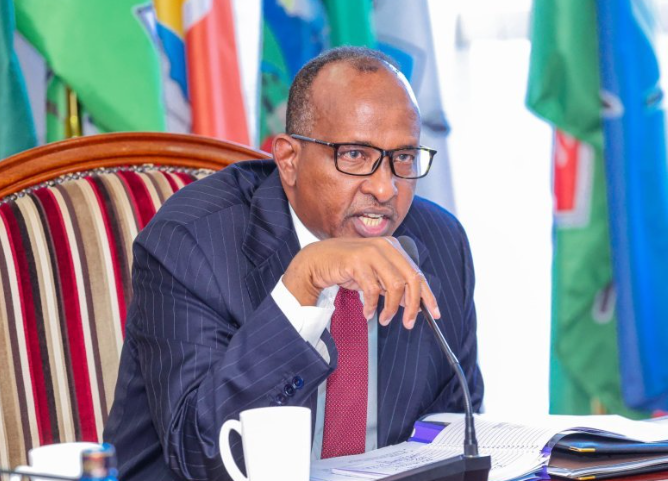
Director of Criminal Investigations Mohamed Amin said institutionalizing the course marks a critical step in strengthening Kenya’s long-term investigative capacity.
“This curriculum launch reflects Kenya’s long-term vision for modern policing. As crime evolves and crosses borders, we must ensure officers are prepared to collaborate regionally and internationally confidently,” Amin said.
Security officials believe the programme will also strengthen trust and coordination between Kenyan authorities and international law enforcement agencies.
Global Partnership Behind the New Training Programme
The INTERPOL Curriculum was developed with support from INTERPOL under its global capacity-building initiative known as Project Soteria.
The initiative received funding from the Foreign, Commonwealth, and Development Office of the United Kingdom and focuses on strengthening global cooperation against serious organized crime.
INTERPOL director David Caunter said the programme builds on Kenya’s strong commitment to combating cross-border criminal networks.
“The course builds on the strong commitment and capability of Kenya’s law enforcement officers in addressing cross-border crime and strengthening international cooperation against organized criminal networks,” Caunter said during the launch.
The training aligns with Kenya’s national security laws and broader strategy to improve cooperation with international policing bodies.
Why the INTERPOL Curriculum Matters in the Modern Crime Era
The launch of the INTERPOL Curriculum highlights a growing challenge facing law enforcement agencies worldwide. Criminal networks increasingly use technology, global travel, and digital financial systems to operate across multiple jurisdictions.
This reality has made international cooperation essential for effective policing.
INTERPOL acts as a global hub connecting police forces from 195 member countries. Through its systems, investigators share intelligence, track fugitives, and coordinate cross-border operations.
One of its most widely known tools is the Red Notice system, which alerts member states about wanted fugitives who may be hiding in another country.
The organization also provides secure communication networks, forensic analysis support, and operational intelligence tools that help authorities dismantle global criminal networks.
INTERPOL focuses on key crime areas, including cybercrime, organized crime, counter-terrorism, environmental crime, and human trafficking.
Investigators often collaborate internationally to tackle fraud schemes, phishing attacks, drug smuggling, wildlife trafficking, illegal fishing, and pollution crimes that span several countries.
For Kenya, embedding the INTERPOL curriculum in police training institutions signals a broader push to ensure local investigators remain connected to these global crime-fighting systems.
Security experts say the initiative could strengthen Kenya’s position as a regional leader in combating transnational crime while ensuring local officers stay ahead of increasingly sophisticated criminal networks.