NAIROBI, Kenya — Suba South MP Caroli Omondi has raised concerns over the government’s divestiture from Safaricom, warning that the proposed “enhanced strategic sale” model could entrench inequality, diminish public ownership and open the door to state capture through opaque dealings.
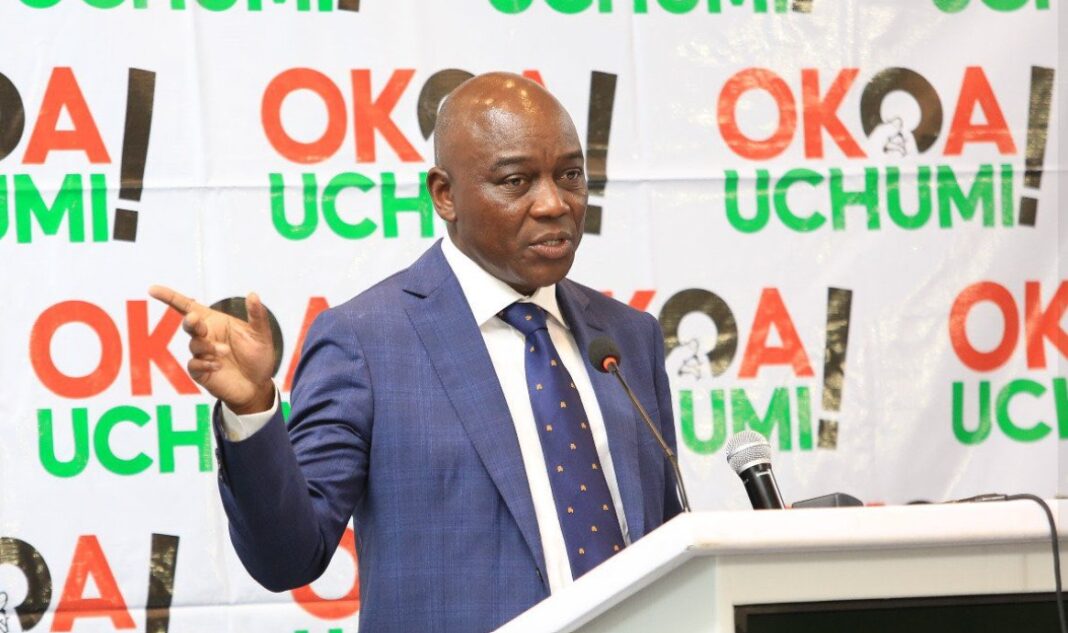
Speaking during the release of the Okoa Uchumi report in Nairobi, Omondi said the model chosen by the Treasury would concentrate more economic power in the hands of a single strategic investor, despite Safaricom’s history as a public asset built with taxpayer resources.
He contrasted the planned Safaricom divestiture with the Kenya Pipeline Company (KPC) sale, arguing that KPC should have attracted a strategic investor capable of expanding the company’s product lines—such as gas distribution or regional pipeline extensions—rather than pursuing deals that simply reshuffle ownership.
Omondi said the Safaricom stake should instead be sold through the Nairobi Securities Exchange (NSE) to widen local ownership and ensure fairness in the process.
“We already have a strategic partner in Vodafone. Why concentrate more resources into its hands when only 1pc of Kenyans control 78pc of our financial resources?” he asked.
Nyoro denounces ‘opaque’ fiscal plan terming Safaricom raw deal
Mobitelea controversy
Omondi also revisited the long-running Mobitelea controversy, recalling how a mysterious private entity secretly held 10pc of Safaricom’s shares during its early years before quietly exiting amid public pressure.
“There was a sweetheart deal between the elites of the time and Vodafone. Mobitelea was a front for Kenyan politicians. We should ask what happened to those shares,” he said.
The CIOC chair further questioned why details of the current negotiations appeared to bypass senior Treasury officials, alleging that the opacity surrounding the sale raises red flags.
“Why is Vodafone always interested in opaque transactions?” he asked.
“Why are frequencies not auctioned transparently to raise revenue for Kenyans?”
He warned that without full public disclosure, the transaction risked repeating historical patterns where politically connected individuals allegedly benefited from hidden “free carry” or “finder’s fee” arrangements.
Omondi urged international lenders—including the IMF and World Bank, who are backing aspects of the divestiture—to ensure the process meets global transparency standards.
“We owe Kenyans full transparency. No hidden beneficiaries, no backroom deals,” he said.