President William Ruto has unveiled an ambitious plan to transform Kenya’s economy by raising Ksh5 trillion within a single year. The strategy involves divesting government stakes in key state-owned entities, including the Kenya Pipeline Company (KPC), to fund development and support the national budget without relying on more borrowing.
Speaking at State House, Nairobi, during an engagement with graduate interns under the Affordable Housing Programme, Ruto insisted the funds would fuel Kenya’s “Singapore Dream,” a vision of rapid economic growth and modern infrastructure.
The president argued that the plan is not political but essential for economic transformation. Critics, however, question whether such a massive fundraising target is realistic under Kenya’s current economic pressures.

Ruto Pushes Divestiture of State-Owned Shares to Fund Singapore Dream
The government has already kickstarted the divestiture process, offering stakes in major parastatals through public trading on the Nairobi Securities Exchange. The flagship initiative is the Kenya Pipeline Company Initial Public Offering, described as the largest IPO ever undertaken in Kenya. Sixty-five percent of KPC’s issued ordinary shares are being offered at Ksh9 per share, opening the energy giant to local and international investors.
Ruto dismissed concerns over transparency, pointing out that all share sales are regulated by the Capital Markets Authority and executed publicly at the NSE. “These are not decisions made by committees or behind closed doors,” he said.
The President also targeted politicians who have reversed their earlier support for privatisation and diversification of government shares. “I want to ask some politicians who, the other day, all agreed that diversification of shares and privatisation is a prudent way of raising resources, but are now politicising the matter to let us own the piece of what we are building together,” Ruto stated.
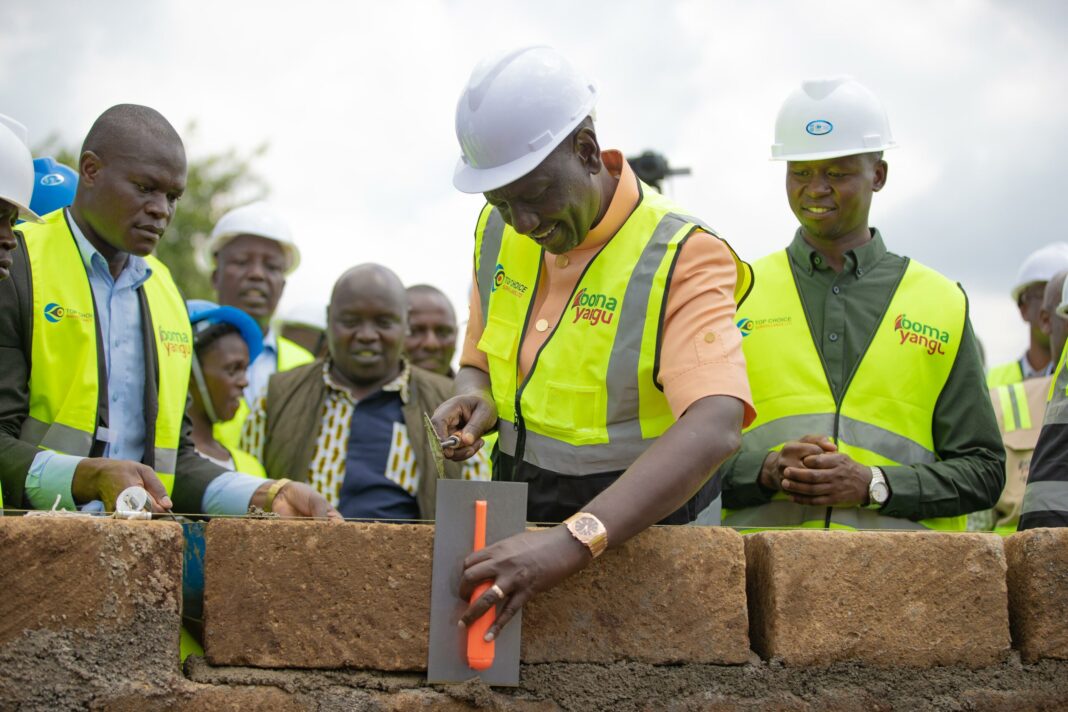
Ruto insists that the divestiture strategy is achievable and critical for funding development projects, including infrastructure, housing, and public services, which he believes will accelerate Kenya’s economic transformation.
Critics Question the Feasibility of the Singapore Dream
Despite Ruto’s confidence, Kenya’s economic watchdogs remain skeptical. Controller of Budget Margaret Nyakang’o described the Singapore Dream as ambitious, warning that Kenya faces significant structural challenges.
“High poverty levels, low wages, and household vulnerability must be addressed before Kenya can hope to replicate Singapore’s economic model,” Nyakang’o stated. She also expressed concern about Kenya’s ongoing reliance on external financing, particularly from the IMF, suggesting that such dependence could constrain the government’s ability to implement reforms based on local priorities.
Critics argue that Ruto’s Ksh5 trillion target is overly optimistic. Raising such a massive sum in one year, even through divestiture, will require strong market appetite and careful execution. Missteps or lackluster investor interest could stall the plan and put pressure on the national budget.
Government Defends Transparency and Economic Rationale
Ruto has vigorously defended the strategy against allegations of opaque dealings or political maneuvering. He emphasized that the process follows clear legal procedures and is subject to regulatory oversight. The President further framed the initiative as a non-partisan effort aimed at national development rather than a political tool.
The government’s approach aligns with the broader vision of economic transformation, aiming to increase public participation in strategic sectors and reduce dependency on borrowing. By opening state-owned assets to investors, Ruto hopes to attract capital, boost productivity, and create jobs—key pillars of his Singapore Dream.
The rollout of the KPC IPO sets a precedent for future divestitures, signaling the government’s intent to explore public participation as a core funding mechanism. Officials believe that if successful, the Ksh5 trillion target could fund infrastructure projects, housing initiatives, and other developmental programs without additional debt accumulation.
However, the skeptics remain unconvinced. Many economists warn that achieving a Singapore-style economy requires more than capital injection; it demands robust governance, efficient institutions, and long-term social development. Without addressing these fundamentals, critics argue, the dream could remain largely aspirational.