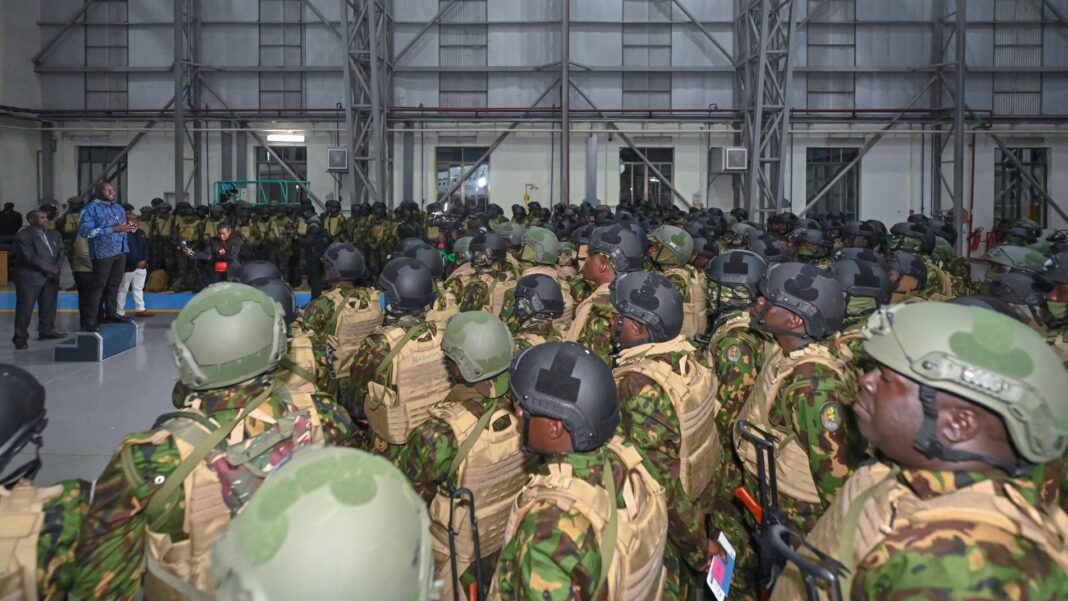
Kenya’s National Assembly has approved a massive Ksh 45 billion security budget increase, handing the National Intelligence Service Ksh 10 billion and the Ministry of Defence Ksh 24.4 billion in additional funding.
The move comes as conflicts on Kenya’s northern borders intensify, Sudan accuses Ethiopia of complicity in drone strikes, and security agencies continue disrupting terror plots on home soil. Parliament authorized the funds under constitutional provisions for urgent, unforeseen needs—and the threats driving that decision are anything but hypothetical.
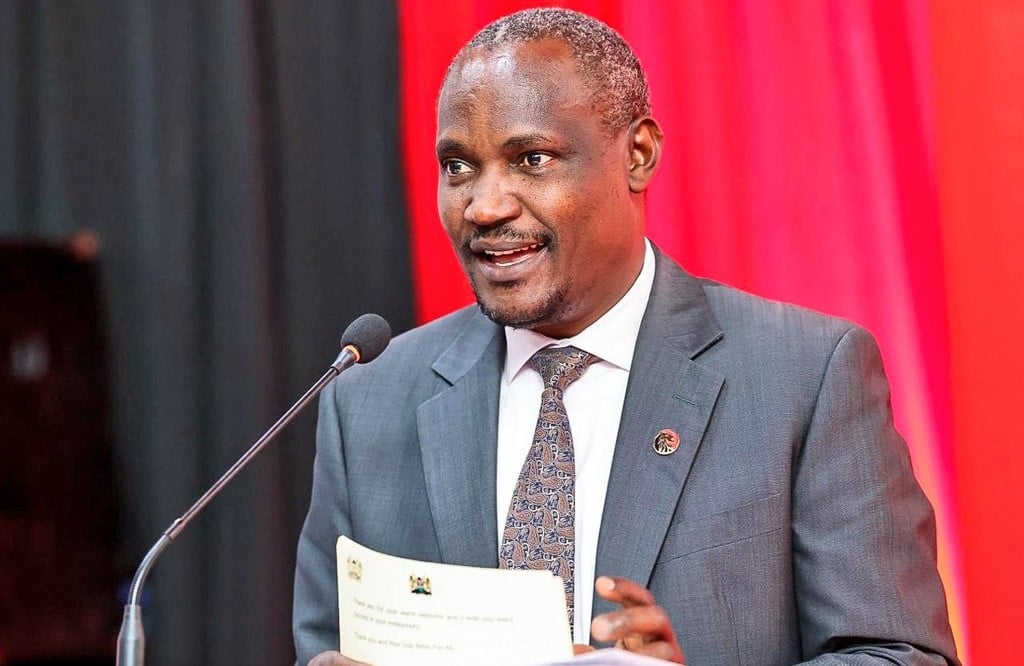
Kenya’s Parliament Responds to Rising Border Security Threats With Ksh 45B Security Surge
On Thursday, the National Assembly approved Supplementary Estimates I for the 2025/26 fiscal year after adopting a report tabled by its Budget and Appropriations Committee. The approval handed three agencies—the Ministry of Defence, the National Intelligence Service, and the National Police Service—significant budget top-ups, all justified against a deteriorating regional security environment that Kenya can no longer afford to treat as a distant problem.
The revised supplementary budget pushes Kenya’s total spending to Ksh 4.66 trillion. That figure sits 8.6 percent above what Parliament passed in June 2024 and Ksh 363.9 billion above what Treasury originally proposed when it tabled the draft supplementary budget in March. The security allocations alone account for the single largest category of new spending.
Parliament authorized the funds under Article 223 of the Constitution, which permits the executive to spend money not previously approved by Parliament when unforeseen and urgent needs arise. Given the events of the past several months, the case for urgency writes itself.
The Ministry of Defence and NIS Get the Biggest Slice
The Ministry of Defence received the largest single allocation—an additional Ksh 24.4 billion on top of its existing Ksh 202.3 billion budget. Parliament described the funds as primarily covering salary adjustments and strengthening defence capabilities. The vague framing of “defence capabilities” leaves room for significant procurement and operational expansion, both of which become more pressing as regional tensions climb.
The National Intelligence Service received Ksh 10 billion specifically to enhance intelligence gathering. Documents tabled in Parliament framed the allocation around the rapidly deteriorating East African security environment — an acknowledgment that Kenya’s intelligence infrastructure needs to scale up as threats multiply and shift in sophistication.
The National Police Service received Ksh 7.5 billion to cover operational needs. Within that figure, Ksh 2 billion addresses a direct welfare gap—shortfalls in group life and medical insurance for officers and their dependants. A further Ksh 3 billion went toward internal security personnel emoluments and operations, covering the day-to-day cost of keeping Kenya’s security forces functional under sustained pressure.
The Sudan-Ethiopia Crisis Is Pushing Kenya to Act
The most consequential driver of Kenya’s security spending surge is unfolding just beyond its northern borders. Last month, Sudan’s Foreign Ministry publicly accused Ethiopia of complicity in drone strikes that targeted Sudanese cities throughout February and into early March — the first time Khartoum had directly implicated Addis Ababa in a civil war the United Nations describes as one of the world’s deadliest active conflicts.
Sudan’s government stated it had been monitoring drone entries from Ethiopian territory targeting locations inside Sudan throughout February and the beginning of March and warned it would not hesitate to retaliate if the attacks continued. Ethiopia denied all involvement, but the accusation alone marks a dangerous escalation in a conflict that has already displaced millions and destabilized the broader Horn of Africa.
For Kenya, the stakes are concrete. An escalation that pulls Ethiopia directly into the Sudan conflict would place Kenya under immediate strategic and humanitarian pressure. Refugee flows, cross-border militant movement, and disrupted trade corridors would all follow. The Ksh 10 billion handed to NIS reflects Kenya’s recognition that it needs sharper, faster intelligence to track these dynamics before they arrive at its doorstep.
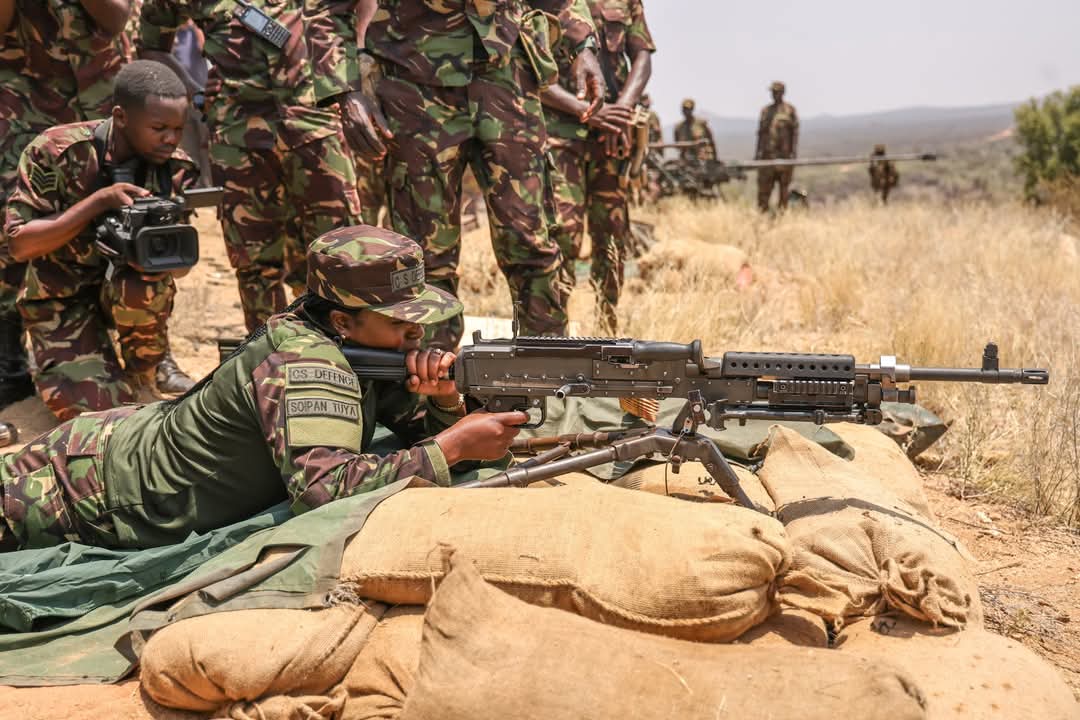
Terror Plots at Home Prove the Threat Is Already Here
Kenya’s security agencies are not just watching events unfold across its borders—they are actively fighting threats on home soil, and the tempo of those threats has increased sharply in recent months.
In February, the NIS and the elite Special Operations Group disrupted a large-scale attack planned for the holy month of Ramadan. A raid on a Nairobi hideout produced five AK-47 rifles, 600 rounds of ammunition, six hand grenades, and a Makarov pistol. Had that operation failed, the consequences during one of Kenya’s most public religious periods would have been catastrophic.
In the same month, SOG operatives intercepted Al-Shabaab militants attempting to plant explosives on the Alungu-Elwak road. Two militants died in the resulting firefight. Security forces recovered a fully assembled improvised explosive device and an RPG warhead—weapons that, deployed successfully, could have killed civilians and officers alike.
These operations demonstrate that Kenya’s security agencies are performing under pressure. But they also demonstrate the scale of the threat demanding that performance. The Ksh 45 billion Parliament approved is not precautionary spending—it is the direct financial response to a security environment that has already tested Kenya repeatedly and shows no sign of easing.
Sources: National Assembly Budget and Appropriations Committee Report; Parliamentary Supplementary Estimates I 2025/26; Sudan Foreign Ministry Statement, March 2026.