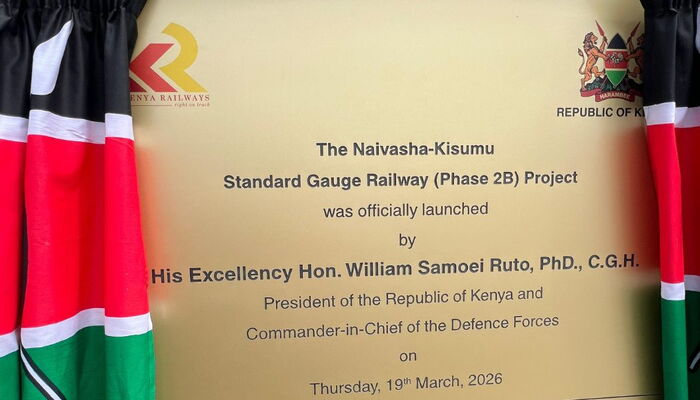
Kenya has reignited its infrastructure ambitions with the official launch of the Naivasha-Kisumu-Malaba Standard Gauge Railway (SGR) Phase 2B, a strategic project poised to transform transport, logistics, and trade across the western corridor.
President William Ruto led the launch, signaling renewed momentum after nearly six years of stalled progress. Spanning over 370 kilometres, the line connects Naivasha to Malaba via Kisumu, passing through nine counties and linking Kenya’s heartland to cross-border trade hubs.
The ambitious project is expected to be completed by June 2027, promising faster travel, increased cargo capacity, and integration with lake and port transport.
Naivasha-Kisumu SGR Phase 2B Route and Key Stations
The Naivasha-Kisumu SGR begins at Emurtoto in Narok County, winding through the Great Rift Valley and concluding in Kisumu. This 264-kilometre section includes six intermediate stations in Narok, Mulot, Bomet, Sotik, Sondu, and Ahero. It also incorporates 17 crossing stations spanning Narok, Bomet, Nyamira, Kericho, and Kisumu counties.
A critical 8.69-kilometre branch line will connect the railway directly to the new Kisumu Port, linking lake transport with the national rail network and creating an integrated logistics hub. The Kisumu-Malaba stretch extends another 107 kilometres, featuring intermediate stations at Yala and Mumias.
Six crossing stations at Kisian West, Ramala, Yala, Musanda, Manyulia, and Amukura traverse Kisumu, Siaya, Vihiga, Kakamega, and Busia counties. Together, these segments establish a continuous modern rail corridor from central Kenya to the western border.
Engineering Feats Behind the Naivasha-Kisumu SGR
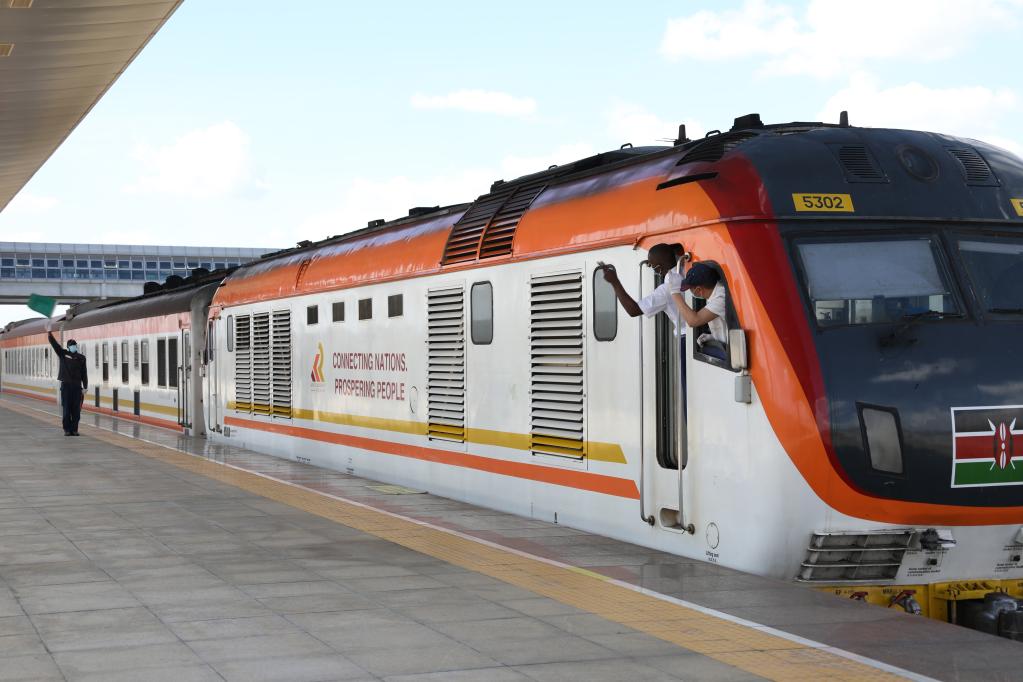
The SGR’s construction is no small feat. Engineers will build 13 tunnels, 23 bridges, and 376 culverts to navigate Kenya’s varied terrain. The line’s design accommodates both passenger and freight transport. Passenger trains will carry up to 1,096 passengers at speeds of 120 kilometres per hour, while freight trains will haul 4,000 tonnes at 80 kilometres per hour.
This engineering effort is expected to ease pressure on Kenya’s congested roads while improving freight efficiency. With the capacity to handle up to 22 million tonnes of cargo annually, the railway will streamline the movement of goods from remote lands to Mombasa’s port and vice versa, enhancing regional trade and competitiveness.
Economic and Trade Implications
Kenya Railways Chairperson Abdi Duale emphasized the line’s strategic importance, noting that it completes a critical segment of the Northern Corridor. By extending modern rail transport to Kisumu and Malaba, the project enhances trade with neighbouring countries and boosts domestic supply chains.
The integration with Kisumu Port is expected to invigorate lake transport, reducing transit times for goods and linking inland producers to regional and international markets. For the nine counties along the route, the SGR promises job creation, tourism development, and new business opportunities.
Investment and Future Outlook
The government has committed over Ksh500 billion to the project, reviving plans previously stalled by funding gaps, especially after reduced support from China’s Belt and Road Initiative. President Ruto’s launch, marked symbolically by tightening a commemorative nut, underscores a political and economic push to finalize a project that has lingered in limbo for almost six years.
Completion is targeted for June 2027, and authorities are confident that the SGR will transform the western corridor. The project reflects Kenya’s broader strategy to modernize its infrastructure, reduce road congestion, and establish a reliable, high-capacity rail network capable of supporting both passenger mobility and freight efficiency.
Naivasha-Kisumu SGR and Regional Integration
The Naivasha-Kisumu SGR is not just a national asset—it positions Kenya as a logistics hub for East Africa. By connecting the Rift Valley to Lake Victoria and the border at Malaba, the railway enhances cross-border trade, reduces dependence on road transport, and integrates the country into continental trade corridors.
For businesses, this promises lower transport costs and faster delivery times. For residents, it provides safer, faster, and more reliable travel options. And for Kenya’s economy, it marks a milestone in infrastructure modernization, signaling the government’s commitment to long-term growth and regional integration.
The Naivasha-Kisumu SGR does more than transport passengers—it drives trade, links counties, and proves Kenya’s commitment to completing its infrastructure vision. With construction progressing and completion approaching, the western corridor is transforming, and its benefits will ripple across the country for decades.