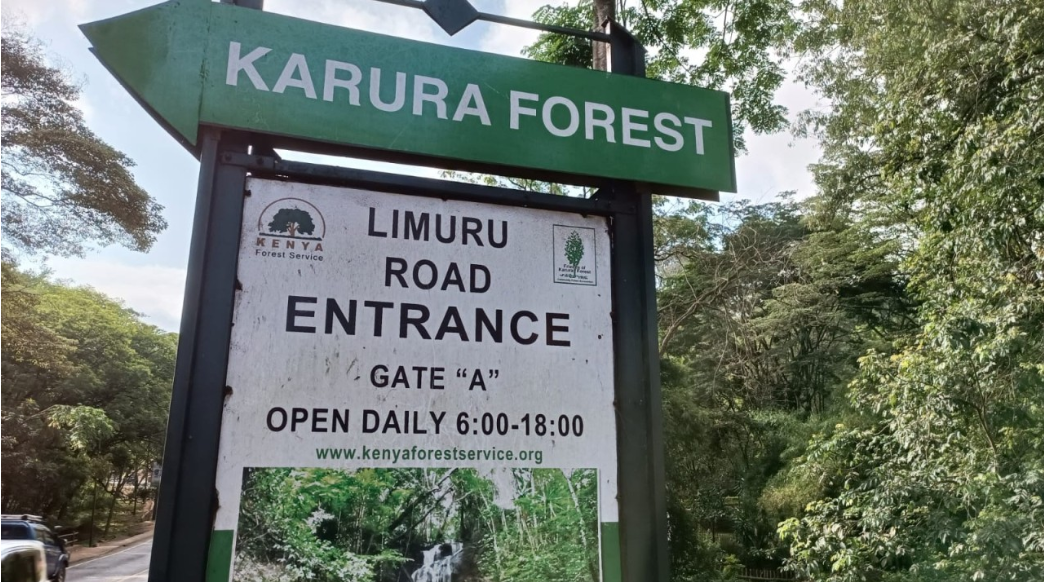
The Kenya Forest Service (KFS) has confirmed the construction of NYS Barracks at its Karura Forest headquarters, addressing public concerns over ongoing development activities spotted on the site.
In a statement released on February 27, KFS said the barracks are intended to house National Youth Service (NYS) personnel, who will partner with the agency to raise tree seedlings across the country. The move aligns with President William Ruto’s ambitious goal of planting 15 billion trees by 2032, aimed at achieving 30 per cent national tree cover.
Fears of forest encroachment and land misuse fueled the public outcry over the construction. KFS emphasized that the development does not affect protected forest areas, asserting that no indigenous trees have been felled and that only old tree stumps were cleared.
The project, according to the agency, is a low-impact initiative designed to boost tree-growing efforts without compromising conservation efforts.
KFS Details NYS Barracks Construction and Nationwide Expansion
KFS explained that the NYS Barracks at Karura are part of a larger plan to expand the presence of National Youth Service personnel in all forest stations across Kenya. The barracks will provide housing for NYS teams who will work alongside KFS staff to address the long-standing shortage of quality tree seedlings.
“Setting up of barracks for NYS is happening not only in Karura forest, but in other forest stations around the country, including Ngong Hills forest, where the barracks are nearing completion,” KFS stated. The agency noted that previous tree-growing initiatives suffered due to limited seedling availability, a gap that the NYS partnership seeks to fill.
The structures themselves are prefabricated metal containers installed within existing administrative zones. KFS worked with the Ministry of Housing to ensure these builds are low-impact, minimizing disruption to the environment and the forest landscape.
By placing NYS Barracks strategically across the country, KFS aims to create a permanent and reliable workforce that can manage tree nurseries, plant seedlings, and monitor growth. The program is expected to standardize tree production, ensuring that indigenous and exotic species, along with fruit trees, are widely available for reforestation efforts.
Addressing Allegations of Forest Encroachment
Civil society groups raised alarms, alleging that Karura Forest land had been excised or handed over to private developers.
KFS categorically rejected these allegations, stressing that no land conversion has occurred. “There has been no excision of Karura forest land, nor allocation to private developers or encroachment into protected indigenous forest or core conservation areas, as alleged,” KFS stated.
The agency confirmed that all construction activities strictly adhere to the Forest Conservation and Management Act of 2016 and Article 69 of the Constitution. KFS emphasized that Karura remains fully protected public forest land and that the NYS Barracks project does not represent any form of land-use change.
Drone imagery from September 2025 supports KFS’s claim that the site remains forested, with construction limited to areas previously cleared of old stumps. The agency insists that the initiative enhances forest management, rather than compromising it.
Enhancing Tree Nurseries to Meet National Targets
Beyond constructing NYS Barracks, KFS is investing in expanding existing tree nurseries at all forest stations nationwide. The initiative aims to ensure a steady supply of quality seedlings to achieve the 15 billion trees target.
“Raising and provision of adequate amounts of tree seedlings is a critical first step which has been lacking in the past, leading to severe shortages of good quality tree seedlings,” KFS noted. The new nurseries will feature irrigation systems, secure storage, and dedicated spaces for both indigenous and exotic trees, as well as fruit trees.
This approach boosts the number of seedlings ready for planting and improves their survival rates, directly advancing Kenya’s national reforestation goals. By embedding NYS personnel into KFS operations, the agency creates a sustainable, scalable tree-growing model that it can replicate nationwide.
What the Project Means
The NYS Barracks project represents a strategic move by KFS to bolster Kenya’s tree-planting programs while maintaining strict environmental safeguards. As public scrutiny intensifies, KFS’s transparency and collaboration with the Ministry of Housing reflect a commitment to protecting forest land while meeting national reforestation goals.
With NYS teams now embedded in forest stations, KFS expects NYS personnel to eliminate seedling shortages and drive progress toward the 15 billion trees target by 2032. The agency urges civil society and the public to support the project as a vital investment in Kenya’s ecological future, protecting forests, preserving indigenous species, and keeping the country on course to achieve its ambitious tree-cover goals.