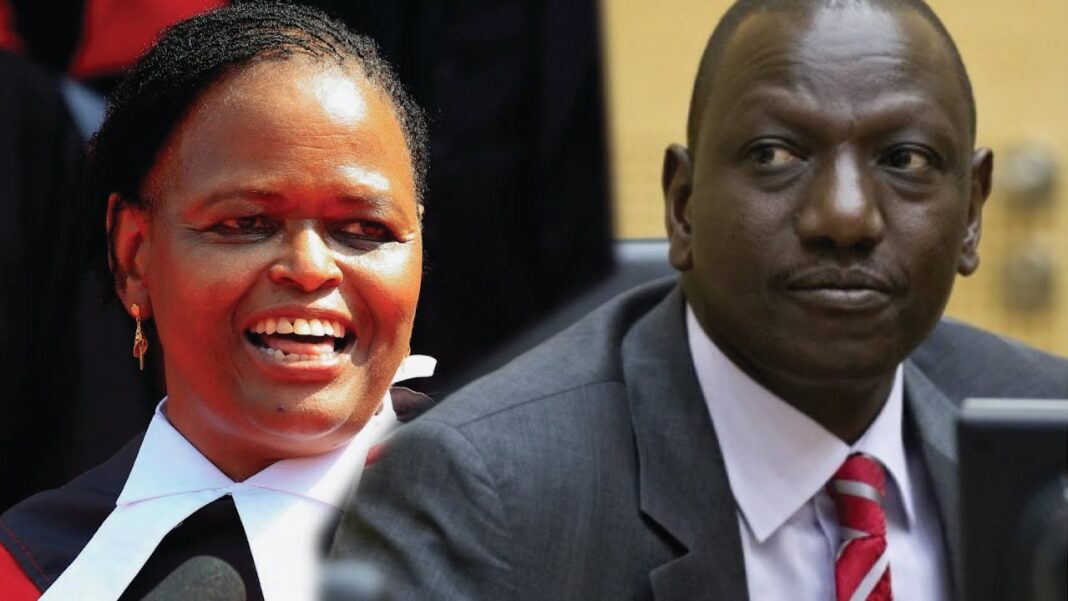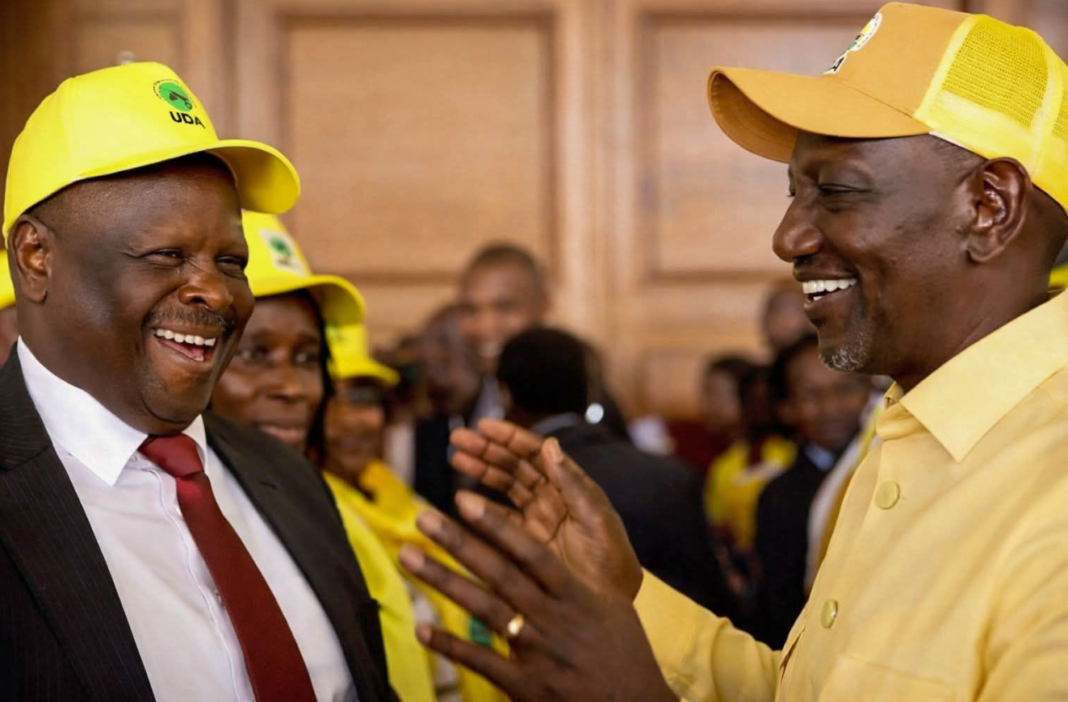
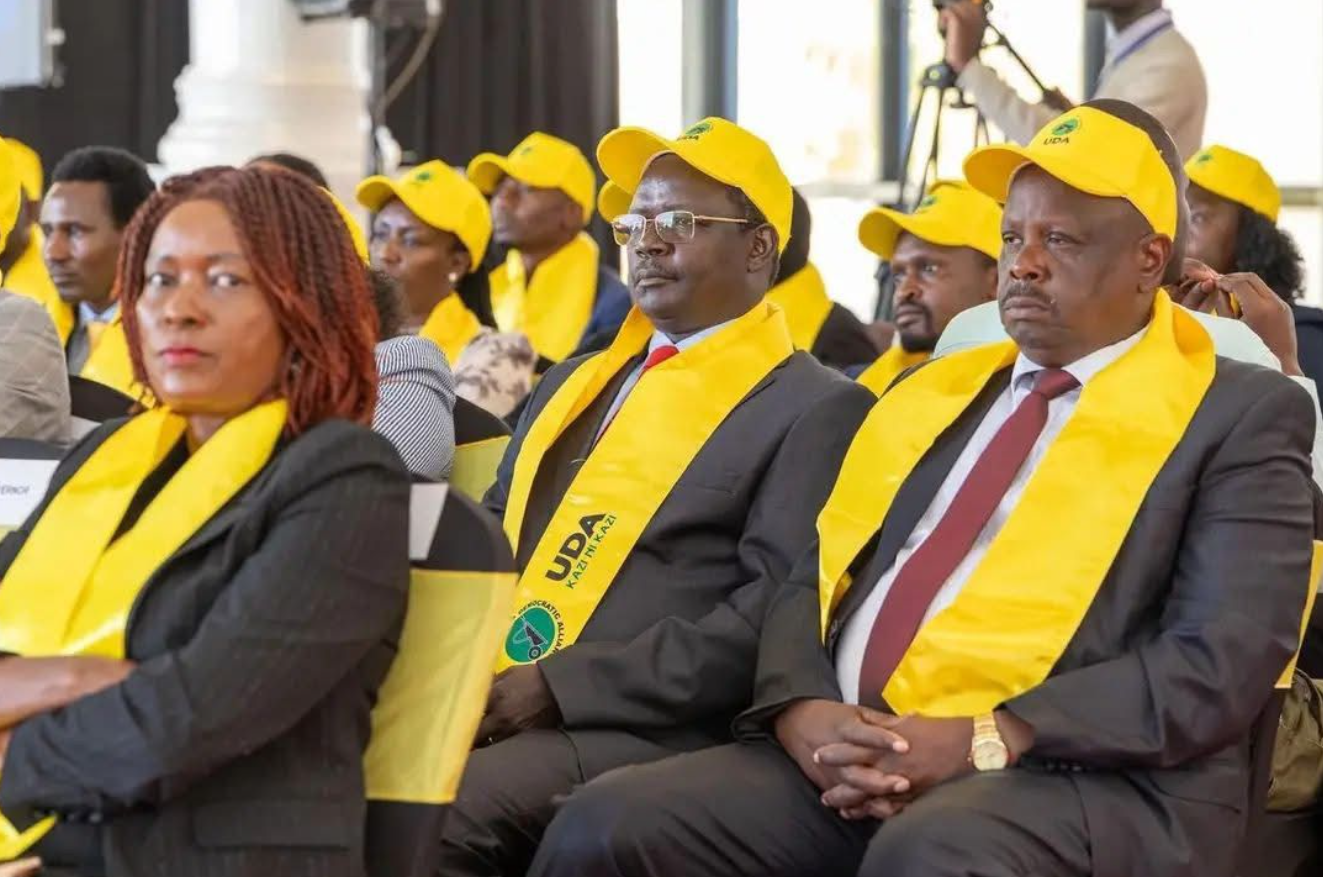
Judicial Service Commission Vice Chair Isaac Ruto is facing intense backlash after being seen attending a United Democratic Alliance (UDA) event at State House while donning party merchandise. Critics argue his actions blur the line between politics and the judiciary, sparking calls for his resignation.
Former JSC Vice Chair Macharia Njeru says Ruto’s conduct threatens judicial independence and violates the Constitution, the Leadership and Integrity Act, and the Judicial Service Code of Conduct. Questions over impartiality now hang over the commission.
JSC Vice Chair Isaac Ruto Faces Resignation Demands Over Political Allegiance
The controversy erupted after Isaac Ruto appeared at the UDA National Governing Council at State House on January 26, 2026, in full party colors alongside President William Ruto. Political observers and former JSC officials immediately condemned the act, claiming it was a blatant breach of constitutional norms.
In a letter dated January 27 to Chief Justice Martha Koome, Macharia Njeru called for Isaac Ruto to resign immediately. Njeru emphasized that Ruto’s visible association with a political party while serving on the JSC violates established codes meant to safeguard judicial impartiality.
“It is unprecedented for a JSC Commissioner to openly associate and work with a political party or actively engage in politics while still in office,” Njeru said. “This conduct flies in the face of the express provisions of the Constitution, the Leadership and Integrity Act, and the code of conduct. It is a big threat to the independence of the judiciary.”
Allegations of Breaching Judicial Protocol
Njeru’s letter highlighted that involvement in active politics is one of the disqualifying factors for judicial appointments. During his tenure, such political engagement automatically barred candidates from the shortlist for judicial positions to prevent partisan influence.
“Having a Commissioner, who is also the Vice Chair, doing exactly what is frowned upon is unacceptable,” Njeru noted. He demanded that Ruto exclude himself from all ongoing interviews for judge appointments and resign entirely from the commission to preserve institutional integrity.
The Consumer Federation of Kenya (COFEK) also filed a complaint, emphasizing that attending partisan political events violates the constitutional requirement for political neutrality and impartiality. The federation argues that the public trust in the JSC is now at risk due to Ruto’s actions.
Political Background Raises Concerns
Isaac Ruto is a long-serving politician, having previously served as Bomet Governor. He joined the JSC in 2023 after a political career that included leading the Chama Cha Mashinani Party (CCM), which later merged with UDA. Critics say his political history further complicates his role as a supposed impartial arbiter of judicial appointments.
Under the Judicial Service Act of 2011, JSC commissioners are explicitly restricted from engaging in partisan politics. The law mandates that appointees relinquish elective offices to safeguard public trust and ensure judicial independence. By appearing at State House in UDA colors, Ruto’s critics argue he disregarded these legal safeguards.
Observers warn that the controversy could have long-term consequences for the judiciary, potentially undermining public confidence in the selection and conduct of judges. Analysts note that even perceived partisanship by a top JSC official can compromise the credibility of judicial decisions and the commission’s authority.
Calls for immediate action against JSC’s Isaac Ruto are mounting, with civil society, former commissioners, and political watchdogs insisting that the commission uphold its constitutional mandate without interference. The coming days will test the JSC’s resolve in balancing political realities with the need to protect judicial integrity.
Public interest in this matter remains high, and the decisions made by the commission will be closely scrutinized for indications of bias, partiality, or tolerance for political interference. For now, Isaac Ruto’s appearance at State House has set off one of the most serious political-judicial controversies in recent Kenyan history.