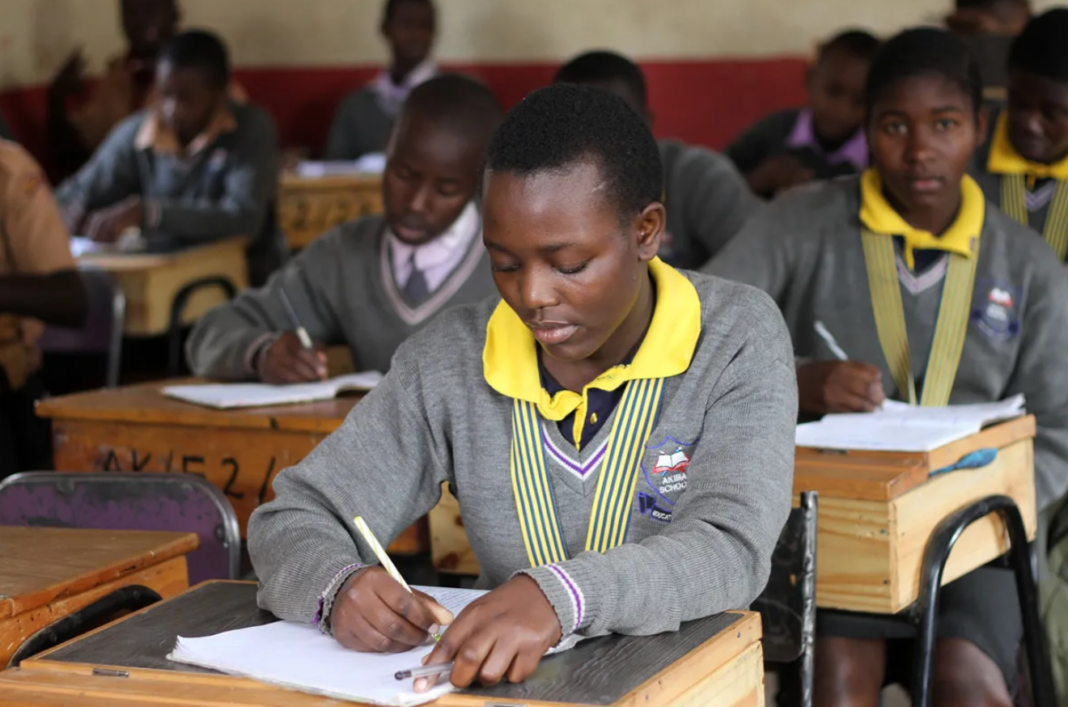
Kenya’s education landscape has entered a new phase after the Ministry of Education released the 2025 Kenya Junior Secondary Education Assessment (KJSEA) results. The announcement marks a major shift in how learners are evaluated and placed under the Competency-Based Education (CBE) system.
More than 1.13 million Grade Nine candidates now have clarity on their transition to senior secondary school in January 2026. The new KNEC point system replaces traditional rankings with a broader performance-band model that measures learners’ abilities more holistically, reducing pressure and promoting fairer assessment across the country.
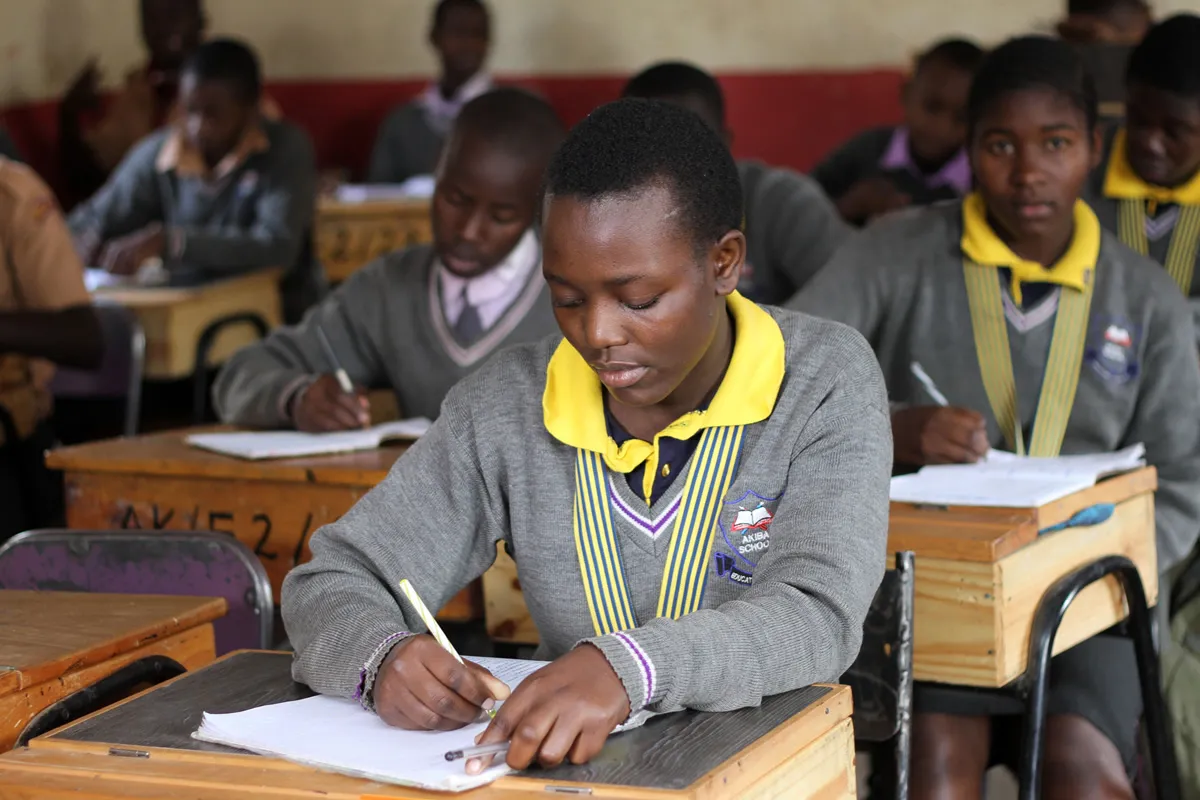
Understanding How to Check KJSEA Results and KNEC’s New Scoring System
The 2025 KJSEA results reflect the most detailed assessment yet under the CBE framework. Education CS Julius Ogamba confirmed that seven subjects posted higher numbers of learners meeting expectations, including Integrated Science, Social Studies, Kiswahili, Hindu Religious Education, Creative Arts and Sports, CRE, and Agriculture.
A total of 1,130,459 learners sat the assessment, with 578,630 male and 551,829 female candidates—a near-equal national gender balance. Ogamba noted that 59.09 percent of candidates demonstrated potential for the STEM pathway, 46.52 percent for Social Sciences, and 48.73 percent for Arts and Sports, showing a broad distribution of academic strengths.
KNEC has introduced a modernised scoring model that moves away from traditional percentage-based marks. The system blends KPSEA (20 percent), Grade Seven and Eight school-based assessments (20 percent), and the KJSEA summative test (60 percent).
Each of the nine subjects carries a maximum of eight points, totaling 72 points. Instead of releasing percentage marks, KNEC places each learner into one of four broad bands: Exceeding Expectations, Meeting Expectations, Approaching Expectations, and Below Expectations.
The top category recognises scores equivalent to 75–100 percent, earning seven to eight points. Meeting Expectations covers 41–74 percent. Approaching Expectations ranges between 21–40 per cent, while Below Expectations captures anything between 0 and 20 percent.
Every band is subdivided into eight levels for refined placement, ensuring each candidate receives an accurate reflection of their performance without the pressure tied to national ranking.
This approach aims to shift attention from unhealthy academic rivalry to a more supportive environment. It highlights a learner’s strengths over time, recognising both continuous assessment and the final evaluation at the end of primary-level education.
New KJSEA Performance Bands Explained
The 2025 assessment marks the first full transition into performance-band reporting under CBE. The four bands provide a complete competency picture, focusing on readiness for senior secondary school rather than strict academics alone.
The Exceeding Expectations band rewards strong conceptual mastery, while Meeting Expectations marks solid performance and readiness for advanced studies.
Approaching Expectations indicates developing competency, and Below Expectations signals learners needing targeted support.
This model gives teachers and parents a clearer understanding of strengths and growth areas, promoting long-term learning rather than exam-day pressure.
Breakdown of the New KNEC Points Structure
Under the new structure, every subject converts into eight total points. Learners tackling nine subjects can attain up to 72 cumulative points. This scoring method allows placement officers to map each learner to an ideal senior school pathway—STEM, Social Sciences, or Arts and Sports.
The continuous assessment component brings fairness into the system by capturing how a child progresses over two years, not just during a one-week exam period. It also discourages rote learning and motivates learners to build consistent competency across subjects.
Step-by-Step Guide on How to Check KJSEA Results
The Ministry of Education and KNEC have opened multiple platforms to make result access smooth for parents, teachers, and learners. The official online portal offers instant access, while the SMS platform provides an alternative for areas with limited connectivity.
For individual candidate results
-
Open kjsea.knec.ac.ke
-
Enter the Assessment Number and at least one registered name
-
Accept the privacy and access notice
-
Search for the results
For institutional results
-
The head teacher logs into cba.knec.ac.ke
-
Selects the Results menu
-
Downloads the institution’s complete results
The released outcomes also show the preferred senior school and pathway each learner is likely to join. The placement process will conclude next week, and parents will track everything digitally.