
A slight delay, caused by a motorbike puncture, spared Narok County government employee George Bett from dying in a helicopter crash that claimed the life of Emurua Dikirr MP Johana Ng’eno and five others on February 28, 2026.
Bett had planned to travel with the lawmaker to Trans Nzoia County but arrived at the pick-up point minutes late. That delay, combined with a chain of decisions and circumstances, kept him off the ill-fated aircraft. His story reveals how fate and minor setbacks intersected to save a life in the midst of tragedy.
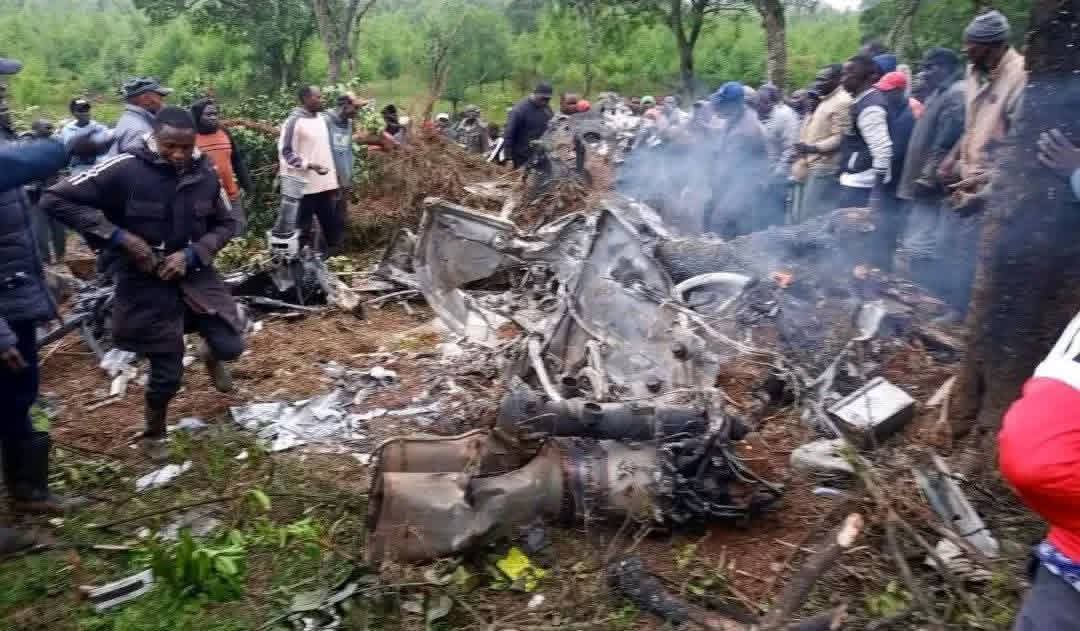
How a Motorbike Puncture Prevented Tragedy for MP Ng’eno’s Friend in Deadly Helicopter Crash
George Bett recounted to NTV how he had accompanied MP Ng’eno to several functions the day before the crash. The pair had planned to meet again for an empowerment event involving a local artist. Initially, Ng’eno intended to travel to Nairobi on Saturday morning and return by helicopter for the trip to Trans Nzoia. However, he changed his plan, ordering the helicopter to his home in Mokindo Village, Emurua Dikirr.
Bett tried repeatedly to reach the MP on Saturday morning to confirm the pick-up details, but his calls went unanswered for hours. Finally, at 12:04 p.m., Ng’eno connected with him and told him he was already late. The only option was to meet at Mara Rianta, where the MP was checking on the search for drowning victims in the Mara River.
Setting out on a boda boda with three passengers, Bett’s journey was immediately complicated. Just three kilometers from the pick-up point, the motorbike developed a slow puncture. Bett and the rider were forced to leave the other two passengers behind and continue alone. By the time Bett arrived at Mara Rianta, the helicopter had already lifted off. That simple mechanical failure, unnoticed at first, would ultimately save his life.
The Sequence of Tragic Decisions Leading to Ng’eno’s Deadly Helicopter Crash
The helicopter carrying MP Ng’eno, registration number 5Y-DSB, departed Chepkiep in Mosop Sub-county, Nandi County, later that evening. Onboard were six people: MP Ng’eno, Kenya Forest Service ranger Amos Kipngetich Rotich, photographer Nick Kosgei, teacher Robert Kipkoech Keter, Narok County government Protocol Officer Wycliffe Kiprotich Rono, and Captain George Were.
A preliminary report from the National Police Service revealed that the helicopter flew at a very low altitude before striking trees and crashing. The aircraft burst into flames on impact, leaving no survivors. Authorities recovered critical flight instruments, including the black box, which investigators from the International Civil Aviation Organisation (ICAO) will analyze to determine whether mechanical failure, pilot error, or adverse weather conditions caused the crash.
Bett, meanwhile, remained at the Mara Rianta site, joining the search for the drowning victims alongside community members, the Kenya Red Cross, police officers, and other county employees. News of the tragedy reached him hours later when he called the photographer traveling with the MP. A stranger answered and confirmed that the victims had perished in a helicopter incident.
Fate, Timing, and a Motorbike Puncture
The story of George Bett underscores how small, seemingly insignificant events can have life-saving consequences. A minor delay, a punctured tire, and a split-second decision kept him off a helicopter that would not return. Bett’s account highlights the human dimension behind Ng’eno’s Deadly Helicopter Crash—a tragedy that claimed lives while leaving some to grapple with the randomness of survival.
Investigators continue to probe the wreckage, which was extensively damaged by fire, to reconstruct the flight’s final moments. ICAO experts will release a preliminary report within 30 days. Meanwhile, communities in Emurua Dikirr and Nandi County mourn the loss of a lawmaker, public servants, and professionals whose lives ended abruptly. Bett’s survival is a rare glimmer of hope amid a shocking national tragedy.
Even as officials work to uncover the causes of the crash, Bett’s story illustrates the fragile balance between fate and circumstance. A punctured boda boda tire, a few minutes’ delay, and the sequence of small choices demonstrate how human lives can hinge on the smallest twists of fate.
Ng’eno’s deadly helicopter crash remains a cautionary tale about the unpredictability of travel and the unforeseen factors that can separate life from death. As investigations proceed, George Bett’s experience will remain a stark reminder of how chance can rewrite destiny, leaving one alive while claiming six others in an instant.