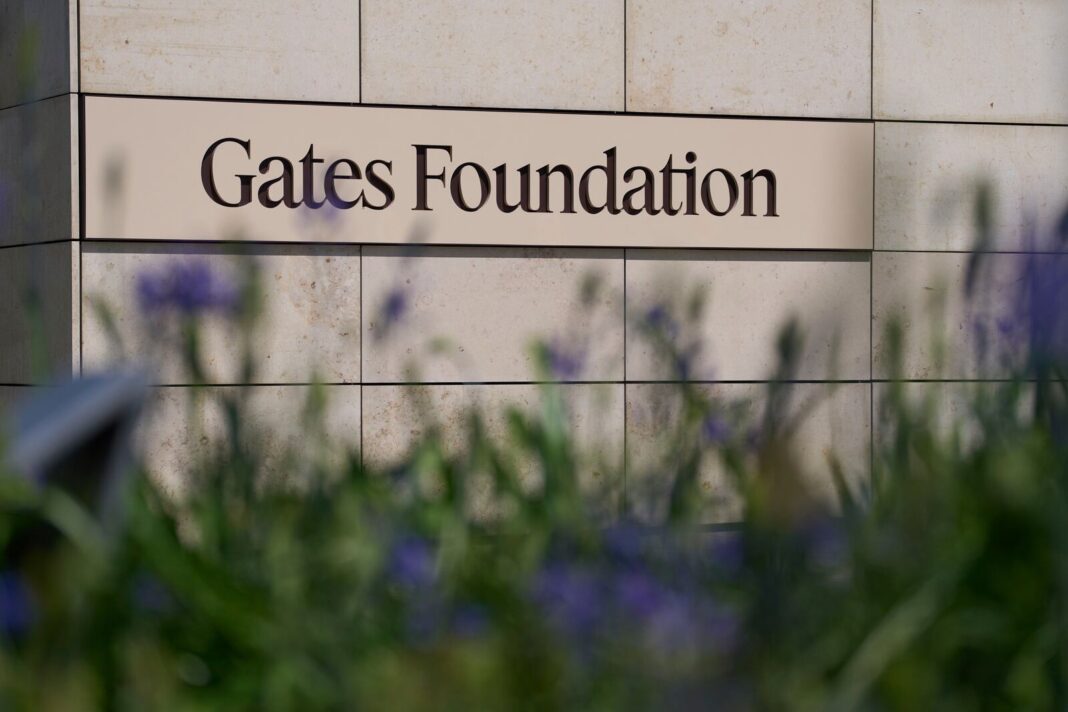
Kenyans have been gripped by a viral claim that billionaire Bill Gates is behind the sudden surge of mosquitoes in Nairobi, sparking outrage online. The Gates Foundation has now categorically denied the allegations, calling them false and misleading.
Social media posts, amplified by politicians and public figures, accused the foundation of releasing genetically modified mosquitoes to harm vulnerable populations.
The organization insists it supports Kenyan-led public health initiatives and does not engage in the release or management of mosquitoes in Kenya, emphasizing full compliance with national regulations.

Gates Foundation Hits Back at Modified Mosquito Claims
The Gates Foundation issued a strong denial after social media and prominent figures, including Senior Counsel Paul Muite, accused it of releasing “modified mosquitoes” in Nairobi. Muite claimed the insects were intentionally harming children and the elderly, alleging a sinister plot linked to malaria prevention projects.
In response, the foundation stressed that these claims are “false.” In a statement on X, the organization clarified, “The Gates Foundation does not release mosquitoes, operate laboratories that do so, or run vector-control activities in Nairobi or anywhere else.”
The foundation highlighted that it strictly supports Kenyan-led priorities in public health. It emphasized its role as a funding and advisory partner, working alongside local governments, researchers, and institutions while fully adhering to national laws and regulatory oversight.
Local Authorities Lead Vector Control Efforts
Contrary to the online claims, the Kenyan government manages all mosquito control initiatives. The National Malaria Control Programme (NMCP), under the Ministry of Health, oversees measures such as the distribution of long-lasting insecticidal nets (LLINs) and indoor residual spraying (IRS).
While the Gates Foundation funds global research into innovative mosquito control tools, including the World Mosquito Program and Target Malaria, the foundation clarified that these programs’ operational activities in Kenya are handled exclusively by local experts. The foundation provides financial and technical support but does not physically release mosquitoes or manage vector-control laboratories.
By making this distinction, the foundation sought to reassure Kenyans that no unauthorized biological interventions are taking place and that all malaria control efforts comply with Kenyan law.
Social Media Panic and Public Reaction
Muite’s posts triggered widespread concern across social media platforms. Many users shared personal accounts of increased mosquito bites in their neighborhoods, fueling suspicions that genetically modified mosquitoes were being mass-produced and released deliberately.
Experts, however, say spikes in mosquito populations are seasonal and often linked to environmental factors such as rainfall and standing water, not deliberate human intervention. Public health officials stress that misinformation can undermine genuine malaria prevention efforts and create unnecessary fear among the population.
The Gates Foundation urged Kenyans to rely on verified public health sources for information. The organization reinforced that its work focuses on supporting local initiatives, capacity-building, and funding scientific research, not conducting field releases of insects.
Malaria Remains a Public Health Challenge
The debate comes as malaria continues to threaten millions across Kenya. Despite significant efforts in vector control, the disease persists, particularly affecting children under five and the elderly.
Local authorities, in partnership with national and international organizations, remain the frontline defence against malaria. The Gates Foundation’s contribution is primarily through grants and research funding aimed at developing innovative solutions, such as gene-drive mosquitoes and other vector control tools.
These projects undergo rigorous scientific review and must comply with strict regulatory oversight before any trials or releases can occur. By clarifying its role, the foundation aims to separate facts from fiction and prevent misinformation from affecting ongoing malaria prevention programs.