EABL Accused of Shielding Top Officials in Explosive Kisumu Brewery Dispute as Court Halts Arbitration Award
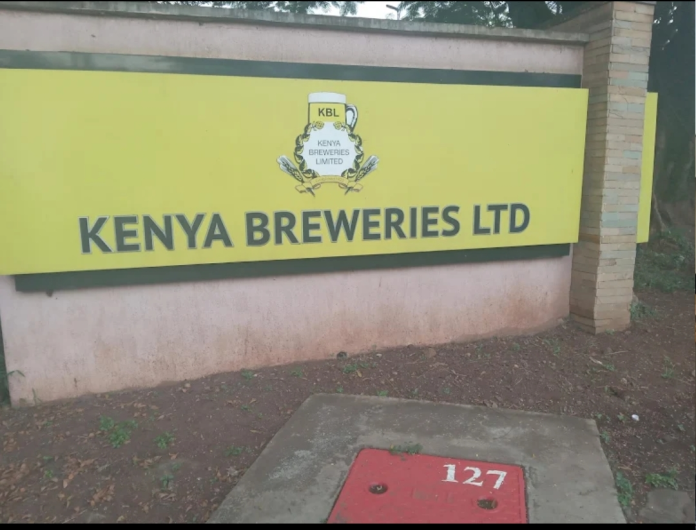
East African Breweries Limited and its subsidiary Kenya Breweries Limited are at the centre of a widening legal storm after a construction firm accused the brewer and its majority shareholder, Diageo PLC, of using the courts to block the release of a multi-billion shilling arbitration award tied to the controversial construction of the Sh15 billion Kisumu brewery.
Jilk Construction Ltd claims that KBL moved to the High Court at the eleventh hour to quash arbitration proceedings just as an award of Sh2.4 billion was about to be delivered. The contractor further alleges that the petition is part of a broader scheme to shield senior project officials from liability, including over claims of sexual harassment raised by female workers during the execution of the project.
The dispute stems from “Project Nafasi”, a flagship brewery facility commissioned in 2016 in Kisumu to produce lower-cost alcoholic beverages. Jilk was contracted under a joint building model agreement to undertake the construction works.
According to court filings, Jilk contends that although KBL executed the agreements, the project was effectively supervised and controlled by Diageo PLC, the London-listed multinational and majority shareholder in EABL. The firm says the project team was dominated by foreign consultants and managers, with limited operational oversight from KBL or EABL offices in Nairobi.
Central to the controversy is a protracted arbitration initiated in 2020 after disputes arose between the parties. The Architectural Association of Kenya appointed Mutinda Mutuku as arbitrator. In July 2020, Jilk lodged a claim seeking Sh2.449 billion against Diageo PLC over alleged contractual breaches and financial disputes connected to the Kisumu project.
The arbitration hearings concluded in November 2024. However, before the award could be delivered, KBL filed a constitutional petition at the High Court on December 1, 2024 seeking to nullify the entire process. The brewer also secured ex parte conservatory orders halting the arbitrator from delivering his verdict.
In its petition, KBL accuses the arbitrator of bias and corruption, relying heavily on a report allegedly authored by an anonymous whistleblower. The report claims that Jilk’s chief executive and the arbitrator colluded to influence the outcome of the proceedings in exchange for financial gain.
KBL says the report was forwarded to the Directorate of Criminal Investigations in July 2022 and has asked the court to compel investigations into the alleged impropriety. It also questions the process through which the arbitrator was appointed, arguing that the vetting of independence and impartiality was flawed.
Jilk has dismissed the whistleblower report as a fabrication designed to derail the arbitration. The firm maintains that neither its CEO nor the arbitrator engaged in any improper conduct and argues that the constitutional petition is an abuse of court process intended to defeat the principle of minimal judicial interference under Section 10 of the Arbitration Act.
The contractor now wants the High Court to fast-track the hearing of the petition before April 30, 2026, citing Diageo’s planned divestiture of its stake in EABL to Asahi Holdings. Jilk fears that if the matter drags on until Diageo exits, it will be left to pursue enforcement against a local subsidiary in what it describes as “endless litigation.”
Justice Freda Mugambi has certified Jilk’s application as urgent and directed that the matter be mentioned for directions.
Layered onto the commercial dispute are explosive allegations of workplace misconduct. Court documents reveal that in January 2020, two female employees of Jilk reported to police that they had been sexually harassed and indecently assaulted by Brendan Daly, the project manager overseeing the Kisumu works.
Jilk says it formally complained to KBL and that the DCI initiated investigations. The firm alleges that raising the issue angered senior officials connected to the project and triggered hostility during subsequent arbitration proceedings.
KBL denies responsibility, stating that Daly was employed by a separate entity, JAE Engineering, and not by KBL or Diageo. The brewer argues that no formal complaint was lodged during the subsistence of the construction contracts and that the individual was not in Kenya when summoned by investigators.
Jilk, however, disputes that position and claims Daly operated under Diageo’s authority, pointing to the use of a Diageo corporate email address and executive-level meetings. The contractor also raises separate concerns about the engagement of foreign consultancy firms allegedly not registered with relevant Kenyan professional bodies during the execution of the project.
Legal observers note that the High Court’s intervention to halt delivery of an arbitral award through a constitutional petition is unusual, given the Arbitration Act’s strict limitation on court interference in ongoing arbitral proceedings. The extension of ex parte conservatory orders beyond typical short-term durations has further drawn scrutiny.
At stake is not only a Sh2.4 billion claim but also reputational damage for one of East Africa’s largest corporates and its global parent. The unresolved arbitration award remains sealed as the High Court battle unfolds, with both sides trading allegations of conspiracy, fabrication and abuse of process.
For now, the arbitrator’s verdict remains in limbo, and the Kisumu brewery project continues to cast a long legal shadow over EABL and Diageo’s Kenyan operations.