WHEN two female construction workers walked into Muthaiga Police Station on January 5, 2020, to report that an Irish project manager had indecently assaulted and sexually harassed them inside his Kisumu office, few could have imagined that their complaint would ignite a legal conflagration stretching across five years, engulfing the corner offices of East Africa’s most powerful brewing conglomerate, rattling the Commercial Division of the High Court, and ultimately placing the conduct of East African Breweries Limited Chief Executive Officer Jane Karuku under the most unflattering scrutiny of her corporate career.
That complaint, filed against one Brendon Daly, a project manager deployed to Kenya by Diageo PLC, the London-based multinational that controls Kenya Breweries Limited and EABL through a majority shareholding, has since metastasised into something far larger and considerably nastier than a simple workplace grievance. It now forms the combustible core of what is emerging as one of the most consequential and deliberately underreported commercial disputes in Kenyan legal history, a Ksh3 billion arbitration battle that has seen judges flee the courtroom, former attorneys general summoned to switch sides, the nation’s foremost labour champion Nelson Havi drafted into the fray, and a construction company boss threatening to drag a multinational’s chief executive before a criminal court.
The story begins, as so many Kenyan corporate disasters do, with ambition, concrete and a contract.
PROJECT NAFASI AND THE FACTORY THAT STARTED A WAR
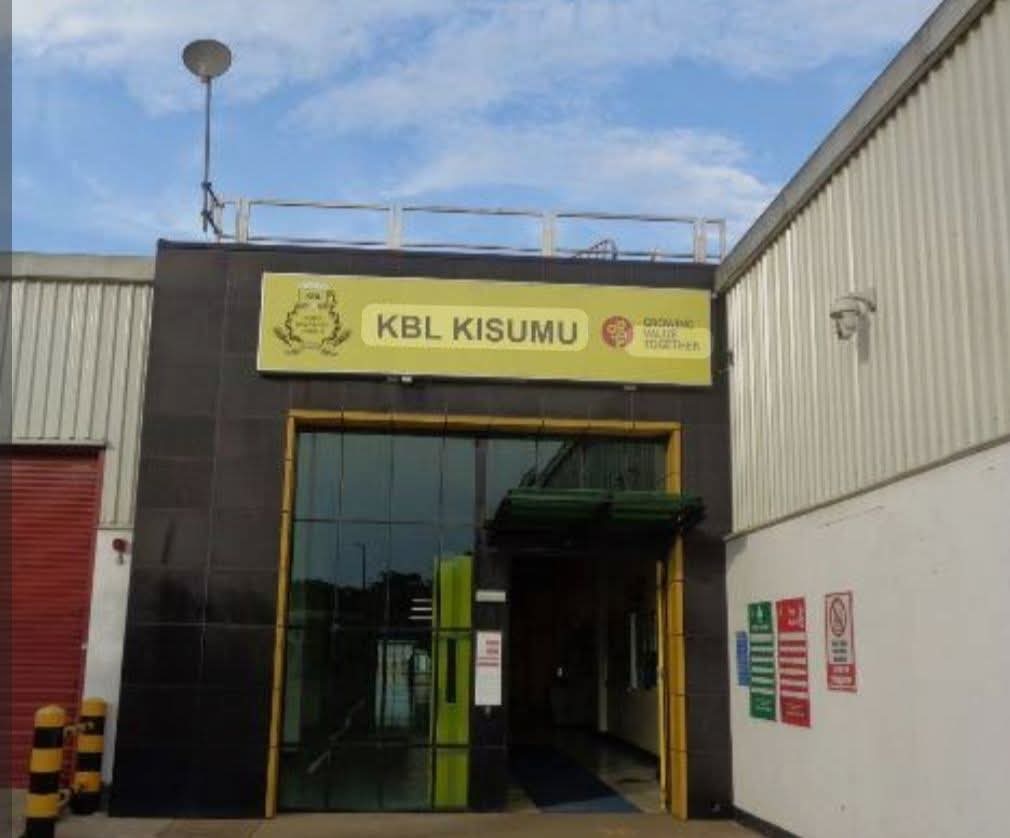
In 2016, Kenya Breweries Limited resolved to construct a modern, Ksh15 billion brewing facility in Kisumu, a plant designed to produce cheaper alcoholic beverages for the vast and thirsty market of the lake region. They engaged JILK Construction Company, a local contractor, executing the mandate through three agreements collectively known as the Joint Building Model Agreement or, in the language of corporate optimism, Project Nafasi.
Nafasi means opportunity in Kiswahili. It would prove bitterly ironic.
Though the contractual arrangements placed KBL and JILK as the principal parties, the practical reality on the ground in Kisumu was markedly different. Diageo PLC, the global spirits giant whose brands include Johnnie Walker, Guinness and Senator Keg, exercised operational control over the project. Diageo’s personnel managed the consultants, directed the procurement of materials, oversaw financial dealings and deployed their own managers, some of them foreign nationals, to run the Kisumu site. KBL’s visible involvement, JILK would later allege, was minimal to the point of negligibility.
It was within this arrangement that Brendon Daly, an Irish national engaged as project manager on the Kisumu site, allegedly committed acts that would eventually collapse the entire commercial relationship. According to accounts now filed in formal legal proceedings, Daly indecently assaulted and sexually harassed two female employees of JILK Construction during the contract period between October 2017 and March 2018. The women, whose names have not been made public, reported the matter to Muthaiga Police Station more than a year after the alleged incidents, on January 5, 2020.
JILK’s CEO, Sammy Maina, lodged a parallel complaint with KBL. What happened next, he contends, set the tone for everything that followed.
THE LETTER THAT CHANGED EVERYTHING
On February 5, 2020, the Director of Criminal Investigations wrote formally to EABL Managing Director Jane Karuku, informing her that investigations had been initiated into the sexual harassment allegations. KBL responded through Group Corporate Relations Director Eric Kiniti on February 12, 2020, acknowledging receipt of the same complaint from JILK but noting that it had arrived after Daly’s departure from the country.
That phrase, after Daly’s departure, has assumed enormous legal and moral significance in the months and years that followed.
In a letter to the Director of Public Prosecutions dated January 14, 2026, Maina makes an accusation that strikes at the heart of the EABL leadership’s professional reputation. He alleges that Karuku and Kiniti assisted Daly to leave Kenya, facilitating what he characterises as an escape from justice. He further accuses KBL and Diageo of leveraging their commercial power to blackmail JILK into abandoning the sexual harassment complaints altogether. When that pressure failed, he contends, EABL’s leadership resolved to punish him by other means, ultimately deploying litigation as a corporate weapon to derail the arbitration in which JILK stood to recover billions of shillings.
Through his lawyer Kibe Mungai, Maina has announced his intention to institute five private criminal charges against Karuku, Kiniti and Daly. He has petitioned the DPP to assist in securing the evidence compiled by police and to facilitate Daly’s return to Kenya to face charges. He has also requested that the DPP ensure the police do not interfere with any private prosecution, citing a conflict of interest arising from KBL’s separate criminal complaints against JILK.
The response from EABL’s legal representatives, dispatched on February 9, 2026, was swift and uncompromising. The company’s lawyers characterised Maina’s letter to the DPP as defamatory, noting that it had been disseminated by electronic mail and circulated to multiple recipients including EABL’s general corporate email address. The letter, they argued, portrayed their clients as “dishonest, corrupt and criminally inclined individuals who had abused positions of trust and were unfit to hold senior corporate office.” The allegations, the lawyers insisted, were “entirely false, malicious and devoid of any factual or legal foundation.”
EABL also offered a counternarrative regarding Daly’s status, asserting that he was employed not by KBL or Diageo but by a separate company called JAE Engineering, and that his departure from Kenya therefore raised no questions of corporate complicity.
Maina and his lawyer are unconvinced. In a reply dated February 12, Kibe Mungai told the EABL legal team with characteristic bluntness to bring their defamation suit if they wished. He maintained that notifying the DPP of intended private criminal proceedings cannot, by any reasonable legal construction, constitute defamation. He was, in his own words, simply describing the criminal offences he intends to prosecute.
THE ARBITRATION AND THE PETITION DESIGNED TO BURY IT
The criminal dispute, explosive as it is, represents only one dimension of a legal battle whose financial stakes run to billions of shillings.
In February 2020, JILK formally requested the Architectural Association of Kenya to appoint an arbitrator to resolve the accumulated commercial disputes arising from Project Nafasi. The AAK complied, appointing Quantity Surveyor Mutinda Mutuku. JILK filed a claim of Ksh2.4 billion against KBL, and arbitration proceedings began, though it was KBL rather than Diageo that filed a response to the claim, a procedural choice whose significance would later be hotly contested.
The arbitration ground on for years, described by those familiar with its proceedings as acrimonious and protracted. Both parties filed their written submissions: JILK on August 26, 2024, and KBL on November 12 of the same year. With oral proceedings concluded and submissions filed, the arbitrator was positioned to publish a final award. That publication never came.
On December 1, 2024, just a fortnight after KBL filed its own submissions, the company lodged Petition No. E029 of 2024 at the Milimani High Court. The petition made wide-ranging allegations about the relationship between the arbitrator and JILK, and sought orders to quash the entire arbitration process. Named as respondents were the arbitrator Mutuku, JILK, the AAK and the DCI. Jane Karuku and Eric Kiniti were listed as interested parties. Alongside the petition, KBL filed an urgent application to prevent the arbitrator from publishing the award.
The High Court granted the application. Every aspect of the arbitration was suspended.
JILK’s interpretation of these events is blunt and bitter. They argue that KBL filed the petition at the precise moment when arbitration had concluded and an award unfavourable to KBL appeared imminent. The timing, they say, was not coincidental. It was calculated. And the orders that followed handed KBL fourteen months of unearned procedural protection while JILK waited for a hearing that never came.
Maina himself connects the petition directly to his decision to support his female employees’ pursuit of justice over the Daly allegations, suggesting that KBL’s litigation offensive was the “lesson” that the company’s top officials had vowed to teach him.
DIAGEO SELLS, JILK PANICS AND THE COMPETITION AUTHORITY STAYS SILENT
The already febrile situation took on a new dimension on December 18, 2025, when JILK learned through newspaper reports that Diageo PLC had sold its controlling stake in EABL to Asahi Group Holdings of Japan and intended to exit the Kenyan market entirely by July 31, 2026. The implications for JILK were immediately obvious. If Diageo, the entity they regard as the true adversary and true beneficiary of the disputed contract, departed Kenya before the Ksh3 billion claim was resolved, JILK would be left pursuing a shadow.
The following day, JILK wrote to KBL seeking arrangements for settlement. KBL’s response, delivered on January 6, 2026, was dismissive, denying any connection between the Diageo share sale and the pending arbitration claim. JILK then wrote to the Competition Authority of Kenya on January 12, seeking intervention to ensure that justice was secured before Diageo’s exit made it impossible. The Competition Authority did not respond.
Left with no alternative, JILK filed Civil Suit No. E032 of 2026 at the Milimani High Court on January 27, 2026. This new suit named Diageo, KBL, EABL and the Competition Authority as respondents and deployed the full arsenal of JILK’s grievances, including the sexual harassment allegations, violations of employment law, and Diageo’s alleged exercise of effective control over a project to which it claimed no contractual responsibility.
JUDGES IN RETREAT
What followed in the new suit produced one of the more remarkable episodes in recent Commercial Court history. Diageo, through the firm of Njoroge Regeru, promptly filed an application to have the entire suit struck out, arguing that since the contracts were between KBL and JILK, Diageo had no standing as a defendant. JILK countered that Diageo’s operational control of the project made its contractual non-appearance a legal fiction unworthy of judicial acceptance.
Then the bench began to empty.
On February 16, 2026, presiding judge Njoki Mwangi recused herself from the case. Her reason was pointed: the firm of Njoroge Regeru, acting for Diageo in this very matter, was simultaneously representing her in another case. She referred the matter to the Head of the Commercial Division.
The Petition of December 2024, meanwhile, had similarly lost its presiding judge. Justice Freda Mugambi withdrew from that case and returned it to Justice Francis Gikonyo, the Divisional Head, leaving both the petition and the new civil suit under his supervisory gaze simultaneously.
THE FORMER ATTORNEY GENERAL’S LAW FIRM SWITCHES SIDES
As if the proceedings were not sufficiently tangled, EABL’s choice of legal representation in Civil Suit E032 ignited yet another controversy. The company instructed Mohammed Muigai LLP, the law firm of former Attorney General Professor Githu Muigai, to act for them. JILK responded with an urgent application to bar the firm from doing so.
Their objection rested on documented history. In June 2022, Mohammed Muigai LLP accepted engagement by JILK itself to prosecute the very arbitration claim now at the centre of this dispute. The letter of engagement defined the scope of work explicitly as “prosecuting the claim in the Reference until the delivery of a Final Award” at an agreed fee of Ksh15 million. The firm confirmed in writing that there was no conflict of interest. On July 13, 2022, JILK paid a deposit of Ksh5.8 million. For a month, JILK and a legal team from Mohammed Muigai LLP discussed the arbitration dispute in detail.
The engagement subsequently broke down. The firm refunded Ksh5.6 million to JILK on July 22, 2022, and the professional relationship ended. But JILK argues that the confidential discussions that took place during that month are sufficient to create an irresolvable conflict of interest when the same firm now appears on the opposite side of proceedings arising from the identical contract and arbitration. They have characterised the representation as a violation of their constitutional rights to equal protection of the law and fair hearing under Articles 27 and 50 of the Constitution, and are seeking the striking out of every document filed by Mohammed Muigai LLP on EABL’s behalf.
HAVI ENTERS, COURTS DIRECT
JILK has since reinforced its legal team with the addition of Nelson Havi, the former Law Society of Kenya president whose combative courtroom style has made him the advocate of choice for parties seeking to match muscle with muscle. Appearing before Justice Gikonyo on February 18, 2026, Havi informed the court that the matters raised were of sufficient weight to demand expedition.
Justice Gikonyo, now carrying oversight of both the 2024 petition and the 2026 civil suit, directed that responses to all pending applications be filed and served within three days, scheduling a further mention for February 24, 2026. He subsequently directed that the three pending applications in the original petition be heard in open court on March 23, 2026.
JILK has separately filed an application asking the court to hear and determine the 2024 petition before March 19 and deliver judgment before April 30, 2026, citing the looming July 31 deadline for Diageo’s exit from Kenya as the existential urgency behind their request.
KBL, for its part, appeared before Justice Gikonyo accusing JILK of filing applications in deliberate contravention of court directions, characterising it as harassment. JILK’s lawyers responded with what might be described as institutional incredulity. They noted that KBL had enjoyed fourteen months of court-ordered suspension of the arbitration, all while no substantive hearing had taken place, and suggested that characterising the respondent’s procedural responses as harassment inverted the realities of who had benefited from delay.
THE MEDIA’S SILENCE AND ITS MEANING
One of the more uncomfortable aspects of this affair is the near-total silence of Kenya’s mainstream media on proceedings of this magnitude. A Ksh3 billion dispute, accusations of sexual abuse against a foreign national who has allegedly fled the country, a CEO accused of facilitating that departure, judges recusing themselves, a former attorney general’s law firm accused of switching sides after taking confidential instructions, and a British multinational selling its stake and preparing to leave the country before a judgment can be rendered. These are not minor footnotes in the commercial life of the republic.
JILK’s lawyers have noted, not without justification, that the companies at the centre of this dispute are among the most significant advertisers in the Kenyan media landscape. They have drawn their own conclusions.
The stakes for every party are enormous. For JILK, the question is whether they can force a resolution of a Ksh3 billion claim before Diageo’s exit renders the judgment pyrrhic. For KBL and EABL, the question is whether their legal strategy, which critics characterise as a deliberate campaign of procedural attrition, will survive judicial scrutiny before a Divisional Head who has made expedition a priority. For Jane Karuku and Eric Kiniti, the question is more personal: whether a private criminal prosecution alleging assistance to a fleeing sexual abuser will proceed, and whether the defamation suit they have threatened against Maina will persuade him to retreat.
On the available evidence, Sammy Maina has no intention of retreating. His lawyer Kibe Mungai has told the EABL legal team to bring their suit. Nelson Havi has told the court that the issues are weighty and must be heard. And two women who walked into Muthaiga Police Station six years ago are still waiting to see the man they accused brought back to Kenya to answer for what they say he did to them in his Kisumu office.
Brendon Daly, wherever he is, has not returned.