The Confederation of African Football is preparing to close one of the longest chapters in continental football history. When Kenya, Uganda, and Tanzania jointly host the Africa Cup of Nations in 2027, the tournament will bow out under its familiar two-year rhythm.
CAF president Dr Patrice Motsepe has confirmed that a new four-year AFCON cycle will take effect shortly after, reshaping how Africa’s biggest football event fits into the global calendar. For East Africa, the Pamoja edition will stand not just as a hosting milestone but also as a turning point for African football planning.
Why CAF Is Overhauling the AFCON Cycle
For decades, AFCON’s biennial schedule has been both a strength and a source of friction. Held every two years since 1968, the competition guaranteed regular continental exposure but repeatedly clashed with European club seasons. This forced CAF into frequent calendar gymnastics, shifting tournaments between summer and winter, often unsettling clubs, broadcasters and even national teams.
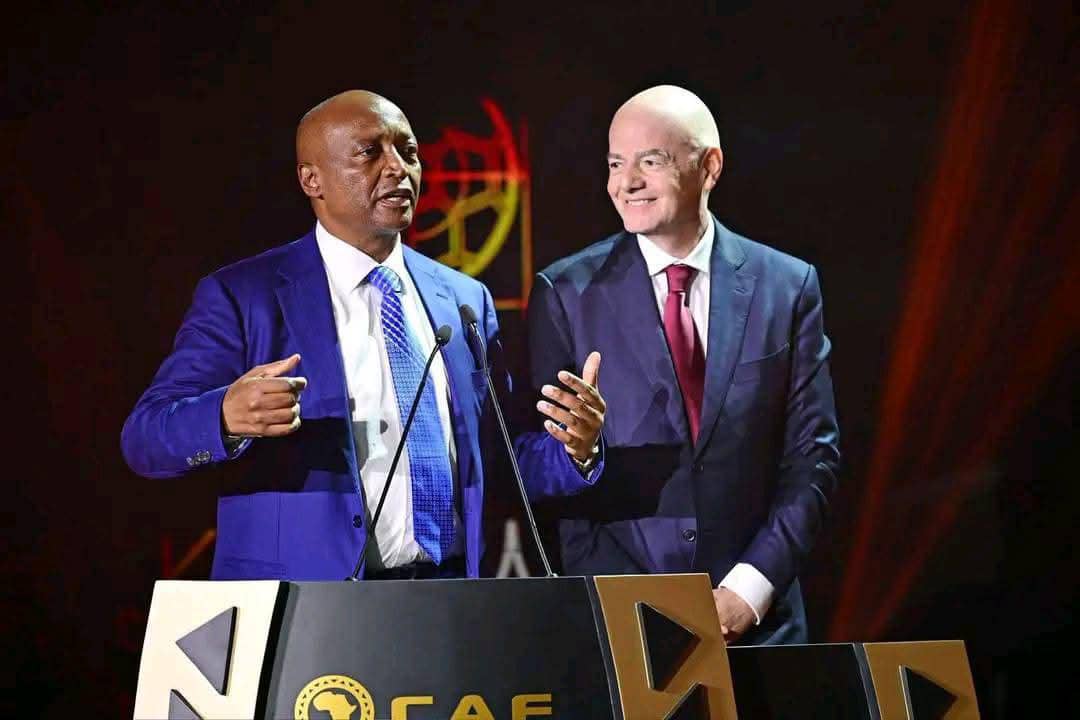
Motsepe announced on December 20 that CAF, following extensive consultations with FIFA, will move AFCON to a four-year cycle beginning in 2028, with full stabilisation from 2032. According to CAF, the decision addresses long standing scheduling conflicts while protecting player welfare and improving commercial planning.
“This is about ensuring there is a competition every year where the best African players who play in Europe and worldwide will be with us on the continent,” Motsepe said. The revised structure, he added, allows African football to breathe within the international calendar rather than constantly fighting for space.
Under the new framework, AFCON tournaments will be complemented by other elite competitions staged during FIFA international windows between September and November. CAF plans to organise matches across four regional zones, keeping top players regularly engaged without the disruption that has dogged the traditional format.
Kenya, Uganda, and Tanzania Host the Final Two-Year Edition
The 2027 AFCON, to be co-hosted by Kenya, Uganda, and Tanzania, now carries added historical weight. It will be the last tournament staged under the familiar two-year AFCON cycle, making East Africa the setting for a symbolic handover into a new era.
Before that, AFCON 2025 will be held in Morocco from December 21, 2025, to January 18, 2026. The East Africa edition will follow, delivering the first-ever three-nation-hosted AFCON in the region under the Pamoja joint bid.
CAF has also confirmed a bridge tournament in 2028, though the host nation and dates are yet to be announced. This transitional competition will help ease the shift from the old cycle into the new four-year rhythm, before the quadrennial format is fully embedded from 2032.
For Kenya, Uganda and Tanzania, the timing elevates the importance of 2027. Infrastructure investments, stadium upgrades and organisational capacity will be tested under intense global scrutiny, with CAF keen to ensure the final biennial AFCON sets a benchmark rather than exposes weaknesses.
How the New AFCON Cycle Fits Global Football
He stressed that coordination between FIFA and CAF would continue, particularly around the yet to be confirmed 2028 bridge tournament. “It’s now up to CAF to decide where the competition will be played in 2028 and to give the dates to us,” Grafström said, noting that compromises reached for previous editions showed cooperation was possible.
By settling into a predictable four-year rhythm, CAF expects fewer clashes with European leagues, greater certainty for clubs releasing players, and stronger bargaining power with broadcasters and sponsors. Stability, CAF believes, will translate into higher revenues and a more coherent international football calendar.
Prize Money Boost Signals Commercial Ambition
Beyond scheduling, CAF has paired the AFCON Cycle reform with a significant financial incentive. Prize money for AFCON winners has been increased from USD7 million to USD10 million, roughly Ksh1.3 billion at current exchange rates.
The confederation says the increase is designed to make African competitions more attractive commercially while freeing up more resources for grassroots football and national team development. For many federations, AFCON earnings remain a critical source of funding, and the higher rewards could encourage better preparation and long term planning.
CAF officials argue that fewer tournaments, better scheduled, and more lucrative will ultimately raise the standard of African football. The four-year AFCON Cycle is intended to transform the competition from a frequent disruptor into a flagship event that commands global attention.
What the Shift Means for African Football
The end of the two-year AFCON cycle closes a familiar chapter, but CAF insists the change is overdue. With the 2027 East Africa tournament now positioned as the final edition of an era, Kenya, Uganda, and Tanzania will host more than a football competition. They will stage the last act of a system that shaped African football for over half a century.
If the transition succeeds, AFCON could emerge stronger, richer, and better integrated into world football. The real test begins after 2027, when the promises of reform meet the realities of execution across the continent.