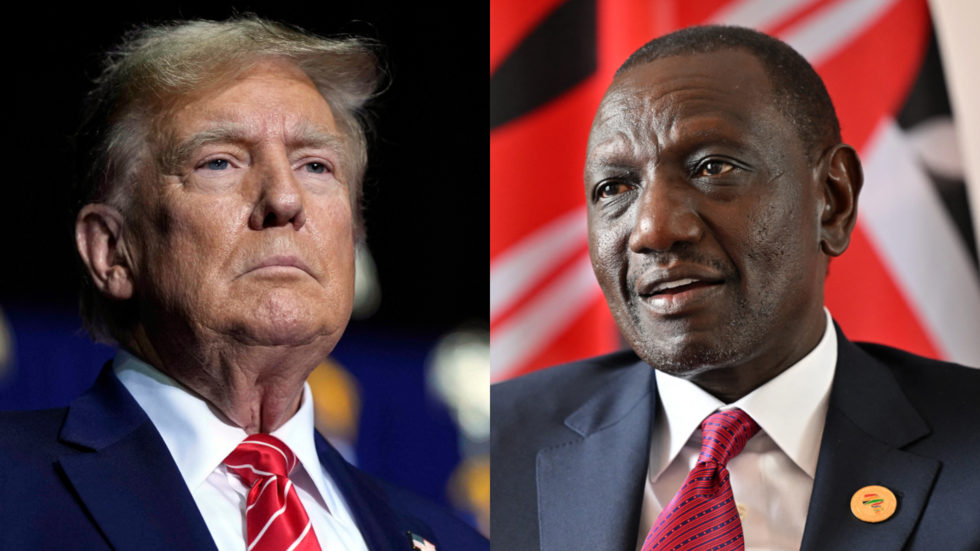
Kenya is among several African countries set to benefit after U.S. President Donald Trump’s administration backed a one-year extension of the African Growth and Opportunity Act (AGOA). The move, expected to be announced this week, comes just before the trade deal was set to expire.
AGOA has been a lifeline for Kenya’s economy, providing duty-free access to the U.S. market for thousands of products and sustaining more than 66,000 jobs. The extension offers temporary relief but also highlights uncertainty over the future of U.S.-Africa trade relations under Trump’s America First policy.
AGOA Extension Brings Relief but Uncertainty
The African Growth and Opportunity Act, first passed in 2000, was designed to provide duty-free access for African goods entering the American market. Kenya has relied heavily on this pact to boost its exports, particularly in textiles, agriculture, and light manufacturing.
The decision by President Trump to support a one-year extension gives countries like Kenya breathing space. It ensures factories and exporters can continue accessing the U.S. market without immediate disruptions. For Kenya, this means thousands of workers in the export processing zones will keep their jobs.
Yet, while the announcement is positive, it does not erase the uncertainty hanging over long-term trade relations. Trump has made protectionism a central part of his presidency, imposing tariffs of 10 to 30 percent on a number of African countries, including Kenya. Analysts say this makes a longer AGOA renewal less likely, at least under the current administration.
Kenya’s Push for a Longer Trade Window
Kenyan leaders are not resting despite the one-year reprieve. President William Ruto used his recent trip to New York during the United Nations General Assembly to lobby for a longer extension. He told reporters that Kenya was pressing for at least five years of duty-free access under AGOA.
According to Ruto, such an extension would strengthen ties between Africa and the U.S. while addressing trade deficits. “I will be asking him for the U.S. to consider seriously renewing and extending AGOA for at least a minimum of five years,” Ruto said.
Kenya’s Parliament has also thrown its weight behind the push. On September 24, lawmakers debated a motion sponsored by Laikipia MP Jane Kagiri urging the government to lobby harder for AGOA renewal. Members across the political divide highlighted the pact’s role in boosting exports, creating jobs, and improving social development.
Trump’s Mixed Trade Record on Africa
The Trump administration’s record on Africa has been uneven. While backing the AGOA extension provides short-term relief, his broader trade policy has strained relations. The America First approach has led to unilateral tariffs on several African nations, undermining the spirit of free trade.
For Kenya, these tariffs have been particularly challenging, given its reliance on the U.S. market for textiles and apparel. Industry experts warn that the tariffs have reduced competitiveness and could erode gains made under AGOA.
Trump’s silence on AGOA since taking office had worried many African governments and investors. With the current extension only lasting one year, uncertainty remains high, leaving exporters unsure about the future.
Bilateral Trade Deal Offers a Safety Net
In response to the uncertainty, Kenya has pursued a direct bilateral trade deal with the U.S. President Ruto confirmed during his U.S. visit that the agreement should be signed by the end of the year.
If completed, this will mark the first such agreement between the Trump administration and an African country. The deal is expected to provide Kenya with a safety net in case AGOA is not renewed beyond the one-year extension.
For Kenya, the move signals a pragmatic approach—using AGOA while also securing longer-term trade stability. It also positions the country as a leader in shaping Africa’s future trade ties with the United States.
Conclusion
The AGOA extension is a welcome lifeline for Kenya and other African countries, but it is only temporary. With jobs and exports on the line, leaders like President Ruto continue to push for a longer renewal.
Meanwhile, Trump’s mixed trade record and protectionist stance keep uncertainty high. For Kenya, the upcoming bilateral deal with Washington could prove to be the strongest safeguard, ensuring its exports remain competitive in the world’s largest market.