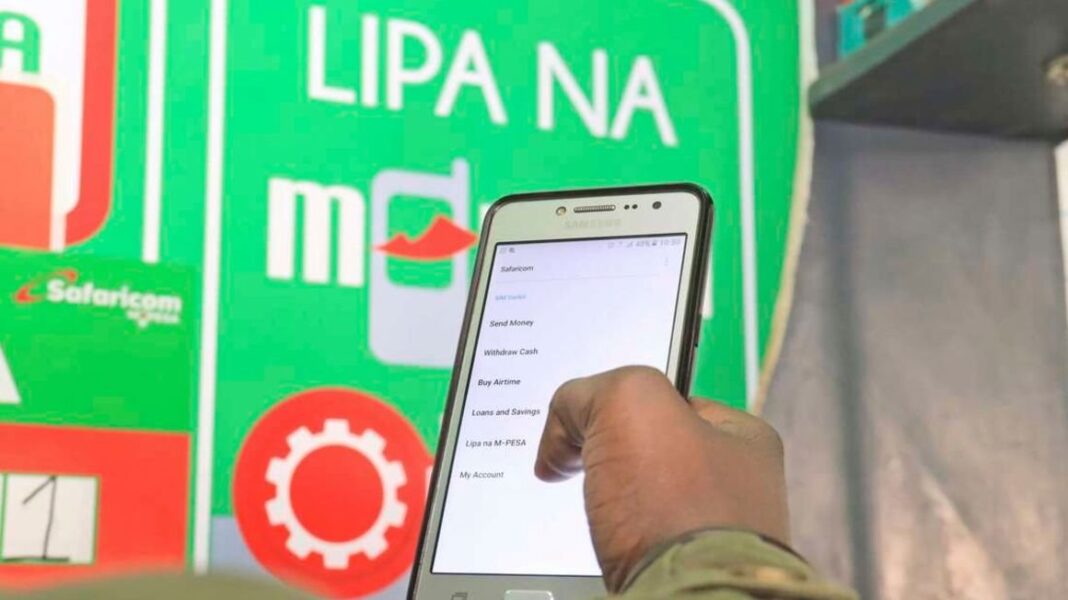
The Central Bank of Kenya has unveiled plans to dramatically reduce the cost of sending money through mobile platforms, a move that could significantly squeeze profit margins for telecommunications giants Safaricom and Airtel.
Under the Kenya National Financial Inclusion Strategy 2025-2028, the apex bank intends to cut the average cost of person-to-person mobile money transfers from Sh23 to Sh10 by 2028, marking a reduction of more than half the current charges.
The ambitious proposal comes as regulators grapple with stagnating growth in mobile money adoption, which they partly attribute to high transaction costs that continue to burden millions of Kenyans who rely on digital financial services for their daily transactions.
Current charges on mobile money transfers can reach as high as 6.9 percent of the amount being sent, significantly exceeding what traditional banks charge their retail customers for similar services. Safaricom’s M-Pesa, which commands more than 90 percent of the mobile money market, currently charges a maximum of Sh108 for person-to-person transfers between Sh20,001 and Sh250,000.
The Central Bank’s decision to intervene stems from growing concerns that the mobile money revolution, which has been hailed as Kenya’s greatest financial inclusion success story, is losing momentum. Recent data indicates that growth in mobile money access and usage has plateaued, with most users confined to basic person-to-person transfers rather than exploring advanced offerings such as digital credit, insurance, or savings products.
“Recent data shows signs of plateauing growth in mobile money access and usage,” the CBK noted in its strategy document. “This is attributed to issues such as limited interoperability, high transaction costs, low financial literacy, and product designs that do not reflect the realities of underserved groups.”
The proposed fee caps represent a significant shift in regulatory approach. Until now, the Central Bank has refrained from imposing universal limits on mobile money charges, instead developing guiding principles for service providers to follow. The regulator’s only previous intervention came in March 2020 at the height of the Covid-19 pandemic, when charges on transactions up to Sh1,000 were completely waived to reduce physical cash handling.
That temporary measure, which lasted until December 2022, proved remarkably successful in expanding financial inclusion. During the waiver period, the number of Kenyans actively using mobile money services grew by 6.2 million, while monthly person-to-person transactions surged from 162 million worth Sh234 billion to 440 million valued at Sh399 billion.
When charges were reintroduced in 2023, they returned at significantly lower rates than pre-pandemic levels, but the Central Bank now appears convinced that further reductions are necessary to sustain the momentum of financial inclusion.
The timing of the proposal is particularly sensitive for Safaricom, whose M-Pesa platform generated Sh161.1 billion in revenues during the twelve months ending March 2025. Of this amount, Sh62.9 billion—representing 39.1 percent of total M-Pesa revenues—came directly from person-to-person cash transfers, the very service now targeted for price controls.
Airtel Money, which holds just 9.1 percent of the mobile money market, has already adopted a more aggressive pricing strategy, waiving all fees for transfers within its network while charging between Sh6 and Sh105 for transfers to competing platforms.
The Central Bank plans to work closely with telecommunications operators and Parliament to implement the new pricing framework while maintaining the financial viability of digital financial services. The regulator has emphasized that pricing policies must balance short-term commercial targets with long-term sustainable growth.
Mobile money has been transformative for Kenya’s economy since M-Pesa launched in 2007, pushing financial inclusion rates from 27 percent to 82.3 percent of the adult population by 2024. The service has particularly benefited low-income groups, women, youth, and rural populations who gained access to essential financial services without requiring traditional bank accounts.
As of June 2025, mobile money subscriptions stood at 47.7 million, representing a penetration rate of 91 percent, up from 77.3 percent a year earlier, according to the Communications Authority of Kenya. However, usage growth has decelerated sharply, rising from just 19.9 percent in 2019 to 23.2 percent in 2024.
The 2024 FinAccess Survey confirms mobile money’s dominance, showing it serves 23.2 million adult users compared to 14.8 million for banks. Yet this leadership position masks underlying challenges that have prompted the Central Bank’s intervention.
For telecommunications operators, the proposed caps present a delicate balancing act between maintaining profitability and supporting the government’s financial inclusion agenda. The outcome of these deliberations will shape not only the future of mobile money in Kenya but also the business models of companies that have built substantial revenue streams on digital financial services.