The KSh 8.2 Billion Drug Bust trial has opened a window into a complex and dangerous narcotics network operating across the Indian Ocean. What began as a high-seas interception has now evolved into one of Kenya’s most significant drug trafficking prosecutions.
Six foreign nationals stand accused of moving over a tonne of methamphetamine through international waters toward East Africa. As proceedings begin at the Shanzu Law Courts, prosecutors are laying out a case built on intelligence, surveillance, and a dramatic naval operation that intercepted a suspicious vessel far from Kenya’s shores.
Inside the KSh 8.2 Billion Drug Bust and High Seas Interception
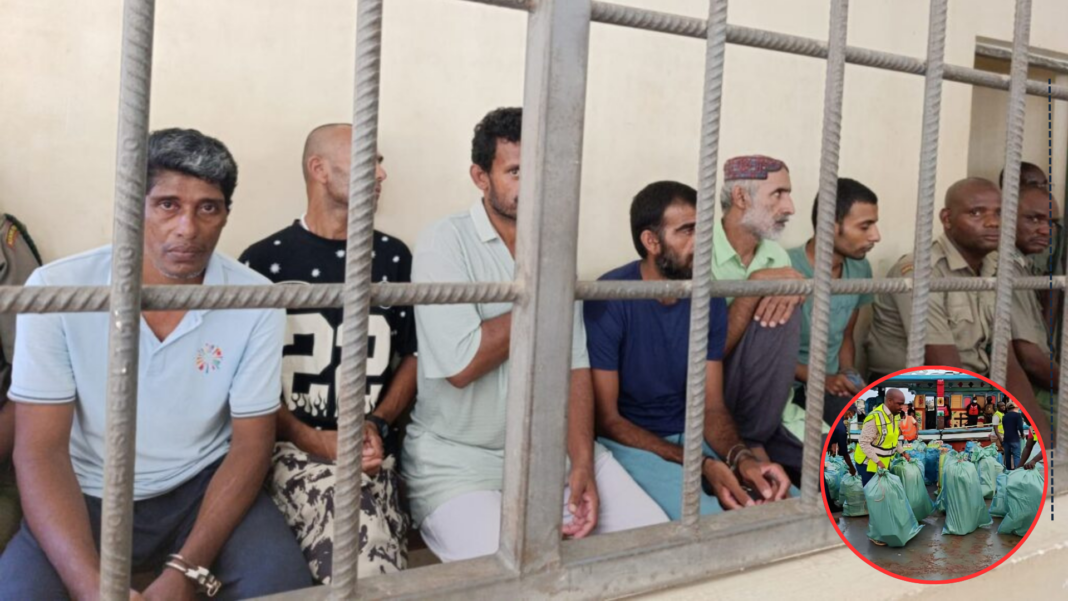
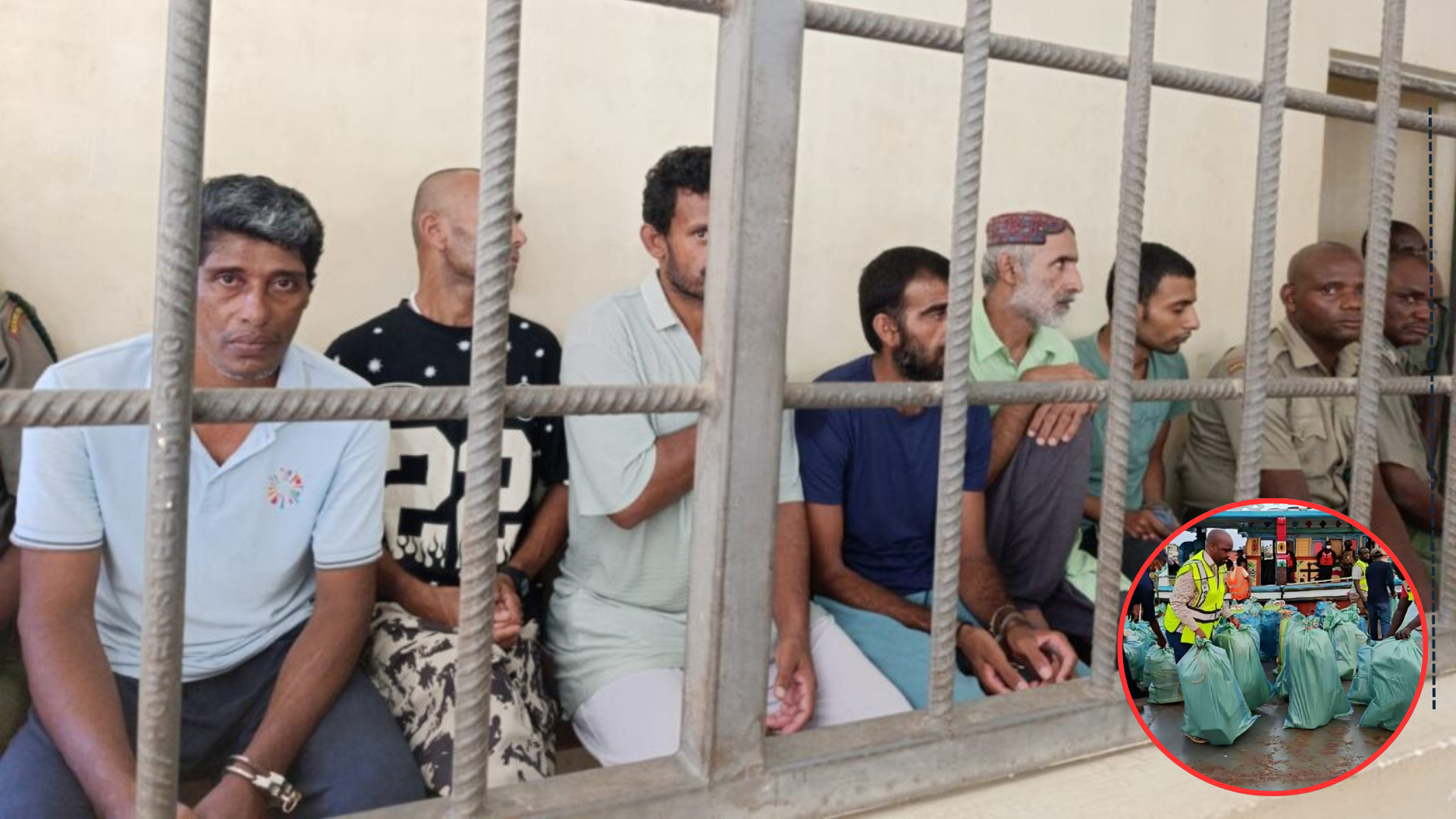
The case is unfolding before Anthony Mwicigi at the Shanzu Law Courts in Mombasa. Six Iranian nationals face charges of trafficking narcotics valued at KSh 8.2 billion. The accused include Jasem Darzadeh Nia, Rahim Baksh Goharam, Hassan Baloch, Imran Baloch Mustafa, Nadeem Jadgal Abdulgani, and Emtiyaz Daryayi.
The prosecution, led by Alex Ndiema and backed by Joseph Kimanthi, plans to call at least twelve witnesses. Their goal is to prove that the suspects participated in a coordinated trafficking operation across international waters.
Kimanthi has already made one point clear. Kenya has jurisdiction. He told the court that both the Constitution and international maritime law allow Kenya to prosecute crimes committed on the high seas when they threaten national and regional security.
Intelligence That Triggered the Operation
The operation did not happen by chance. It began with intelligence shared through the Regional Coordination Operations Centre, a multi-country platform that monitors criminal activity across the Indian Ocean.
According to testimony from Joab Gitonga, Kenyan authorities received alerts on October 17, 2025. The intelligence flagged two suspicious vessels, MV Igor and MV Chevy, moving along known trafficking routes.
Security teams began tracking both vessels. Analysts quickly narrowed their focus to MV Igor due to its movement pattern, which matched known drug smuggling corridors linking Asia to East Africa.
With support from the Seychelles Coast Guard, which deployed a patrol aircraft, authorities confirmed the vessel’s position. The operation then escalated into a coordinated regional effort aimed at stopping the suspected shipment before it reached land.
Dramatic Interception in International Waters
On October 20, 2025, naval forces intercepted the target vessel about 350 nautical miles off Kenya’s coast. The vessel turned out to be a dhow named Mashallah.
Lt. Col. Gitonga described multiple red flags. The dhow flew no national flag. It ignored repeated radio calls. It drifted without a clear navigation path. These signs strongly suggested illegal activity.
Kenyan marine commandos boarded the vessel. On board, they found six crew members who later became the accused persons in court. The men carried Iranian identification documents but failed to produce registration papers or explain their journey.
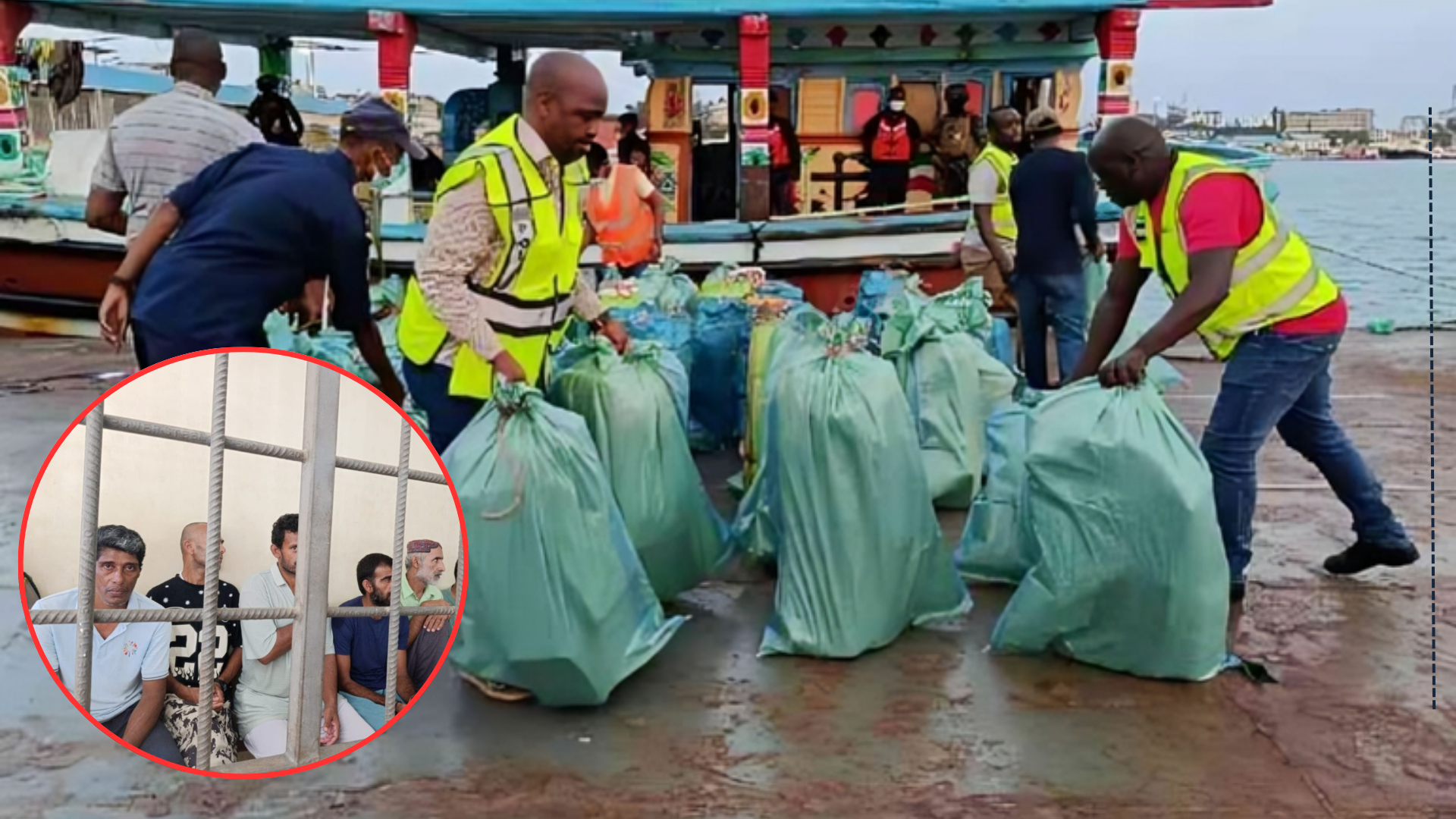
That gap raised immediate suspicion. Naval officers launched a full search. They uncovered hundreds of tightly packed packages hidden inside the dhow. The cargo contained a white crystalline substance commonly known as methamphetamine or “ice.”
Laboratory tests later confirmed the substance. Investigators counted 769 packets weighing over one metric tonne. Authorities placed the street value at KSh 8.2 billion.
Evidence Points to Organized Crime Network
Prosecutors argue that the scale of the seizure rules out a small smuggling attempt. They believe the drugs formed part of a larger, well-coordinated criminal network operating across the Indian Ocean.
After the interception, authorities escorted the dhow to Mombasa. A multi-agency team took over the investigation. The team included officers from the Directorate of Criminal Investigations and the Anti-Narcotics Unit.
Investigators secured the drugs as evidence and began mapping the network behind the shipment. They are now working to identify the origin of the narcotics, the intended destination, and the financiers supporting the operation.
Legal Battle Over Knowledge and Jurisdiction
The trial will not just focus on the drugs. It will also examine whether the accused knowingly participated in trafficking.
The defense is expected to challenge the prosecution’s claims on knowledge and intent. Another key issue will be jurisdiction, given that the arrest occurred in international waters.
However, prosecutors remain confident. They argue that the operation falls squarely within international legal frameworks that allow states to act against transnational crimes at sea.
Why the KSh 8.2 Billion Drug Bust Matters
This case goes beyond the six individuals in the dock. It highlights the growing threat of maritime drug trafficking in the Indian Ocean.
Criminal networks are increasingly using sea routes to move large quantities of narcotics. These routes are harder to monitor and offer fewer immediate risks compared to land-based smuggling.
The successful interception shows the power of intelligence sharing and regional cooperation. Without coordination between Kenya and its partners, the dhow might have slipped through undetected.
At the same time, the case exposes the scale of the challenge. A shipment worth KSh 8.2 billion suggests a network with deep resources, strong logistics, and international reach.
A Defining Test for Justice and Security
The KSh 8.2 Billion Drug Bust trial will test Kenya’s ability to handle complex transnational crime cases. It will also test how effectively the legal system can apply international law in local courts.
If prosecutors succeed, the case could set a strong precedent for future maritime drug prosecutions. It could also send a clear message to criminal networks operating in the region.
For now, the court continues to hear evidence. Witnesses will take the stand. Arguments will unfold. But one thing is already clear.
This is not just another drug case. It is a high-stakes battle against a sophisticated network that tried to exploit the vastness of the ocean—and got caught.