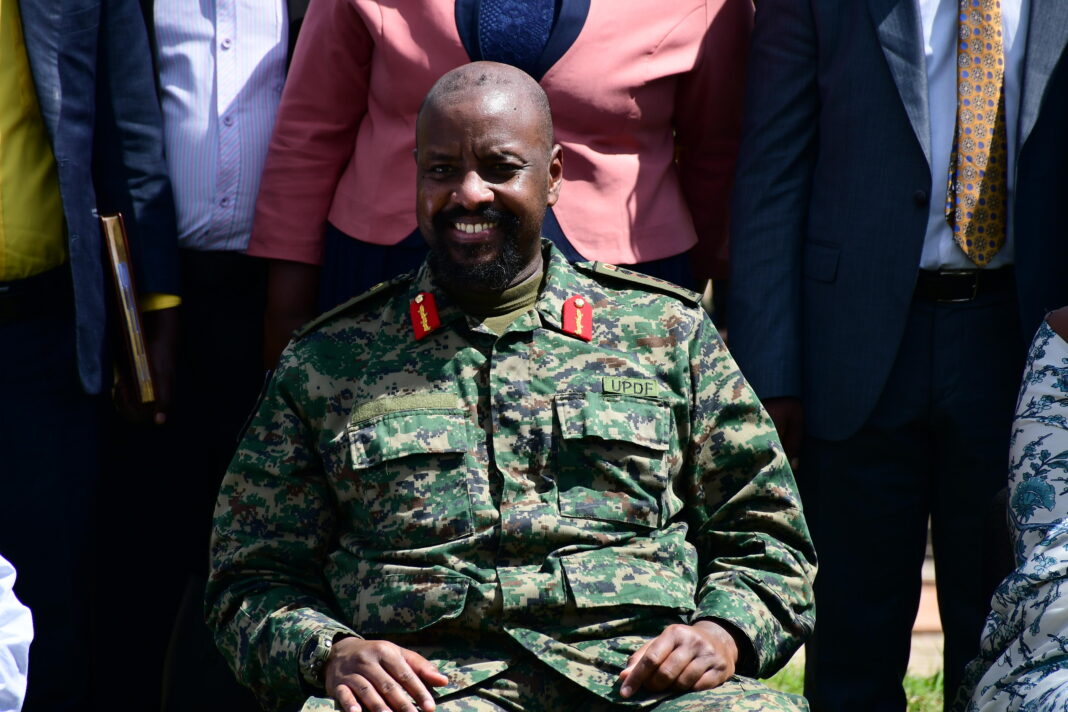
Ugandan President Yoweri Museveni’s son, General Muhoozi Kainerugaba, has ignited a diplomatic storm by threatening to pull Ugandan troops out of Somalia unless the United States provides urgent and substantial funding for their mission.
The Chief of Defence Forces of the Uganda People’s Defence Forces (UPDF) warned that failure to secure financing could force Kampala to withdraw forces battling Al-Shabaab before the year ends. Muhoozi’s demand for Ksh129 billion (USD 1 billion) annually has escalated tensions with Washington, exposing fractures in Uganda’s long-standing military partnership with the U.S.
Muhoozi made his stance clear in a series of social media posts on February 4, insisting that America had no alternative but to meet Uganda’s funding needs. “Unless we have serious discussions about financing for our mission in Somalia, we shall withdraw by the end of this year,” he declared.
The general underscored that his expectation remained for the U.S. to deliver the requested support, signaling that Uganda’s continued presence in Somalia is contingent on Washington’s response.
The threat comes amid rising friction between Uganda and the United States, intensified by Uganda’s recently concluded general elections. President Museveni secured a seventh term with 7.9 million votes, an outcome rejected by opposition leader Bobi Wine, sparking international criticism. Muhoozi’s prior social media remarks, tied to allegations of violence against National Unity Platform supporters, had already drawn condemnation, forcing the general to issue a public apology to U.S. officials.
Muhoozi’s Warning Sends Shockwaves in Washington
The bold statements from Muhoozi mark a rare and direct confrontation with the United States over military funding. U.S. Senator Jim Risch, chairman of the Senate Foreign Relations Committee, has been particularly critical. Despite Muhoozi deleting controversial posts and apologizing, Risch deemed the actions insufficient. In a January 30 statement, the senator called for a reassessment of U.S.-Uganda security cooperation and hinted at potential sanctions.
“Uganda cannot be allowed to act recklessly where American personnel, interests, and civilian lives are at risk,” Risch said. His comments highlight the growing unease in Washington over Uganda’s domestic political climate and its potential to impact regional security operations. Analysts now warn that Muhoozi’s threat could force the U.S. to reconsider its military partnership and aid commitments in East Africa.
Muhoozi, however, attempted to soften perceptions of his diplomacy by differentiating his strained relations with American politicians from global leaders. In his social media posts, he emphasized that he holds Britain’s King Charles III in high regard, describing him as “my king,” signaling a desire to maintain strong ties with select international partners even amid U.S. tensions.
The Financial Stakes of Uganda’s Somalia Troop Withdrawal
Uganda has deployed hundreds of troops in Somalia as part of the African Union Mission in Somalia (AMISOM), tasked with countering Al-Shabaab insurgents. The mission is costly, and Muhoozi’s demand of Ksh129 billion annually reflects Uganda’s insistence that Washington share the financial burden. Failure to meet the funding could leave Somalia vulnerable to increased insurgent activity and weaken the AU mission’s effectiveness.
Military analysts note that Muhoozi’s move is both a negotiation tactic and a warning. By linking troop deployment to U.S. funding, he forces Washington to reckon with Uganda’s indispensable role in the fight against terrorism in East Africa. Any sudden withdrawal could destabilize ongoing operations and create a security vacuum that Al-Shabaab could exploit.
Diplomatic Fallout and Regional Implications
The latest developments underscore the delicate balance between Uganda’s domestic politics and international military commitments. While Muhoozi maintains that relations with the U.S. are intact, the public nature of his threats has strained diplomatic channels. Uganda’s embassy in Washington has worked to mitigate tensions, but the general’s aggressive stance suggests that Kampala may prioritize national interests over long-standing alliances if funding negotiations fail.
Experts warn that Muhoozi’s hardline approach could inspire similar leverage tactics by other African states dependent on U.S. support. At the same time, a withdrawal would pose severe risks to regional security and could complicate international counterterrorism efforts in Somalia. The coming months are likely to be decisive, as Uganda and the U.S. weigh the costs of continued cooperation against the risk of a destabilizing troop pullout.
As the year progresses, all eyes remain on Kampala and Washington. Uganda’s Somalia troop withdrawal threat is more than a financial dispute—it is a test of diplomatic resolve, military strategy, and the limits of international partnerships in East Africa.