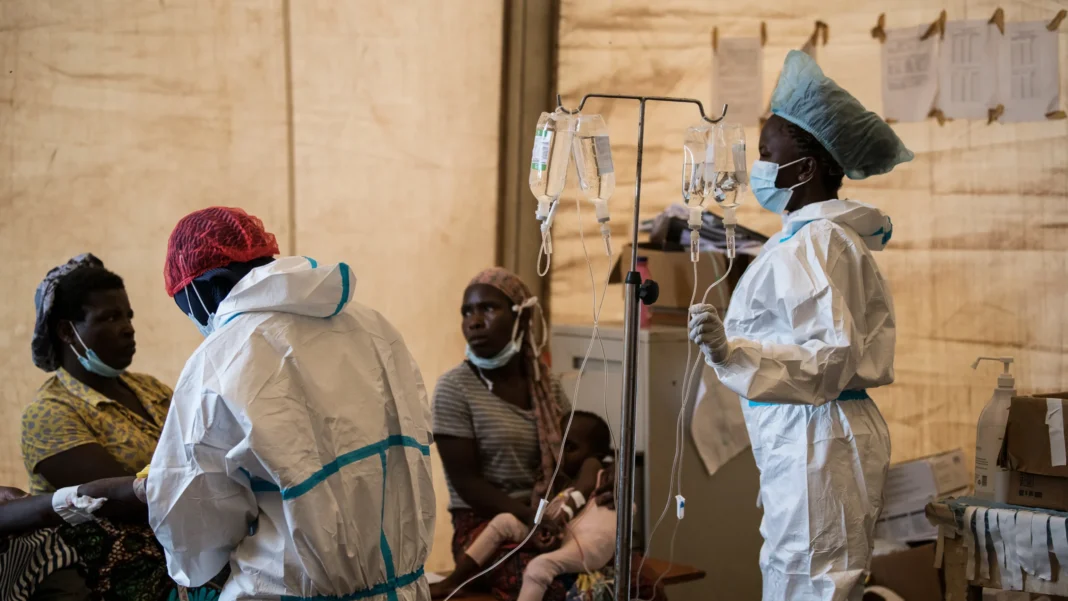
WHO has issued a stark warning to Kenya over a looming cholera and typhoid outbreak as drought tightens its grip on large parts of the country. The alert follows worsening water shortages that now force families to drink from unsafe sources.
Health officials say the risk is highest in arid and semi-arid counties where drought, heat, and hunger collide. With rains delayed and temperatures rising, WHO says Kenya faces a dangerous mix that could trigger deadly waterborne diseases if action is delayed.
Why WHO Issued the Cholera and Typhoid Outbreak Warning
WHO sounded the alarm after assessing drought conditions in nine counties. These include Wajir, Garissa, Kilifi, Marsabit, Kitui, Kwale, Kajiado, Isiolo, and Tana River. The agency confirmed that severe drought has reduced access to clean water for household use.
Livinus Martins, WHO Kenya’s Head of Emergency Preparedness and Response, said water scarcity has pushed families to unsafe water points. People now draw water from contaminated wells, seasonal rivers, and shared pans used by livestock. This behavior sharply increases exposure to cholera, typhoid, and other diarrhoeal diseases.
WHO linked the cholera and typhoid outbreak risk directly to drought-driven heat. High temperatures dry up vegetation and force humans and animals to crowd around the same water sources. This concentration accelerates the spread of bacteria that cause waterborne infections.
Martins also warned that prolonged drought weakens communities before disease strikes. Food shortages have increased acute malnutrition, especially among children and pregnant women. Malnourished bodies struggle to fight infections, making outbreaks more deadly once they begin.
Livestock deaths have worsened the crisis. Families in affected counties depend on animals for food and income. As drought kills cattle, goats, and camels, households lose milk, meat, and money. Hunger then compounds disease risk and deepens vulnerability.
WHO also flagged a second danger. When rains finally arrive, hardened soils may fail to absorb water. This condition can trigger flash floods that spread contaminated water into homes and villages. Flooding can spark a fresh wave of cholera and typhoid cases, even as communities celebrate rainfall.
The Kenyan government has already warned that 2.5 million people face severe hunger and water scarcity if drought persists. WHO says this number could rise if coordinated action stalls.
Unsafe Water and Heat Fuel Cholera and Typhoid Outbreaks
Unsafe water stands at the center of the cholera and typhoid outbreak threat. Drought has crippled boreholes, dried rivers, and reduced water trucking in remote areas. Families now ration water or skip basic hygiene to survive.
Poor sanitation worsens the problem. Limited water reduces handwashing and proper waste disposal. Bacteria then spread rapidly through food, water, and shared surfaces.
Heat amplifies transmission. High temperatures allow bacteria to multiply faster in stored water. Open containers, poorly covered tanks, and dirty jerrycans become breeding grounds for infection.
WHO stressed that drought does not act alone. Heat stress weakens immune systems, especially among the elderly and children. Vector-borne diseases also rise as insects gather near shrinking water points, adding another layer of health risk.
Government and WHO Push Urgent Prevention Measures
WHO has pledged to work closely with national and county governments to blunt the cholera and typhoid outbreak threat. The agency plans to support emergency water supply, disease surveillance, and public health messaging in high-risk counties.
WHO has called on humanitarian agencies and communities to act fast. The agency wants coordinated efforts that prioritize safe water, food aid, and sanitation services. Delays, it warned, could cost lives.
The Kenya Meteorological Department has reinforced the alert. It expects hotter and drier conditions than normal to persist until February. Prolonged heat will intensify daytime temperatures and raise nighttime minimums across the country.
Authorities have urged residents to save water, protect storage containers, and prioritize domestic use. Public health officials have also asked communities to remain alert for signs of heat stress and waterborne illness.
Farmers have received guidance to conserve water through mulching, store animal feed, and maintain water points. These steps aim to protect livelihoods while reducing risky water sharing.