Shock and anger grip a family in Garissa following the unexplained death of a 25-year-old General Service Unit officer deployed at Damajali near the Kenya–Somalia border. Found dead barely metres from the camp where he served, his death has triggered serious questions about what truly happened that night.
Police initially suggested suicide, but the family, local leaders, and a sitting MP rejected that account. The death of the GSU officer now joins a troubling list of security fatalities clouded by secrecy and unanswered questions.
Death of GSU Officer Raises Alarming Questions at Damajali Camp
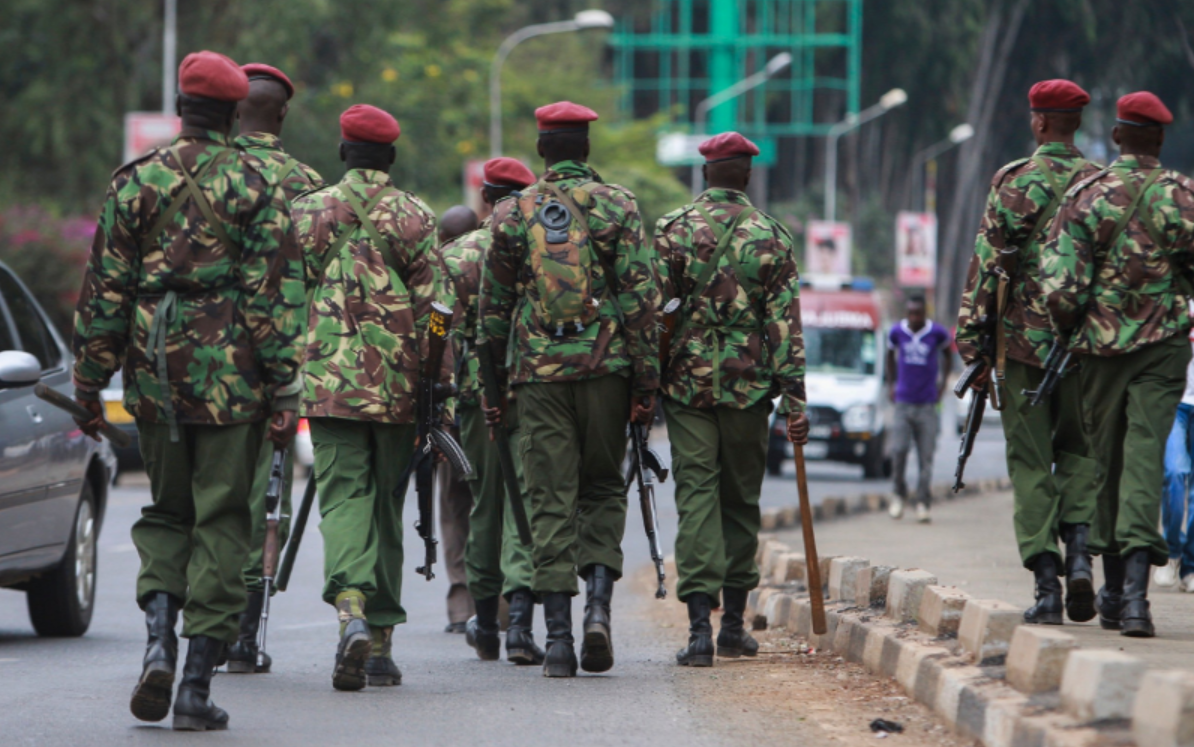
The death of GSU officer at Damajali has unsettled residents and security circles in equal measure. The officer’s body was discovered roughly 50 metres from the GSU camp where he was stationed, a proximity that has deepened suspicion rather than provided clarity. To his family, it makes little sense that a trained officer would take his own life so close to colleagues and command structures meant to protect him.
Local leaders have voiced grave concerns, suggesting the possibility of foul play from within. One leader openly questioned the suicide narrative, saying information reaching the community pointed to murder involving people known to the officer. The location of the body, the lack of convincing explanation, and the speed with which suicide was mentioned have all fuelled doubts.
Family members say they were not given a clear briefing on the circumstances leading to his death. They argue that crucial details were either withheld or poorly explained. For them, the death of GSU Officer is not merely a personal loss but a test of whether security institutions can investigate themselves honestly.
The incident has also revived debate about the mental health narrative often used to explain deaths within the disciplined forces. While stress and trauma are real, families insist that such claims should follow evidence, not replace it. In this case, they say, evidence points elsewhere.
Family Rejects Suicide Claims and Demands Truth
The officer’s sister has emerged as a strong voice challenging the official version of events. After viewing the body and hearing accounts from those on the ground, she said she could not reconcile what she saw with suicide. According to her, there were inconsistencies that demanded deeper scrutiny.
She and other relatives have formally called on the Directorate of Criminal Investigations to conduct a thorough and transparent probe. They want an independent approach that examines all possible angles, including the officer’s last movements, interactions with colleagues, and any disputes within the camp.
For the family, the death of GSU officer reflects a wider pattern where quick conclusions deny victims justice. They fear that without public pressure, the case could quietly fade away. Their demand is simple yet powerful. Establish the truth, regardless of where it leads.
Community elders in Garissa have backed the family, urging authorities to handle the matter with seriousness and respect. They warn that unresolved cases erode trust between citizens and security agencies, particularly in border regions where cooperation is vital.
Leaders Cite Foul Play and Call for Accountability
Garissa Township MP Dekow Mohamed has openly questioned the circumstances surrounding the death of GSU officer. Speaking during a public forum in Garissa, the legislator said there was strong reason to suspect foul play. He challenged investigators to move beyond surface explanations and confront uncomfortable possibilities.
According to the MP, the officer’s death being classified too early risked shielding those responsible. He stressed that accountability within security agencies must match the discipline demanded of officers. Without it, morale suffers and public confidence collapses.
Other leaders have echoed his concerns, saying the case should not be treated in isolation. They argue that border deployments come with risks, but those risks should not include silence and cover-ups when something goes wrong.
The MP’s involvement has added political weight to the family’s demands, ensuring that the death of GSU officer remains in the public eye.
Pattern of Unclear Police Deaths Deepens Concern
The Garissa case fits into a disturbing national pattern seen in 2025. In June, a patrol officer from Bondeni Police Station in Nakuru was shot dead while on duty. Initial reports blamed armed gangs, yet later developments, including recovered weapons and arrests, raised doubts about who pulled the trigger.
In October, another GSU officer stationed at State House Gate D lost his life after being struck with a spear during an alleged intrusion attempt. Questions lingered over how such a breach occurred in one of the country’s most secured locations.
Around the same period, a GSU officer guarding the JKIA perimeter reportedly died after being strangled by a civilian. Each case followed a familiar script of early explanations followed by lingering uncertainty.
Samples from the Garissa officer were taken to the government laboratory for analysis, but families and rights groups insist that forensic tests alone are not enough. They want openness, timelines, and accountability.