
Kenya’s controversial health cooperation deal with the United States has entered a new phase of political tension and public scrutiny. The government now promises to make available all Kenya-US Health Deal Documents that were not initially provided to the court before it issued conservatory orders halting the agreement.
Health Cabinet Secretary Aden Duale defended the deal strongly, insisting it remains lawful, beneficial to Kenyans, and unfairly judged without full context.
At the same time, civil society, legislators, and digital rights groups intensify calls for transparency, accountability, and clarity on how Kenyan health data would be protected under the suspended framework.
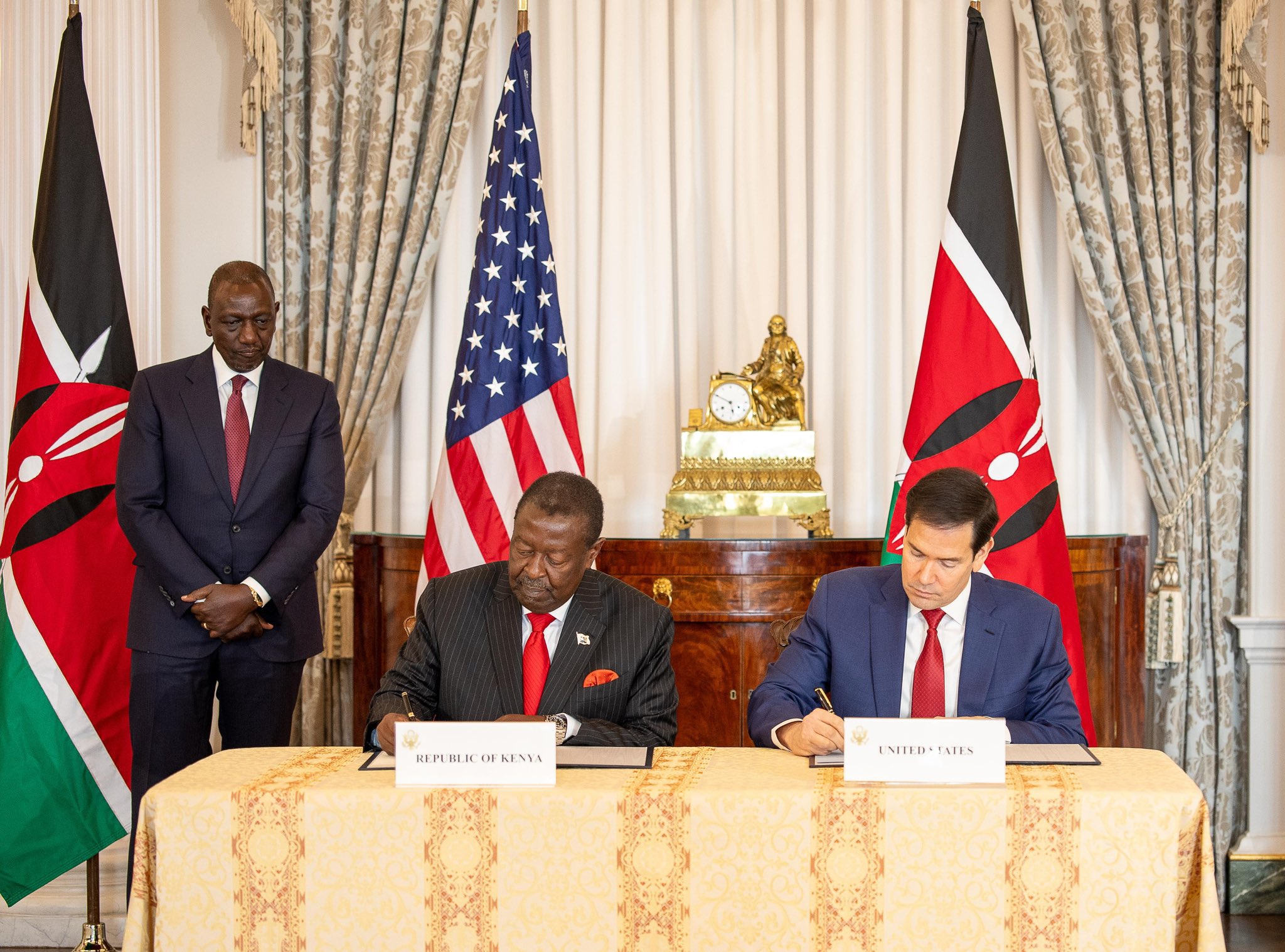
Government Vows to Release Full Kenya-US Health Deal Documents After Court Order
The High Court on Wednesday, December 10, issued a sweeping suspension of the multi-billion-shilling cooperation agreement signed between Nairobi and Washington. Justice Lawrence Mugambi ordered that implementation of the health framework executed on December 4 be halted pending a full hearing.
“Pending the hearing and determination of the petition, a conservatory order is hereby issued restraining the respondents from implementing the health framework,” the court ruled, sending the deal into legal limbo and triggering a political firestorm.
By Friday, December 12, CS Aden Duale stepped forward to address the judicial decision. Without dismissing the ruling, Duale argued that the court acted without seeing the entire documentation behind the agreement. He revealed the government would now provide every missing file, memorandum, technical paper, and annex for the court’s review.
Duale insisted the ruling was being misinterpreted by a section of Kenyans and opposition leaders. According to him, the suspension touches only the data-sharing segment of the deal, not the entire cooperation structure.
“We fully recognise and respect the crucial role of the courts in interpreting the law. We note that the current conservatory orders are specific to the sharing of data and do not suspend the broader partnership,” he stated.
He expressed confidence that once judges go through all the Kenya-US Health Deal Documents, the agreement will be understood correctly and allowed to move forward.
Clarification on Nature of the Health Deal
In his defence, Duale sought to demystify the contested framework. He explained that the deal is a cooperative policy arrangement, not an international treaty, and therefore does not compromise sovereignty.
Duale described the agreement signed in the U.S. by a Kenyan delegation as a technical health cooperation blueprint rather than a binding diplomatic pact. He stressed that the provisions for collaboration in training, disease surveillance, infrastructure, and emergency response were ordinary components of long-standing bilateral health partnerships.
He emphasised that the framework was developed under strict adherence to due process and aligned with Kenya’s domestic laws. This includes compliance with the Data Protection Act of 2019 and the Digital Health Act, both of which impose safeguards on personal and health-related information.
“We emphasise that this framework was drafted with strict adherence to due process, ensuring that Kenya’s sovereignty, data ownership, and intellectual property are fully protected,” the CS maintained.
Rising Concerns and Demand for Transparency
Despite Duale’s assurance, concerns continue to rise. Civil society organisations argue that the secrecy surrounding the agreement before the court intervention is precisely what created confusion and distrust. Critics question why the documents were not readily accessible earlier, considering the deal involves sensitive national data.
Lawmakers from multiple political camps are now pushing for the agreement to be tabled before Parliament. They argue that public policy must not be negotiated in opaque channels, especially when it touches on citizen health records, national surveillance systems, and bioinformatics.
Digital rights advocates are also demanding a thorough audit of all provisions involving cross-border data transfer, storage, and access by foreign agencies or partners. They insist that Kenya cannot afford to set precedents that might expose citizens to privacy breaches or exploitation.
At the same time, pro-government leaders insist the uproar is politically motivated. They accuse critics of misrepresenting the agreement to fuel public fear and undermine Kenya’s strategic partnerships.
Court Battle Ahead and What to Expect
Duale said the state will challenge parts of the ruling while fully complying with the court’s directive. This sets the stage for a major legal contest that could redefine how Kenya negotiates international health partnerships in the future.
The submission of all Kenya-US Health Deal Documents to the court will shape the next stage of the case. Judges will scrutinize whether the structure of the deal meets constitutional thresholds on public participation, transparency, privacy protection, and sovereignty.
The outcome will determine not only the fate of the health cooperation framework but the standard for future agreements involving national data. For now, the government seeks to reassure the country that no health records have been exposed, no provisions have been implemented, and no Kenyan data has left the country.