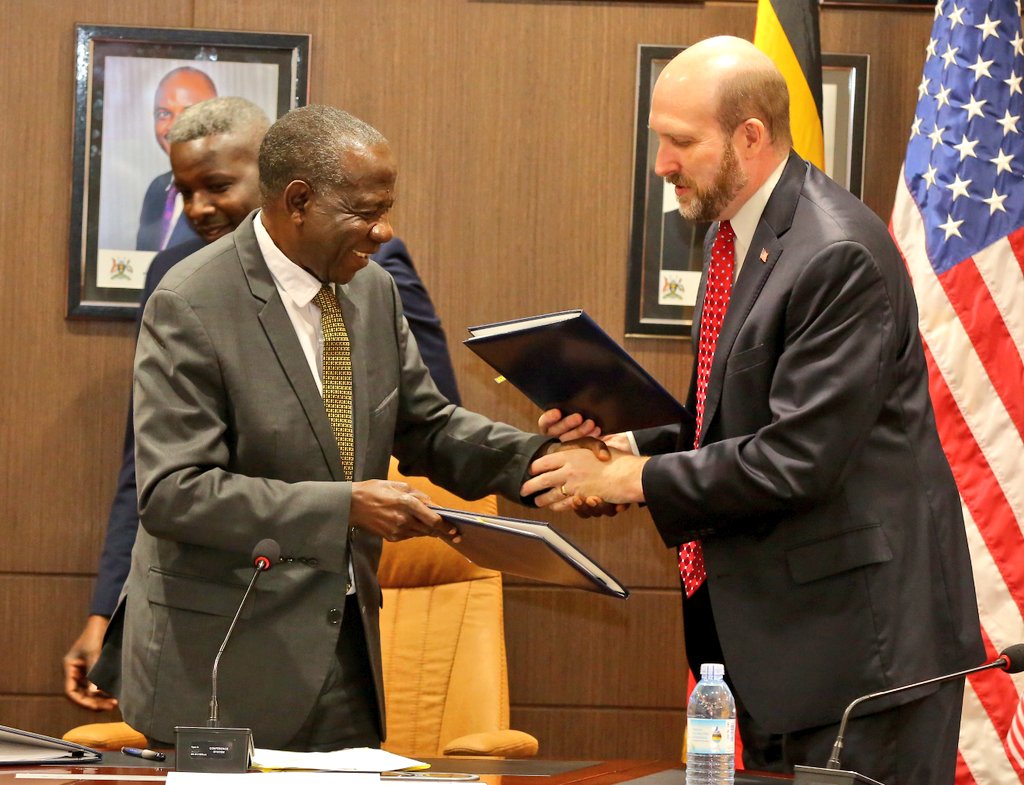
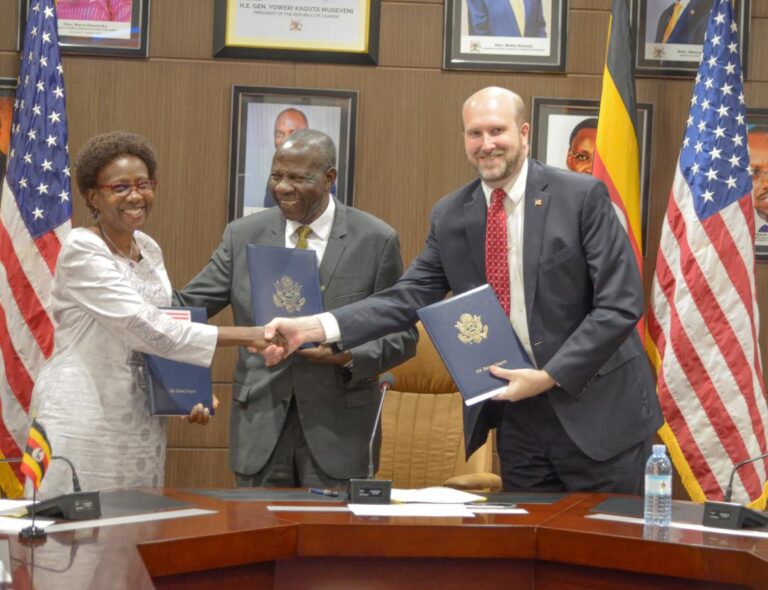
In a bold move that underscores East Africa’s growing role in global health diplomacy, Uganda has signed a five-year, Ksh297 billion ($2.3 billion) health cooperation agreement with the United States. The deal, inked on Wednesday, December 10, 2025, comes just six days after Kenya signed a similar Ksh207 billion ($1.6 billion) agreement. Analysts say the Uganda-U.S. Health Deal could reshape the country’s healthcare landscape, addressing HIV/AIDS, malaria, tuberculosis, maternal and child health, and bolstering emergency preparedness systems nationwide.
Uganda-U.S. Health Deal Brings Major Investments in Health Systems and Workforce
The Uganda-U.S. Health Deal is structured to provide both immediate and long-term support for the country’s health sector. Under the Memorandum of Understanding, the U.S. commits up to Ksh220 billion ($1.7 billion), while Uganda pledges over Ksh64 billion ($500 million) in domestic health funding.
The partnership targets critical disease areas including HIV/AIDS, malaria, tuberculosis, polio eradication, and maternal and child health programs, while also strengthening emergency preparedness and disease surveillance.
U.S. Ambassador to Uganda William W. Popp described the agreement as a strategic shift toward self-reliance. He stated, “This agreement represents a significant commitment by the United States and Uganda to co-invest in our shared global health priorities.” Minister of Finance, Planning, and Economic Development Matia Kasaija echoed this sentiment, noting the deal’s broader impact on national health systems and workforce capacity.
Co-Investing in Uganda’s Healthcare Infrastructure
A key feature of the Uganda-U.S. Health Deal is its focus on systemic improvements rather than just funding disease-specific programs. Part of the agreement involves transitioning health workers currently supported by U.S. programs to Uganda’s government payroll, ensuring long-term sustainability. The deal also directs investment into faith-based healthcare providers, which play a pivotal role in rural and underserved areas.
The agreement requires Uganda to gradually assume procurement responsibilities for medical commodities previously handled by the U.S., signaling a deliberate push toward local ownership and self-sufficiency. Investment in electronic medical records and disease surveillance systems is also a central component, aimed at modernizing health data management and enhancing epidemic response capacity.
Strategic Timing and Regional Dynamics
The timing of Uganda’s deal, just days after Kenya’s Ksh207 billion agreement, highlights a competitive regional push for health development financing. While Kenya’s agreement faced immediate scrutiny due to data-sharing concerns, Uganda’s framework emphasizes strengthening national data systems with minimal risk to patient privacy.
Chargé d’Affaires of the U.S. Embassy in Kenya, Susan Burns, clarified that the Kenya-U.S. agreement only shares aggregate statistical data, not individual patient information. This distinction is crucial in light of ongoing legal challenges in Kenya, where the High Court has suspended implementation of parts of the deal following a challenge by the Consumers Federation of Kenya (Cofek). Uganda’s parallel agreement appears designed to sidestep similar disputes while still promoting robust disease surveillance and reporting capabilities.
U.S. Strategic Interests in East African Health
The Uganda-U.S. Health Deal is part of a broader U.S. strategy in global health, which Secretary of State Marco Rubio described as the “America First Global Health Strategy.” The strategy aims to reduce long-term dependency on U.S. foreign assistance while promoting sustainable, self-reliant health systems in partner countries. For Uganda, the deal consolidates the country’s position as a key U.S. health partner in the region.
The U.S. has been involved in Uganda’s health sector for over 60 years, supporting initiatives ranging from HIV/AIDS treatment programs to malaria control and maternal health interventions. This historic collaboration, combined with new investment under the Uganda-U.S. Health Deal, positions the country for a significant boost in healthcare delivery capacity and institutional strength.
As Uganda moves forward with implementation, the agreement could become a model for other East African nations seeking balanced health partnerships that combine foreign support with local ownership. While Kenya grapples with legal hurdles over data sharing, Uganda appears poised to capitalize on the timing and scale of this landmark agreement, potentially redefining health outcomes for millions of citizens.