In a dramatic legal twist that has thrown the government’s flagship international health partnership into uncertainty, the High Court has issued sweeping conservatory orders freezing the Kenya-U.S. Ksh 200 billion Health Cooperation Deal.
The ruling halts any component of the pact involving the transfer of medical or personal health data, pending deeper judicial scrutiny. The decision follows a petition by the Consumers Federation of Kenya (COFEK), which warned that Kenya risks irreversible harm by exporting citizens’ sensitive health information without robust oversight or constitutional safeguards.
Court Freezes Kenya-U.S. Health Cooperation Deal Amid Rising Privacy Concerns
The High Court’s suspension of the Kenya-U.S. Health Cooperation Deal marks a major confrontation between the government’s global health ambitions and the growing national alarm over data sovereignty.
Justice Bahati Mwamuye’s order was unequivocal: no government office, agency, or representative may implement or operationalise any aspect of the agreement that enables the sharing, transfer, or dissemination of Kenyan medical or epidemiological data.
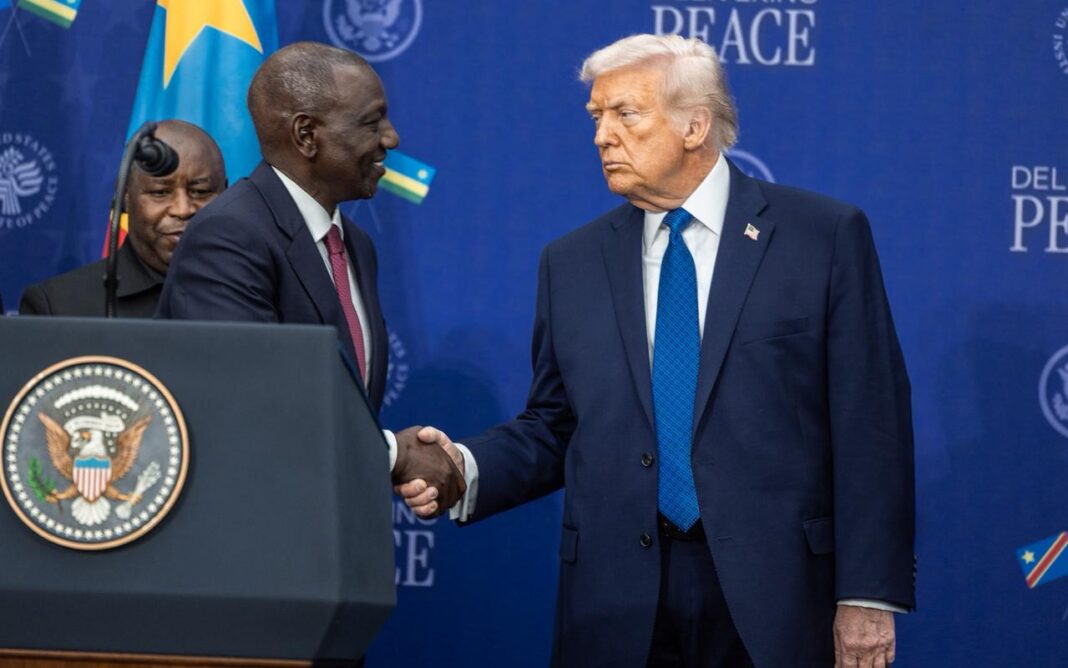
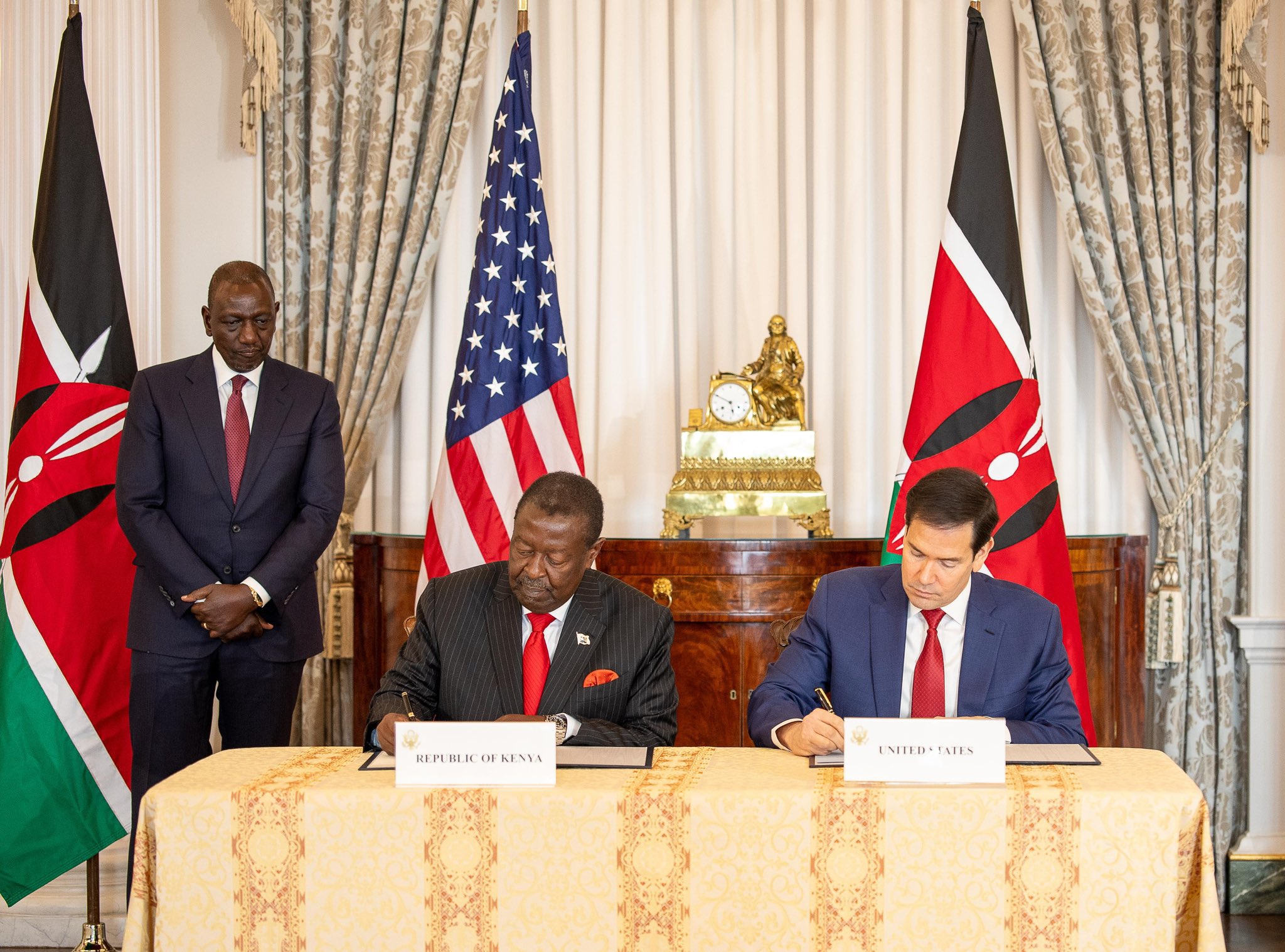
The ruling followed just days after Prime Cabinet Secretary Musalia Mudavadi and U.S. Secretary of State Marco Rubio signed the agreement in Washington during a ceremony President William Ruto attended.
Government officials marketed the Ksh200 billion framework as a transformative plan to strengthen Kenya’s health systems, but they kept most details concealed, raising suspicion among civil society actors.
COFEK Petition
COFEK filed its petition with a blunt warning: once Kenya’s health data leaves the country, it disappears forever. The lobby told the court that “the harm becomes permanent and irreversible,” because Kenya lacks any legal mechanism to control, audit, or recall exported data. To COFEK, the stakes extend far beyond privacy—they threaten national security, public trust, and the dignity of millions of Kenyans whose health records could be processed abroad.
Justice Mwamuye ruled that the matter carries enough urgency to justify halting the deal before any potential harm occurs. The court will mention the case on February 12 before Justice Lawrence Mugambi to confirm compliance and set directions for an expedited hearing.
President Ruto, however, has pushed back against the rising criticism. Speaking in Nairobi during the National and County Governments Coordinating Summit, the president insisted that Kenya—not the United States—crafted and initiated the negotiations.
He accused sections of the public and media of drifting toward misinformation and assured that the government took every precaution to protect citizen data. Ruto added that Attorney General Dorcas Oduor had scrutinised and approved the deal long before the signing, saying there were no hidden risks.
Still, the court’s intervention suggests that the matter is far from settled.
COFEK Raises Red Flags on Constitutionality of Kenya-U.S. Health Agreement
COFEK’s legal assault on the Kenya-U.S. Health Cooperation Deal hinges on three core arguments: secrecy, unconstitutionality, and the absence of proper safeguards. The lobby argues that the deal was signed discreetly, without public participation, stakeholder engagement, or parliamentary scrutiny—three benchmarks required for agreements of national consequence.
Their petition warns of a worst-case scenario in which sensitive medical records could be exposed to misuse abroad, leading to discrimination, profiling, or commercial exploitation. For COFEK, the lack of reciprocal oversight mechanisms makes the deal fundamentally unsafe and structurally flawed.
They argue that once the data leaves Kenyan jurisdiction, the country loses all power to regulate its use—a constitutional violation and a potential breach of the Health Act.

Government Defends Integrity of 200B Kenya-U.S. Health Deal
President Ruto and his senior officials maintain that critics are overstating the risks and understating the benefits. According to the government, the health partnership aims to build Kenya’s research capacity, enhance epidemic preparedness, and modernise its health system.
Ruto claimed that U.S. State Department officials traveled to Nairobi for extensive negotiations, not the other way around. The signing ceremony, he said, was simply a culmination of a long, transparent diplomatic process.
He further asserted that Attorney General Dorcas Oduor had thoroughly vetted the document, ruling out any loopholes related to privacy, sovereignty, or data protection.
Despite the President’s assurances, the court’s intervention means the legal team must now convince the judiciary that the agreement meets constitutional thresholds.
Future of Kenya-U.S. Health Deal Hangs in Balance
The High Court’s suspension thrusts the deal into a legal limbo that could stretch for months. With opposition already building in civil society and Parliament likely to take interest, the government faces an uphill task defending a deal that many feel was rushed and inadequately disclosed.
Whether the agreement survives judicial scrutiny will depend on whether the State can prove that the benefits outweigh the potential risks—and that Kenya’s sovereignty and data protection laws were not sacrificed in the negotiation process.