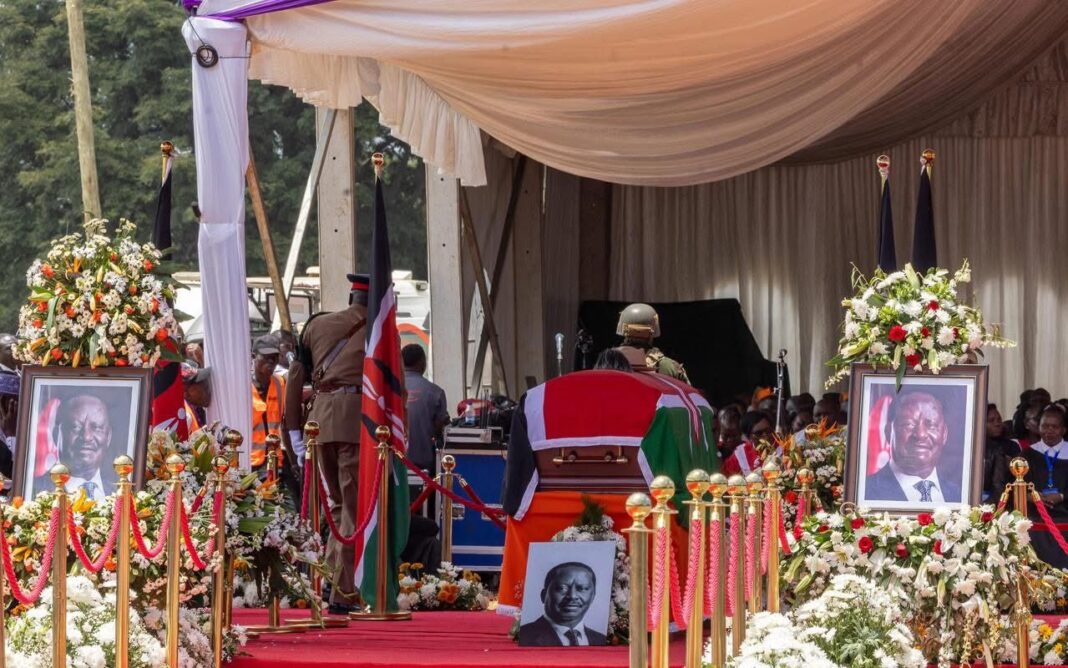
Former Prime Minister Raila Amolo Odinga was laid to rest on Sunday evening at Kang’o Ka Jaramogi, his ancestral home in Bondo, Siaya County, in a deeply symbolic ceremony filled with tradition and meaning.
The event, attended by President William Ruto, top leaders, and close family, reflected not only the nation’s grief but also the powerful heritage Raila carried to his grave. The items Raila was buried with—his trademark hat and ceremonial whisk—told a story of authority, legacy, and Luo cultural identity that transcends death.
The Deeper Meaning Behind the Items Raila Was Buried With
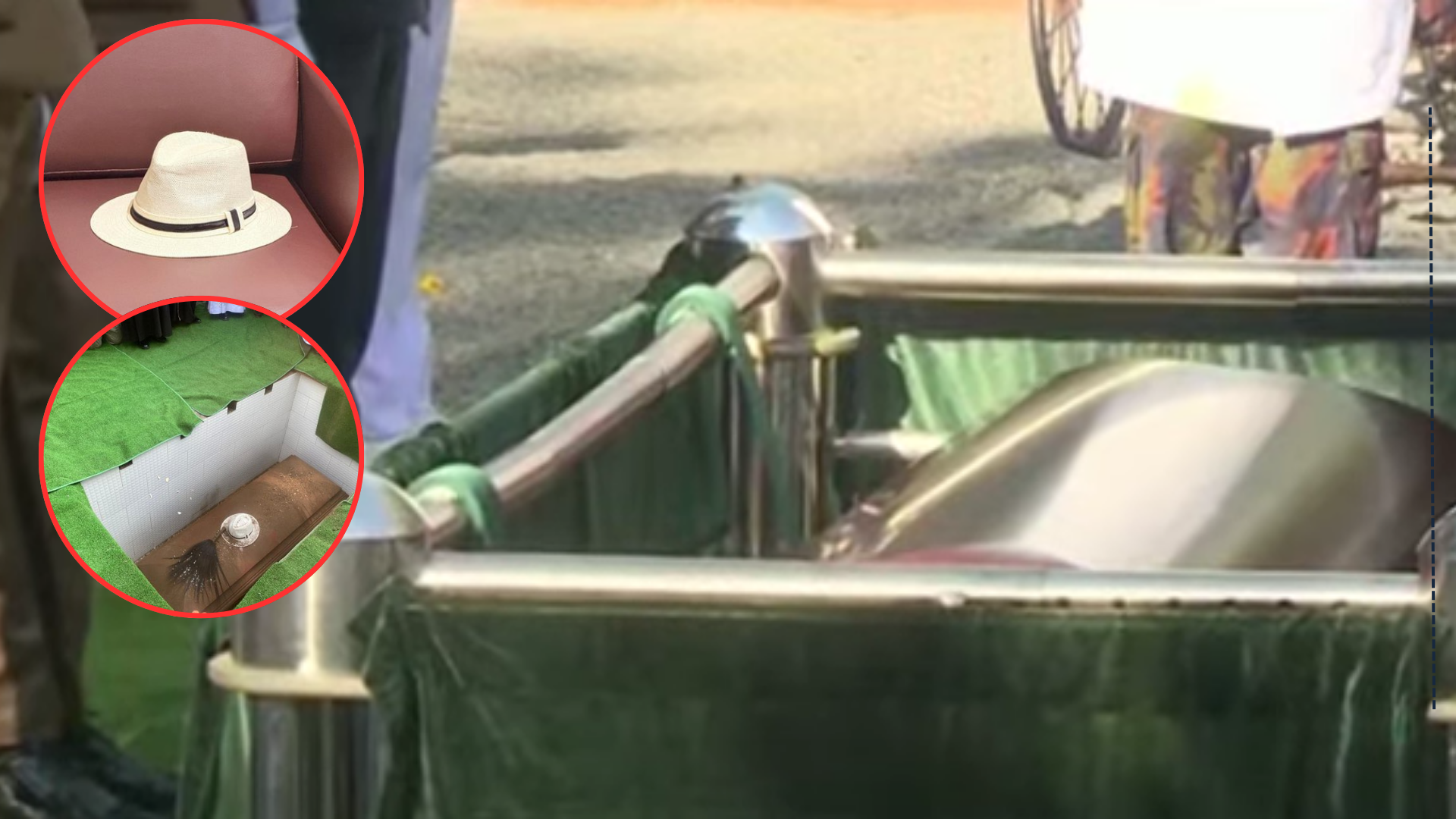
When Raila Odinga’s casket was lowered into the ground, the sight of his trademark hat and ceremonial whisk resting atop his coffin carried a powerful message. These were not ordinary accessories. In Luo culture, such items hold immense spiritual and social meaning, reserved for respected elders and community leaders.
The burial, which took place in a private setting witnessed by President William Ruto, Mama Ida Odinga, and ODM dignitaries, symbolized the closing of an era. Raila’s hat and whisk were chosen not just for memory, but to affirm his eternal stature among his people.
The hat, known locally as Ogudu, has long been a defining part of Raila’s image—seen in rallies, state functions, and even during his quiet moments. The whisk, or Orengo, in Luo tradition represents power, leadership, and continuity. Together, these items formed the perfect symbol of Raila’s enduring authority, wisdom, and connection to his community.
The Hat That Defined Raila’s Political Identity
Throughout his life, Raila Odinga’s hat became more than just a piece of fashion—it became his signature. The black wide-brimmed hat, often referred to simply as “Baba’s hat,” stood as a symbol of resilience and self-assured leadership.
Even in his final moments, the decision to bury him wearing it reflected the deep respect his family and supporters had for the image he built. The hat represented more than style; it represented the man’s journey from political prisoner to statesman.
For millions of Kenyans, the image of Raila in his hat remains etched in history—a man who stood firm, carried hope for the oppressed, and never shied away from speaking truth to power. By taking it to his grave, Raila carried with him the identity that inspired generations.

The Whisk That Signified Authority and Continuity
The ceremonial whisk, often carried by elders and chiefs, represents command, wisdom, and the voice of the people. In Luo culture, it’s not merely a decoration—it’s a symbol of status. When Raila’s whisk was placed beside him, it was a message that his leadership would continue in spirit.
Burying a leader with a whisk signifies that he retains his dignity and influence even in death. It’s a way of declaring that the man’s authority lives on, protecting his people from the ancestral realm.
For the Luo community, and indeed the whole nation, this gesture captured the timeless connection between leadership and legacy. It ensured that Raila would continue guiding his people in memory and spirit, much like his father, Jaramogi Oginga Odinga, before him.
The Ceremony That Blended State Honor and Cultural Heritage
The burial at Kang’o Ka Jaramogi blended national ceremony with deep cultural symbolism. Only a few dignitaries were allowed during the private interment—among them President Ruto, top ODM leaders, and close family.
At the gravesite, the Kenyan military presented the national flag to Mama Ida Odinga, honoring Raila’s lifetime of service, sacrifice, and unbroken commitment to public life. The presentation marked the state’s formal recognition of Raila’s contribution to democracy and national unity.
Raila’s long-serving bodyguard, Maurice Ogeta, was among those allowed to see him off personally—a moving moment that highlighted years of loyalty and trust. President Ruto even promised him a government job, symbolizing continuity beyond grief.
Meanwhile, attention turned to Raila’s lastborn son, Raila Odinga Junior, who was seen carrying his father’s whisk during the public viewing of the body at Parliament Buildings. The sight was both emotional and symbolic, hinting at generational succession and the endurance of the Odinga political heritage.