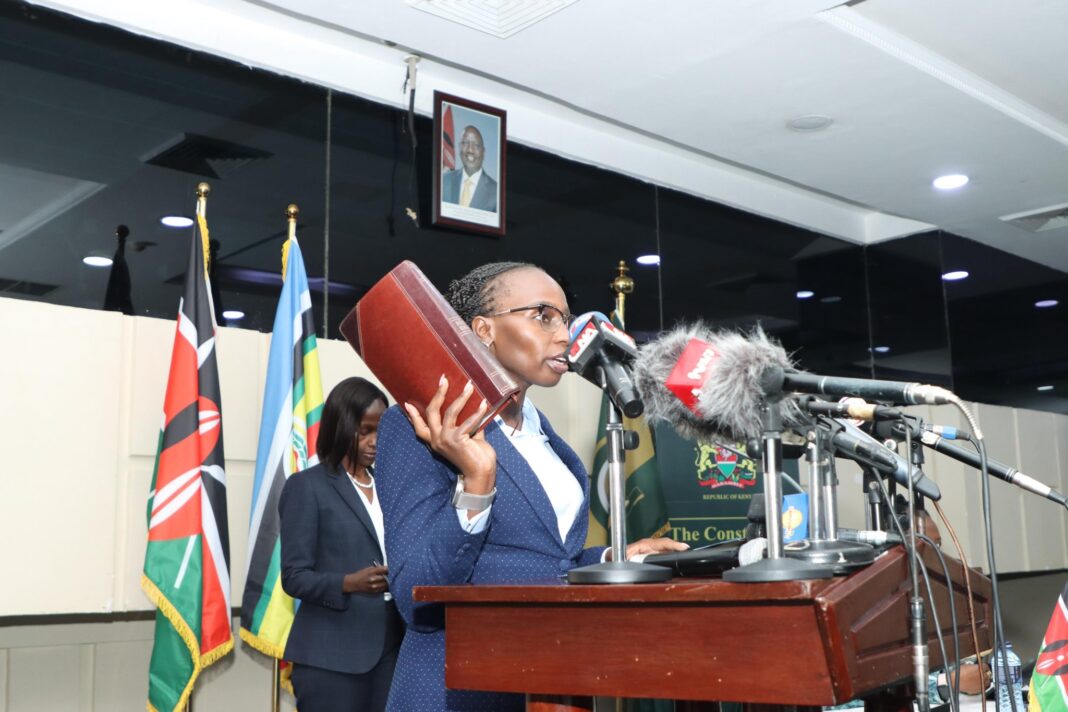
Law Society of Kenya (LSK) President Faith Odhiambo has resigned from President William Ruto’s Victims Compensation Panel after weeks of growing political and legal pressure.
Odhiambo, who served as the vice chairperson of the 15-member panel, announced her resignation on Monday, citing the need for the Law Society to remain independent and focused on its core mandate.
“Earlier today, I tendered my resignation from the position of Vice Chairperson of the Compensation Panel,” she said in a statement. “I will continue to agitate for justice for all victims and pursue all key deliverables I had set out to attain.”
Her resignation marks a major setback for the panel, which was tasked with designing a framework to compensate victims of police brutality and violence during recent anti-government protests.
Odhiambo said the decision was informed by the High Court’s order halting the operations of the panel, whose 120-day tenure was already running out.
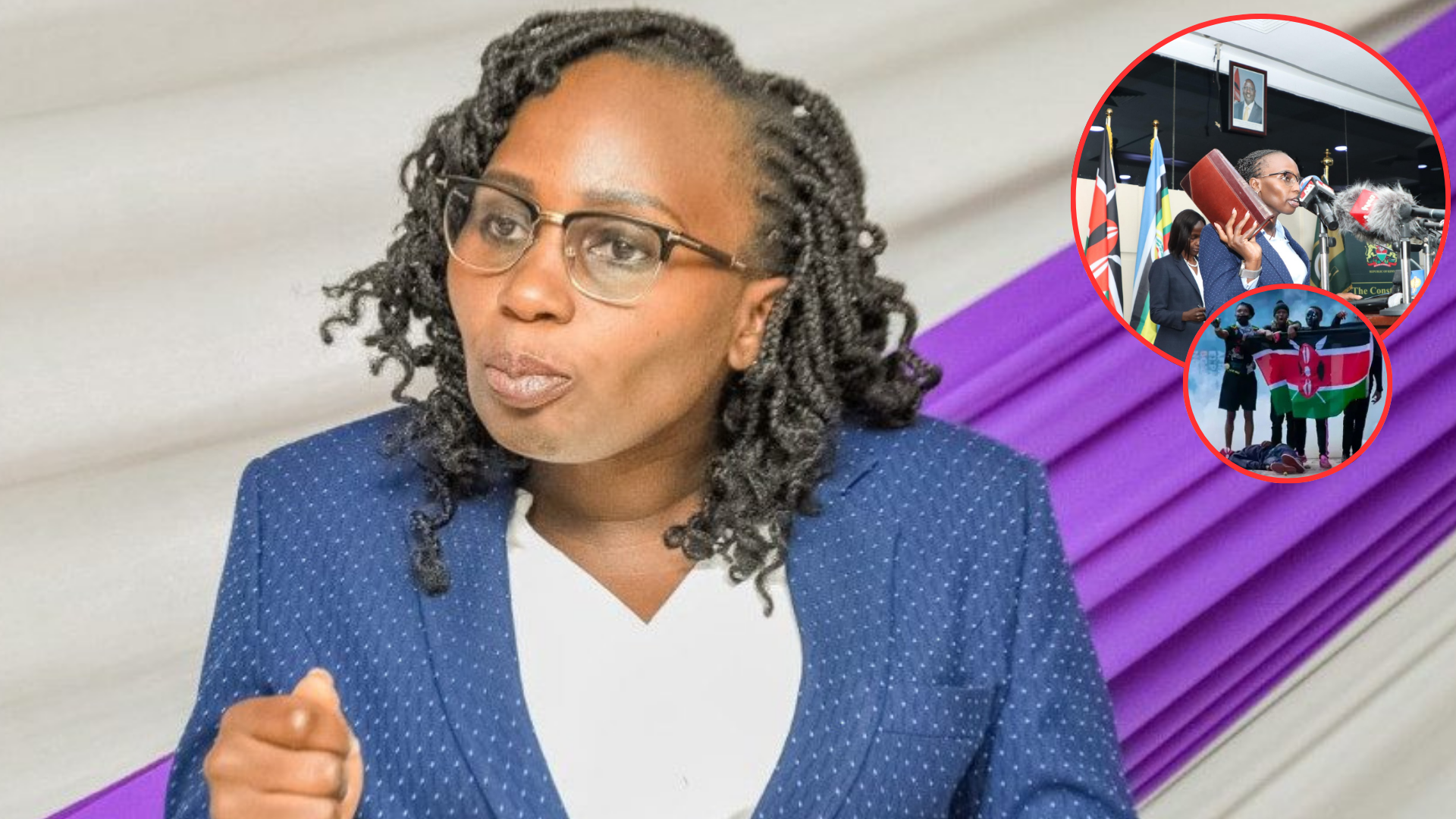
Faith Odhiambo Resigns From Ruto Panel, Citing Court Orders and Integrity of LSK
According to the LSK President, the High Court’s intervention meant the panel’s work could not proceed effectively within the set timeframe.
“The time-bound mandate of the panel has already been stopped by the court, and the 120 days are likely to lapse before the matter is settled,” she explained.
Odhiambo emphasized that her resignation was meant to protect the credibility and unity of the Law Society of Kenya.
“This consequential moment for our country calls for all rule of law institutions, especially the Law Society of Kenya, to remain unified and resolute in discharging the mandate bestowed upon us by law,” she noted.
She added that LSK would continue championing justice for victims through independent initiatives and engagement with relevant state and human rights bodies.
“My commitment to agitate for the rights of victims remains impregnable. I will continue to take up and prosecute matters on behalf of victims of police excesses during demonstrations,” she said.
Panel Under Fire Since Formation
The compensation panel, chaired by President Ruto’s Constitutional Advisor Professor Makau Mutua, has faced heavy criticism since its formation.
Critics, including members of civil society and opposition leaders, accused the President of using the panel to score political points instead of addressing systemic human rights abuses.
Faith Odhiambo’s appointment in particular drew fire from within the legal community, which argued that her involvement compromised the independence of LSK.
“The panel’s composition raised legitimate concerns about conflict of interest,” said one lawyer familiar with the case. “Faith Odhiambo represents an institution that should be holding government accountable, not sitting in its committees.”
On September 8, the High Court issued conservatory orders suspending the panel’s work following a petition by lawyer Levi Munyeri, who questioned its legality.
Legal and Political Fallout After Odhiambo’s Exit
Following her resignation, Munyeri praised the LSK President for making what he termed “the right and timely decision.”
“Faith Odhiambo, you have done the right thing. Better late than never,” Munyeri stated. “Now let us turn our focus to the rest of the panel and ensure justice is delivered for our slain and injured patriots.”
The High Court in Kerugoya has since extended the suspension of the panel’s operations until October 21. This extension effectively stalls any progress toward compensating victims of protest-related violence.
Political observers view Odhiambo’s resignation as a significant blow to President Ruto’s attempt to project a reconciliatory image following months of deadly protests.
They argue that her exit reflects broader mistrust between the government and independent institutions tasked with upholding justice and accountability.
For Faith Odhiambo, the move reinforces her reputation as a principled legal leader determined to maintain the integrity of the Law Society.
She reaffirmed that LSK will now focus on pushing for comprehensive reforms to Kenya’s victim reparations framework.
“There remains a significant gap in our victim reparations system which must be addressed urgently,” she said. “LSK will engage all justice stakeholders to formulate legislative proposals to fix the weaknesses that have left victims short-changed.”
Her departure from the panel may have closed one chapter of controversy, but it has also reignited debate about the independence of professional bodies in Kenya’s evolving political landscape.